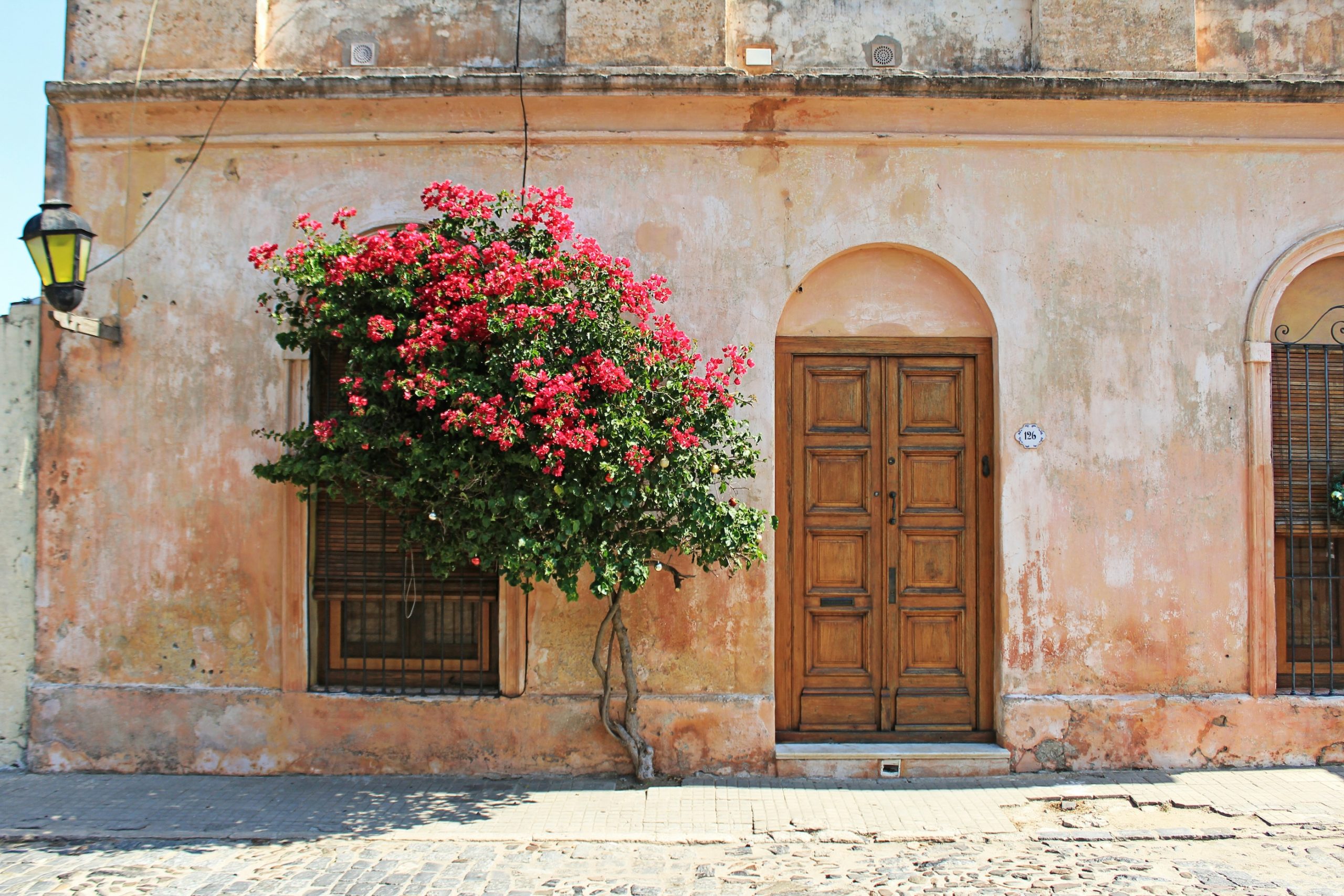
Uruguay

Uruguay
KEY INFORMATION TO PREPARE FOR YOUR JOURNEY
Uruguay is South America’s second-smallest country, wedged between Argentina and Brazil on the Río de la Plata and the Atlantic. Around 3.5 million people live here, nearly 2 million of them in greater Montevideo. It is known for its relaxed pace, Atlantic beaches, rolling cattle country, gaucho traditions and one of the region’s highest standards of living. With roughly 3.8 cattle per person, beef and the weekend asado are central to life.
PLEASE NOTE: All pre-departure information was correct at the time of writing, but should be used as a guide only since requirements can change at short notice and without warning. Consult Smart Traveller or contact the Embassy of Uruguay or the appropriate authority prior to departure to confirm all details.
AT A GLANCE
URUGUAY KEY FACTS
Time: GMT -3 hours | AEST -13 hours
Capital: Montevideo
Official language: Spanish. English is spoken in hotels, wineries and tourist areas of Montevideo, Colonia and Punta del Este, but less so in the interior. A few basic Spanish phrases go a long way.
Religion: Uruguay is the most secular country in the Americas, with church and state fully separated since 1917. Around 38% of people identify with no religion; most others are Christian, mainly Roman Catholic.vast majority (92%) of Argentineans identify as Roman Catholic, but most are non-practising.
Electrical Current: 220-230V | Plug types C, F and L, with type I in some older buildings.
Currency:Uruguayan peso (UYU)
Australian High Commission: There is no Australian embassy in Uruguay. Full consular services come from the Australian Embassy in Buenos Aires | Villanueva 1400, Buenos Aires | T: +54 11 4779 3500). A consulate in Montevideo | 25 de Mayo 455, 2nd floor | T: +598 98 451 451) offers limited assistance and cannot issue passports.500 | www.argentina.embassy.gov.au
Visa: No – Australian nationals do not require a visa for stays of up to 90 days.
USEFUL WEBSITES
Smart Traveller – https://www.smartraveller.gov.au/destinations/americas/uruguay
Travel Doctor-TMVC – https://www.traveldoctor.com.au/destinations/uruguay
Embassy of Uruguay – https://www.gub.uy/ministerio-relaciones-exteriores/en/embassy-of-uruguay-in-australia
PUBLIC HOLIDAYS
January 1: New Year’s Day
January 6: Children’s Day (Día de los Niños)
Monday & Tuesday, 47-48 days before Easter: Carnival (Carnaval)
The week before Easter: Tourism Week (Semana de Turismo)
April 19*: Landing of the 33 Patriots
May 1: Workers’ Day
May 18*:Battle of Las Piedras
June 19: Birthday of José Artigas
July 18: Constitution Day
August 25: Independence Day
October 12*: Day of the Americas
November 2: All Souls’ Day
December 25: Family Day (Christmas)
*May move to the nearest Monday. Many businesses close and long-distance buses and ferries fill up during Carnival and Tourism Week, so book ahead if travelling at these times.
PASSPORT, VISA & DOCUMENTATION
PASSPORTS
Your passport must be valid for at least six months after your return to Australia and have at least two blank pages for every entry and country you intend to visit on your journey. If your passport does not meet these requirements you must obtain a new one. The Australian Passport Office website is www.passports.gov.au.
It is a wise precaution to carry a photocopy of your passport separately and leave a copy at home. This will aid authorities in processing a new passport should yours get stolen or lost.
If you have dual citizenship and more than one passport, we strongly recommend that you use only one of these during your travels, as in some countries it is considered illegal to have two or more passports. Be sure to use the same passport on entry and exit from a country, and never surrender your passport.
If your passport name is different to your commonly used name, please advise us of this and ensure your airline reservations match those of your passport name.
VISAS
Australian nationals need a valid passport, but no visa is needed for stays of up to 90 days. Border officials may request evidence that you intend to depart the country within the 90 days, for example a return or onward ticket.
CLIMATE, WEATHER & SEASONS
CLIMATE
Uruguay has a temperate, humid climate with four distinct seasons and no dry season: rain falls fairly evenly throughout the year. Summers (December to February) are warm, typically 25–29°C by day. Winters (June to August) are cool and damp, with days around 14–16°C and nights that can drop close to freezing inland. Frost occurs in the interior but snow is extremely rare.
Montevideo: Mild year-round, but often breezy on the waterfront. Humidity can make winter days feel colder than the thermometer suggests.
Colonia del Sacramento: Slightly warmer in summer than Montevideo, and sheltered on the calm Río de la Plata.
Punta del Este and the Atlantic coast: Cooled by sea breezes, with milder summers and a noticeable wind much of the year. The ocean is fresh even in midsummer.
The interior (estancia country): More extreme than the coast, with hotter summer days and colder winter nights.
KEY SEASONS
- December to February is high summer. Punta del Este and José Ignacio are at their busiest from Christmas to the end of February.
- March to May is a lovely time to visit, with warm days, fewer crowds and the grape harvest (vendimia) in the wineries from around February to April.
- June to August is low season. It is quiet and cool, many beach-resort restaurants and hotels close, and it suits city stays, wine and food.
- September to November is spring, ideal for estancia stays and touring the countryside. From around July to November, southern right whales can be seen off the Atlantic coast near Punta del Este and Rocha.
| MONTEVIDEO | JAN | FEB | MAR | APR | MAY | JUN | JUL | AUG | SEP | OCT | NOV | DEC |
|---|---|---|---|---|---|---|---|---|---|---|---|---|
| Temperature (°C) | 18-28 | 18-28 | 17-26 | 14-22 | 10-19 | 8-15 | 7-15 | 8-17 | 9-18 | 12-21 | 14-24 | 16-27 |
| Rainfall (mm) | 96 | 103 | 111 | 113 | 86 | 91 | 93 | 87 | 85 | 102 | 94 | 101 |
LUGGAGE & PACKING
CLOTHING
Uruguayans dress in a relaxed, smart-casual style. Neat casual clothes suit almost every occasion, with something slightly smarter for dinner in Montevideo, José Ignacio or Punta del Este. Dress in layers: the weather can change quickly and coastal breezes make evenings cooler than you might expect, even in summer.
Summer (December to February): Light, breathable clothing, swimwear, a sun hat and a light jacket or jumper for breezy evenings.
Winter (June to August): A warm jacket, jumpers, a scarf and closed shoes. A waterproof jacket is useful year-round, as rain can fall in any month.
Estancia stays: Comfortable trousers (jeans are ideal) and closed shoes or boots for horse riding, plus a warm layer for cool countryside nights.
City touring: Comfortable walking shoes. Colonia’s historic quarter has uneven cobblestone streets.
JEWELLERY
Keep jewellery to a minimum and leave valuables at home. Petty theft occurs in busy areas, so wear bags across your body and keep phones out of sight on the street.
HEALTH & VACCINATIONS
HEALTH & VACCINATIONS
As we are not qualified to offer advice, please always check with your GP or the Travel Doctor-TMVC who have the most up‐to-date information available.
Requirements are highly personal depending on your health profile and the activities in your itinerary. Some vaccinations must be given well in advance of travel, so we suggest seeking medical advice as soon as you start to plan your trip.
Be sure to ask what vaccinations or medications may be required both to enter Uruguay and also to re-enter Australia.
FURTHER INFORMATION
- Contact your GP for the latest recommendations for travel to Uruguay, tailored to your itinerary and personal health profile
- SmartTraveller – Uruguay
- Travel Doctor-TMVC – Uruguay
GENERAL RECOMMENDATIONS
Mosquito-borne illness: Dengue and Zika occur, mainly in the warmer, wetter months. Use insect repellent and wear long, light clothing at dawn and dusk. Seek medical advice if you develop a fever, rash, severe headache or muscle pain.
Sun: The summer sun is strong and the UV index is often extreme. Wear a hat and sunglasses, use high-SPF sunscreen and drink plenty of water.
Water and food: Tap water is treated and generally safe to drink in Montevideo and most towns, and bottled water is widely available. Food hygiene standards are good, but take the usual care with food from street stalls.
Animals: Seek medical help immediately after any animal bite or scratch.
YELLOW FEVER
A yellow fever vaccination certificate is not required to enter or leave Uruguay. However, if your journey also includes yellow fever risk areas, such as Iguazu Falls or parts of Brazil, Australian authorities may ask for a certificate when you return if you were in those areas within the six days before arriving home.
MONEY MATTERS
CURRENCY AND EXCHANGE
The local currency is the Uruguayan peso (UYU).
Unlike in Argentina, the currency is stable and there is no parallel or “blue” exchange market, so you can simply use cards, ATMs and official exchange offices. Uruguay is one of the more expensive countries in South America, with prices for dining and hotels similar to Australia.
US dollars are widely accepted for hotels, tours and larger purchases, and many prices in tourist areas are quoted in USD. Pesos are best for day-to-day spending such as cafés, taxis and markets. Bring clean, undamaged USD notes, as torn or marked notes may be refused.
Exchange: Exchange offices (cambios) are common in Montevideo, Colonia and Punta del Este and usually offer better rates than hotels. Australian dollars are rarely exchanged, so bring US dollars or use an ATM.
ATMs are widely available in cities and towns, and many dispense both pesos and US dollars. Local banks may charge a fee and set withdrawal limits per transaction.
Cards: Visa and Mastercard are widely accepted, including contactless payment; American Express less so. Paying by overseas card may also earn you a VAT discount (see Tourist VAT Benefits). Carry some cash for small purchases, taxis and tips, especially in rural areas.
Banks are generally open on weekday afternoons only. Travellers’ cheques are not practical and are rarely accepted.
TELL YOUR BANK
We highly recommend you advise your bank of your destinations and travel dates. This should prevent any of your transactions being deemed as ‘out of the ordinary’ (and possibly stopped) due to their unexpected location.
TIPPING
Tipping is customary in Uruguay for good service and is always appreciated. As a guide:
| Service | Suggested Tip |
|---|---|
| Guides | USD 15-20 per day |
| Drivers | USD 5-10 per day |
| Restaurants | Around 10%. Service is not normally included, so check the bill |
| Hotel porters | USD 1-2 per bag |
| Taxis | Not expected, but rounding up the fare is common |

POWER, TECH & PHOTOGRAPHY
POWER
There are basically two main voltage systems used around the world: 110 Volt ‐ USA, Canada, Spain & Japan 220 Volt ‐ the rest of the world. In simple terms, the power supply available at the socket is roughly twice as powerful in 240V countries as in 110V countries.
The voltage in Uruguay is 220-230 Volts, therefore if you wish to use any electronic devices from Canada, the US or Japan you’ll need a voltage converter AND a plug adapter. Australia operates a 220V currency and therefore you only require an adapter for Australian appliances.
There are several associated plug types in Uruguay so the adaptors you will need are:
- Type C and F: two round pins (the European style). These are the most common.
- Type L: three round pins in a row (the Italian style), found in some buildings.
- Type I: the Australian-style angled flat pins. These were the main standard until the 1990s and still appear in some older buildings, but don’t rely on finding them.
Alternatively you may prefer to invest in an International Travel Adaptor that provides you with more than one option.
Many adaptors also have a USB port so you can plug your smart phone, or I‐product directly into the adaptor.
For the latest & most up to date information about voltage and what adaptors to travel with refer to: www.korjo.com
ADAPTORS
Uruguay uses a 220-230V electrical current and several socket types C and F (two round pins) or type L (three round pins in a row) or type I (three flat pins in a triangular pattern) in some older buildings.

PHONES & INTERNET
Uruguay has some of the best internet connectivity in Latin America. Free Wi-Fi is available in almost all hotels, cafés and restaurants, and mobile coverage is good in towns and along main roads, though it can be patchy in remote countryside. Check international roaming rates with your provider before you leave, or buy a travel eSIM or local prepaid SIM (Antel, Claro or Movistar) on arrival.
PHOTOGRAPHY
Uruguay is very photogenic, from Colonia’s cobbled lanes to coastal sunsets and gauchos at work. Always ask before photographing people, and respect signs prohibiting photography in museums or galleries. If you plan to fly a drone, check Uruguay’s drone regulations before you travel, as registration and restrictions apply.