Rwanda
The Land of a Thousand Hills
Discovering Rwanda | In Summary
- Rwanda is one of the only destinations in Africa where a single itinerary can deliver both mountain gorilla trekking and a classic Big Five safari — Volcanoes National Park and Akagera National Park sit within the same country, eliminating the need to cross borders.
- Only 96 gorilla trekking permits are issued each day across eight habituated families in Volcanoes National Park; peak-season availability routinely fills six to twelve months in advance, making early booking through a specialist not just useful but essential.
- Beyond wildlife, Kigali stands as one of Africa’s most compelling urban destinations in its own right — a city of design-forward architecture, a thriving coffee culture, and a Genocide Memorial that offers one of the most moving and important experiences available to any traveller on the continent.
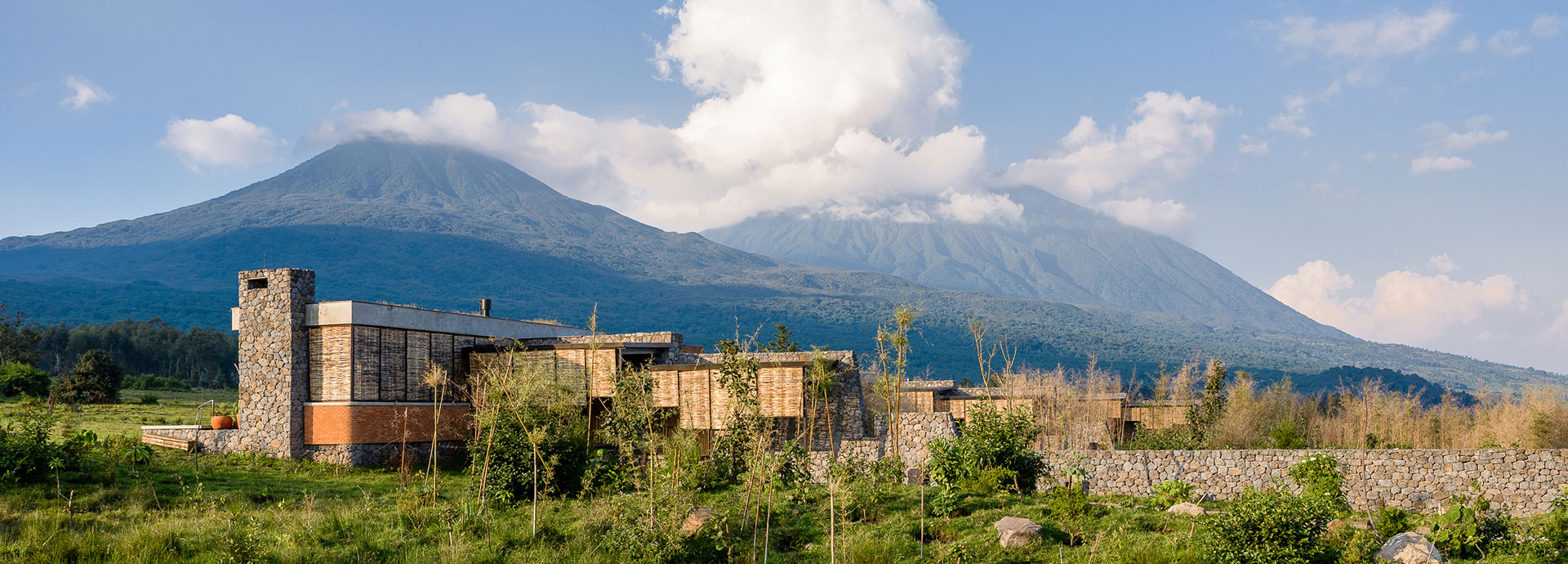
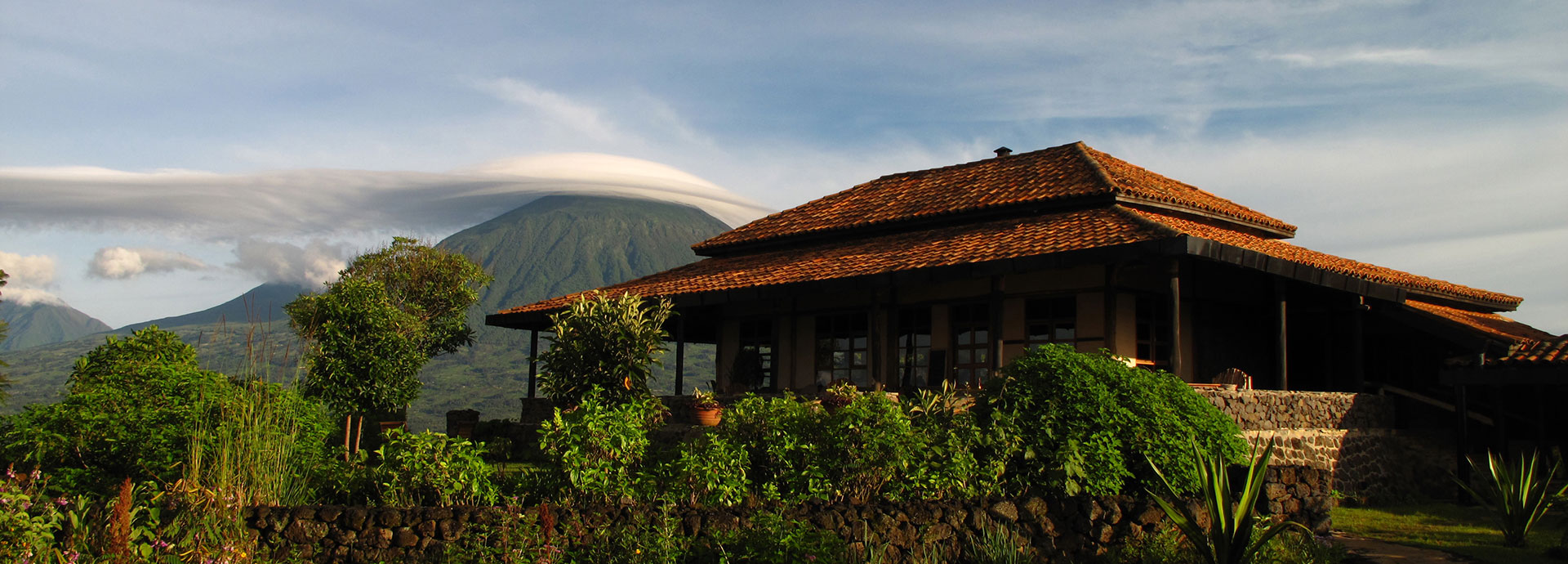
Known as the ‘Land of a Thousand Hills’ thanks to its swathes of mist-shrouded mountains, Rwanda lies in the heart of Africa as the emerald jewel of the continent’s crown. The country’s tragic history is widely known but through a combination of careful governance, pioneering green initiatives (plastic bags were banned in 2008), and a relentless positive attitude, the country has embraced a dynamic future and the Rwandan people are some of the most friendly and inspirational you’ll meet in Africa.
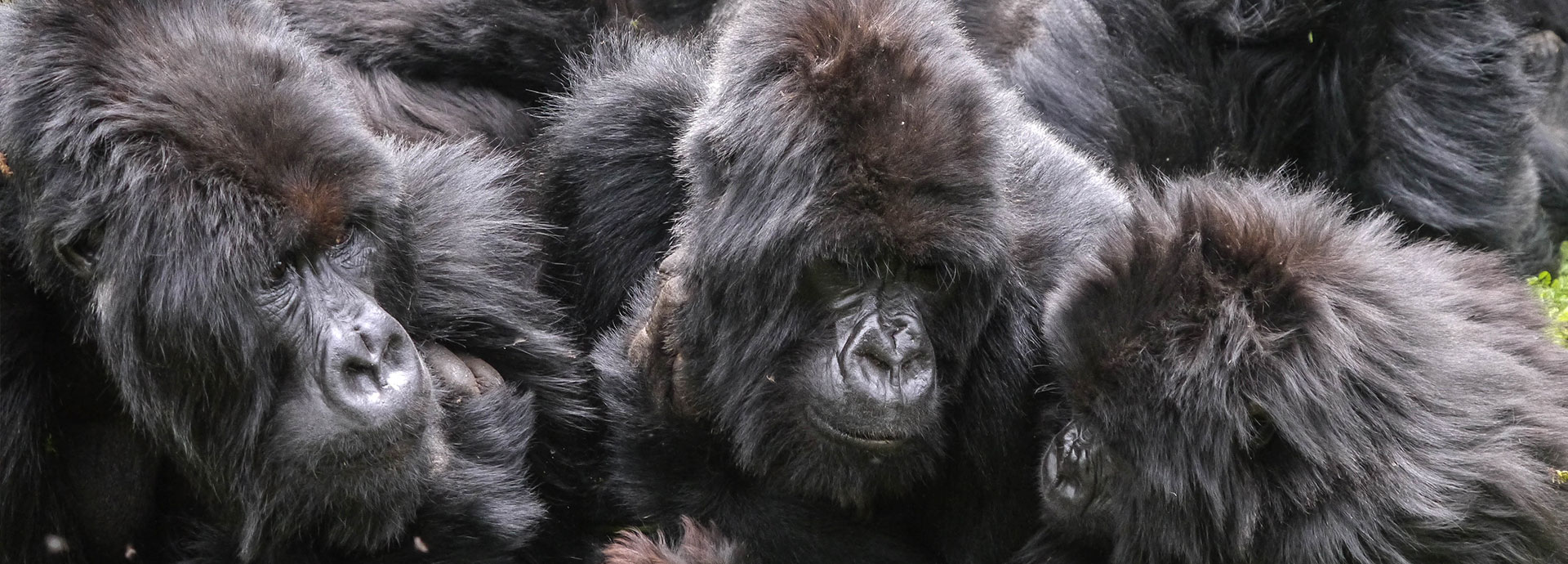
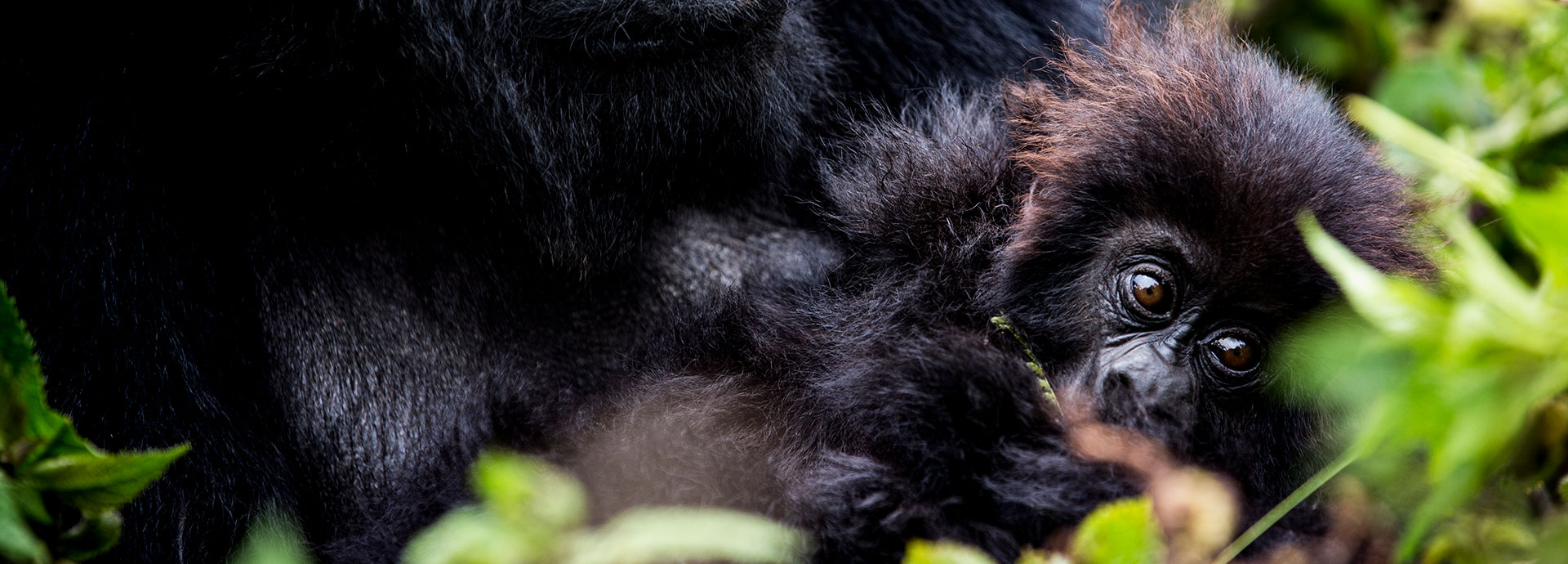
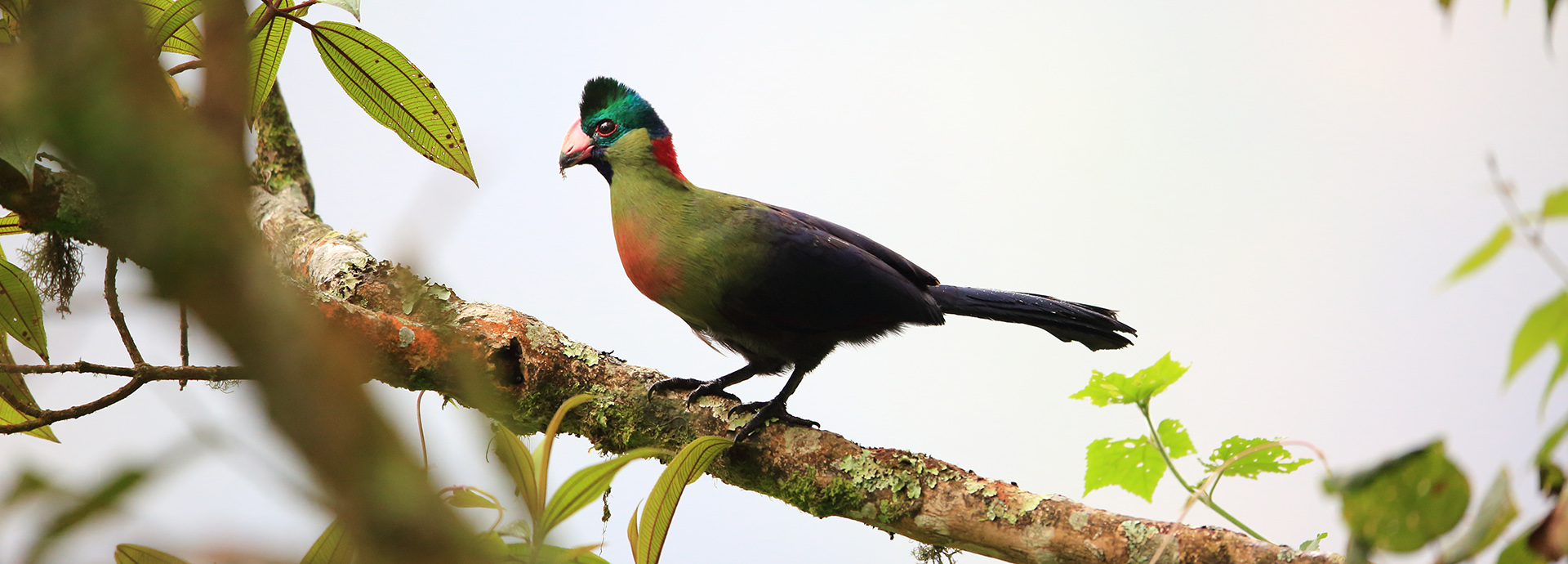
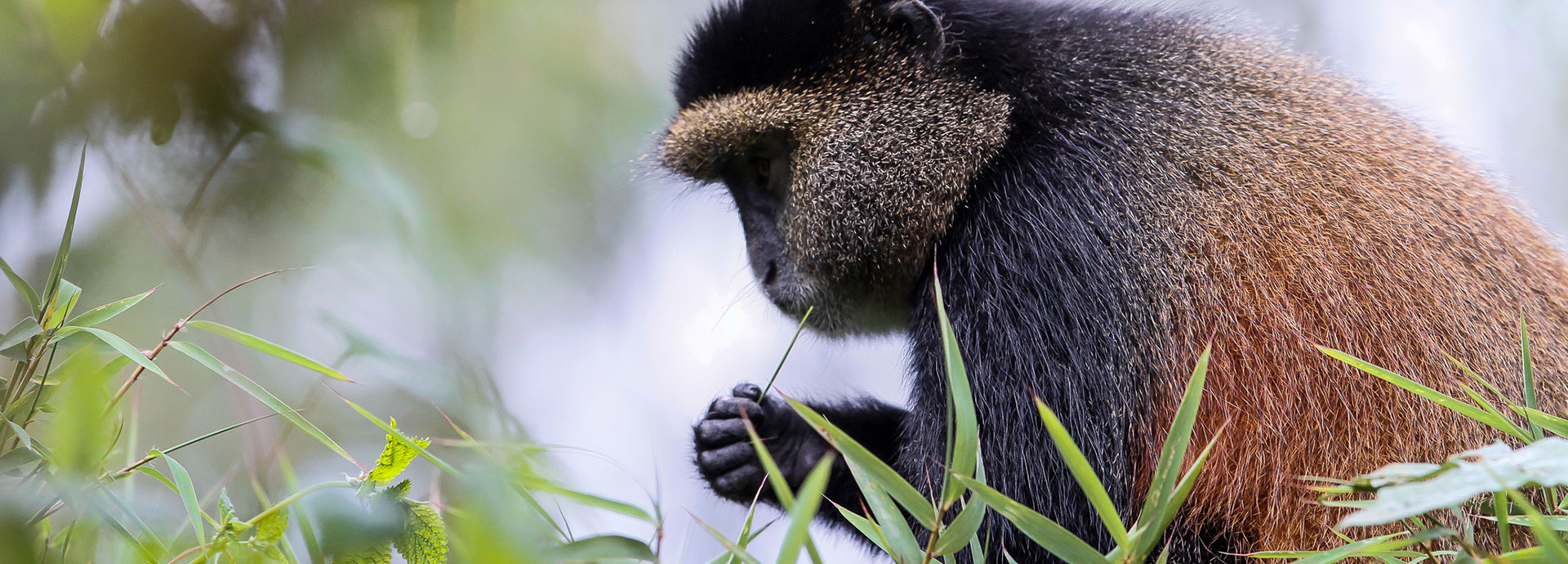
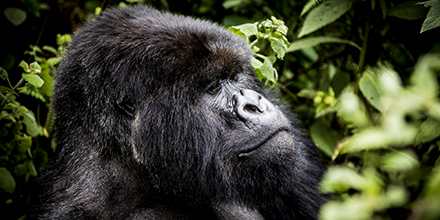
The majestic Virunga volcano mountains are home to one third of the world’s remaining mountain gorillas. Trekking through this lush landscape to sit quietly in their presence and observe them in the wild is profound and life affirming – one of the greatest wildlife experiences on earth. Agakera National Park boasts the full ‘Big Five’ and Nyungwe Forest National Park supports over 280 birds, 120 butterflies, 100 varieties of orchid and the opportunity to track colobus monkeys, endangered golden monkeys and wild chimpanzees. Meanwhile Kigali is one of the prettiest, cleanest and safest cities in Africa.
You Will Love
• Mountain gorillas
• Relentless positivity and dynamism
• Wild chimpanzees and rare golden monkeys
• ‘Big 5’ game drives in Akagera N.P.
• Scenic twin lakes: Bulera and Ruhondo
Let us design your perfect itinerary.
Unforgettable experiences in Rwanda
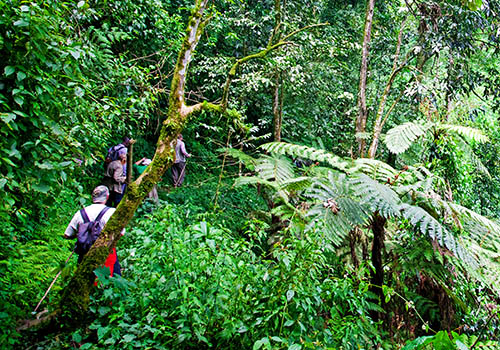
Honour Dian Fossey at her grave
Honour Dian Fossey at her grave
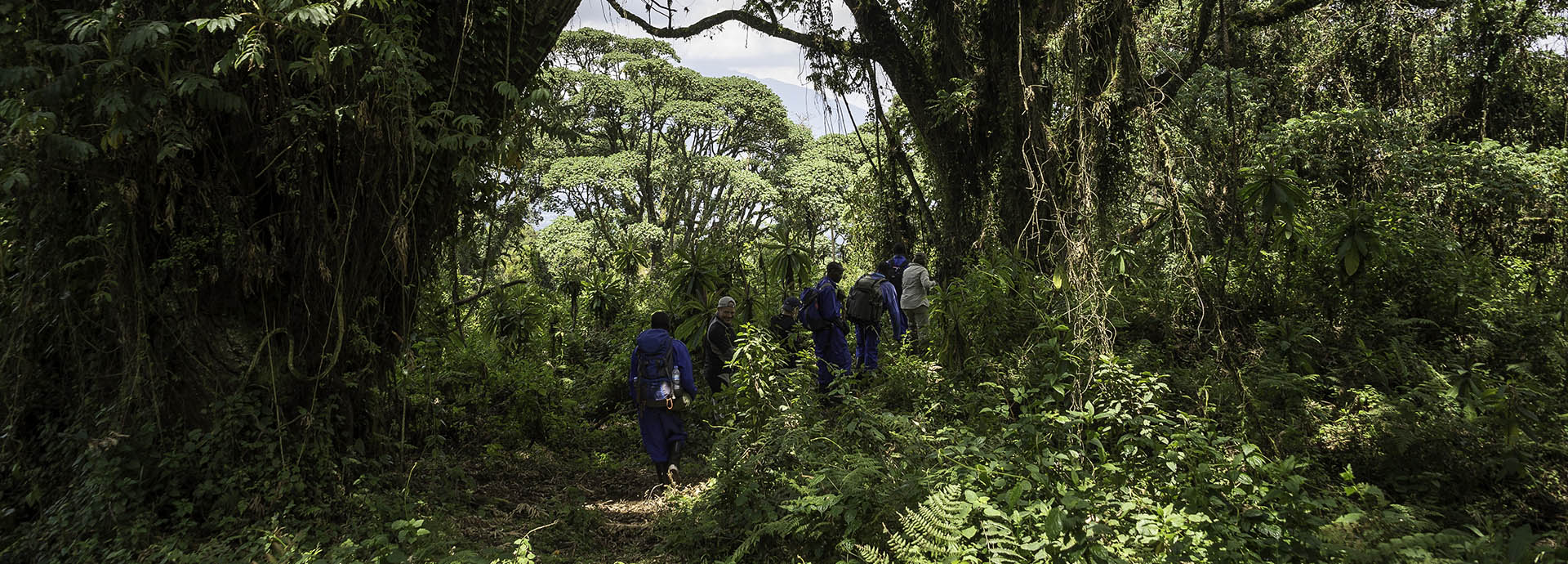
After a four-hour hike through lush rainforest you will reach the Karisoke research base, situated between two impressive volcanoes. The base was set up by Dian Fossey during her 18 years of ground-breaking research on mountain go...
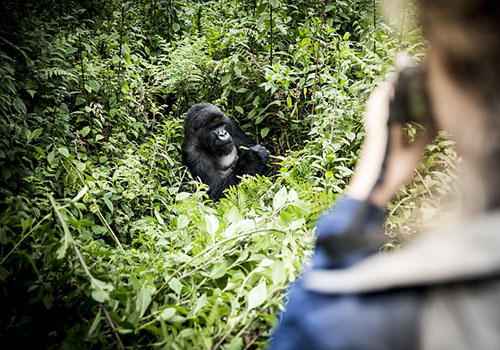
Trek to see the real ‘gorillas in the mist’
Trek to see the real ‘gorillas in the mist’
One of the most amazing wildlife experiences in Africa is coming face to face with a family of mountain gorillas. The estimated number of mountain gorillas remaining in the wild is just 1,000. It is no wonder that an encounter wit...
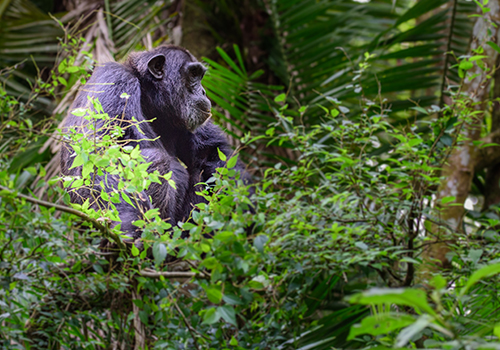
Track Chimpanzees in the wild
Track Chimpanzees in the wild
In the far southwest of Rwanda lies the ancient, pristine montane forest of Nyungwe. Although the verdant jungle in Nyungwe Forest National Park is a sanctuary for all sorts of interesting wildlife, the main draw here is the chimp...
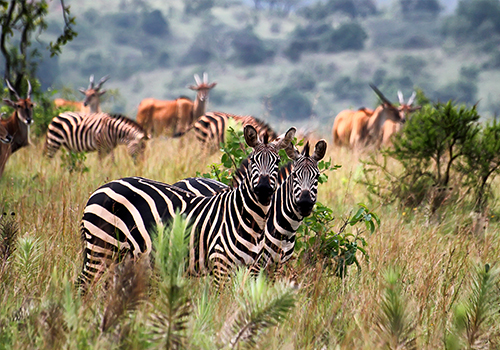
Marvel at East Africa’s wildlife in Akagera
Marvel at East Africa’s wildlife in Akagera
With open savannah, rolling hills, and a succession of lush marshes and lakes, Akagera National Park has always been a scenic park but thanks to a concerted conservation effort, its wildlife is now flourishing too. As well as game...
A selection of our favourite places to stay in Rwanda
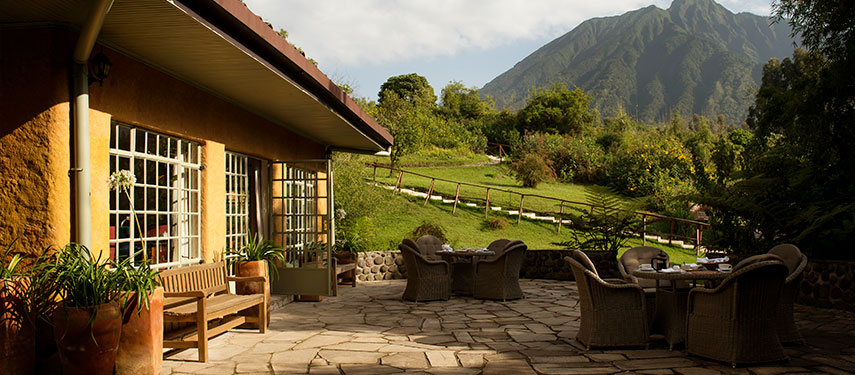
Sabyinyo Lodge – Volcanoes National Park
Spectacular forest retreat
The elegant Sabyinyo Lodge lies hidden amongst the foothills of the Virungas - an ideal location for mountain biking, seeing rare golden monkeys and tracking the endangered gorilla population. The décor is cosy and inviting with deep armchairs, fireplaces and panoramic views over the five volcanoes.... Read More
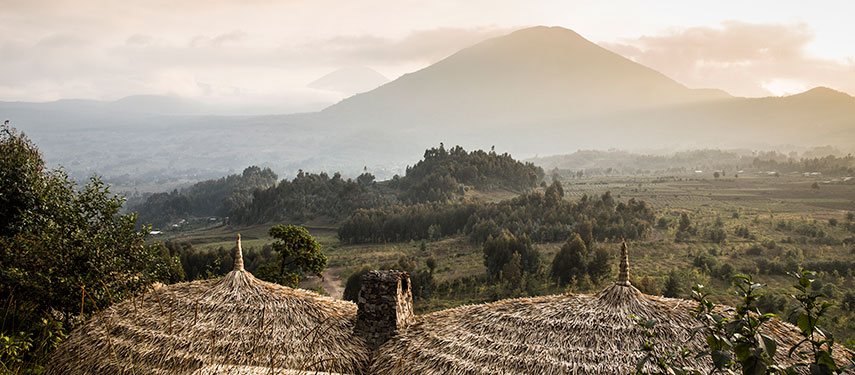
Bisate Lodge – Volcanoes National Park
Gorilla luxury
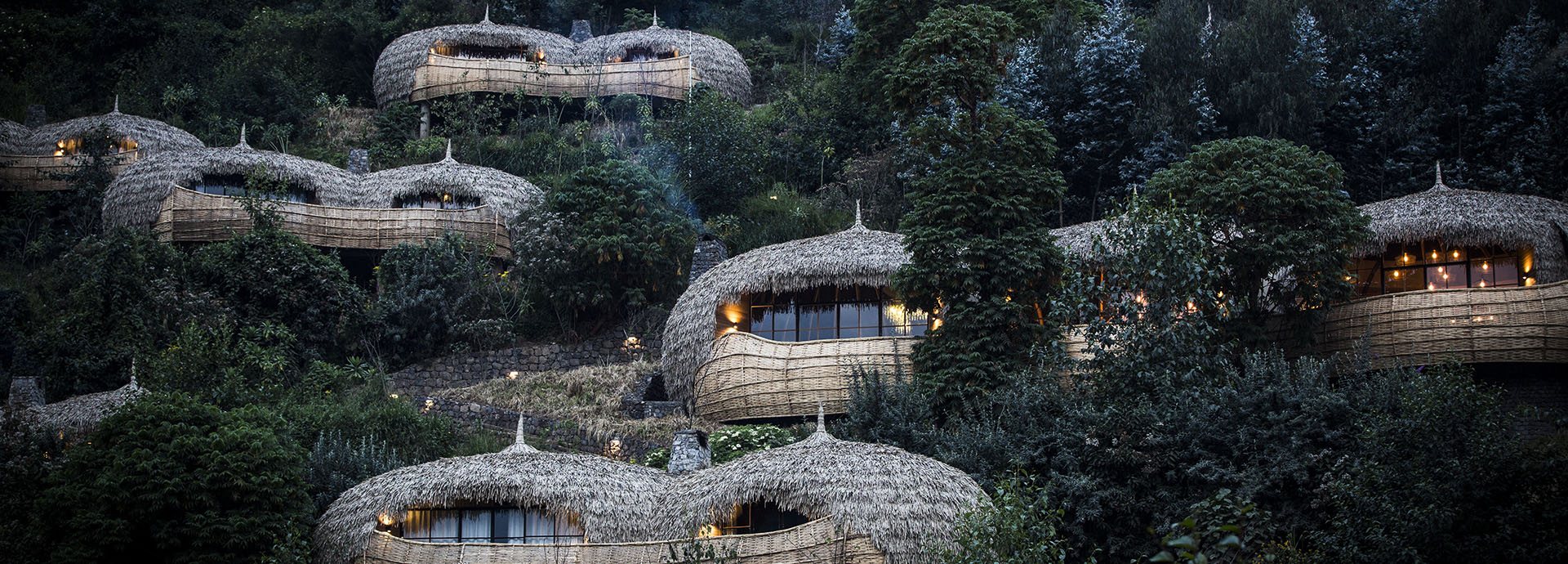
Bisate Lodge is located in the natural amphitheatre of an eroded volcanic cone, with dramatic views of the peaks of the volcanoes Bisoke and Karisimbi rearing up through the Afro-alpine forests of nearby Volcanoes National Park. It is not only one of the most exclusive luxury offerings in this beautiful corner of Africa, but also the most sustainable.... Read More
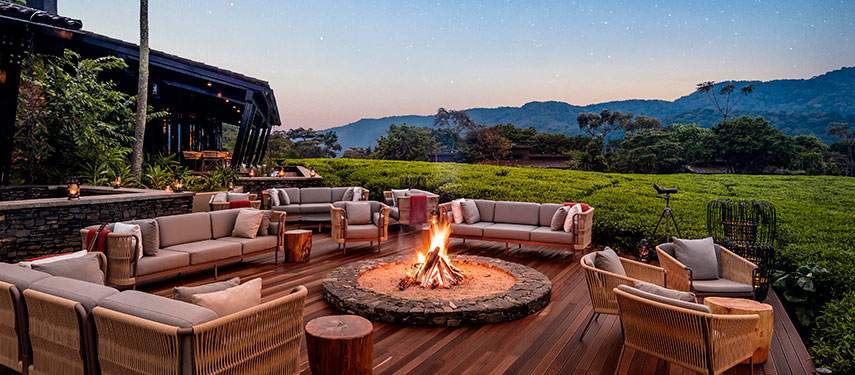
Nyungwe House – Nyungwe National Park
Primates & Plantation
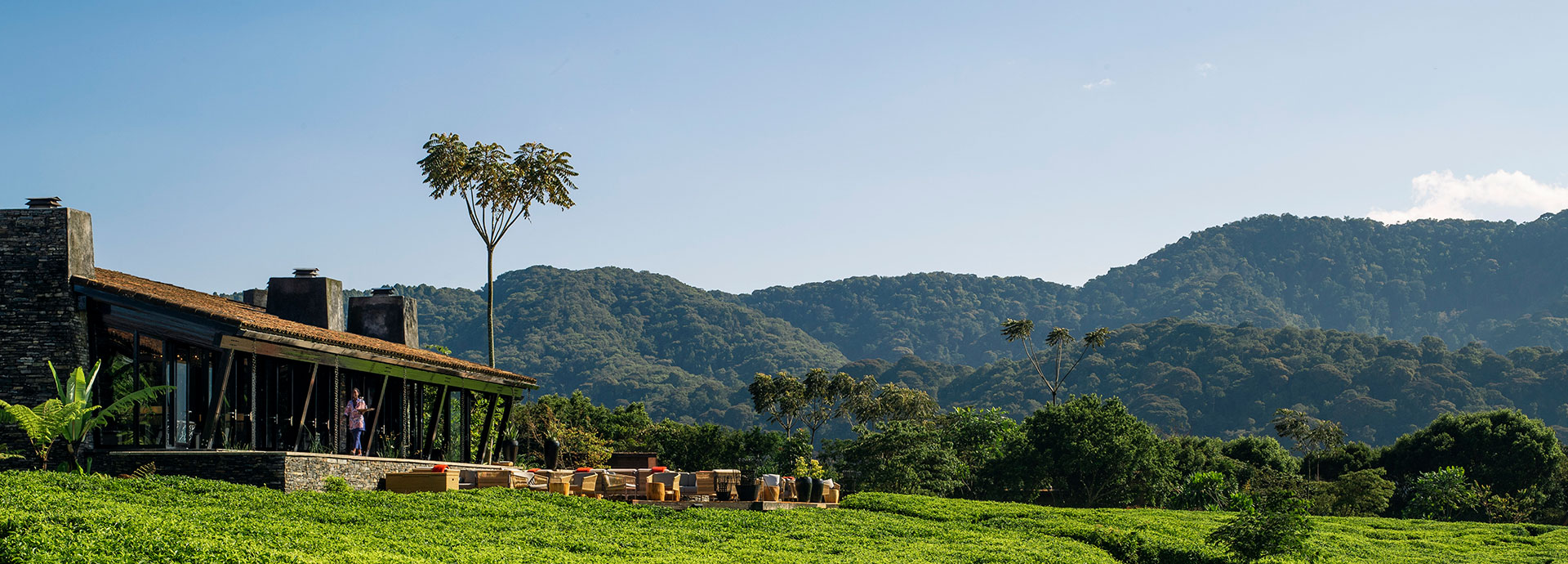
On the edge of the ancient Nyungwe rainforest within a tea plantation lies Nyungwe House. From the comfort of this lodge-style retreat you can trek though the lush jungle to spot chimpanzees, watch the exotic birdlife, indulge in an open-air spa treatment or head out on a walk to the spectacular Kamiranzovu waterfalls.... Read More
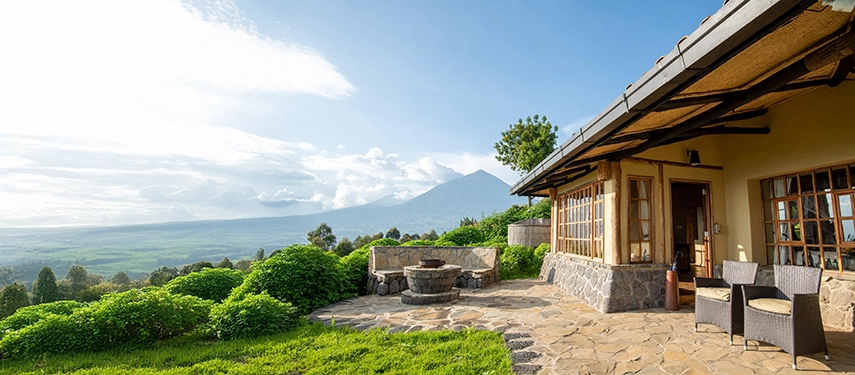
Volcanoes Virunga Lodge – Volcanoes National Park
Breathtaking vistas
The stone-built Virunga Lodge consists of ten bandas which look towards the Virunga volcanoes and the lakes below – a stunning outlook. It offers luxurious but authentic Rwandese style, excellent food and exceptional service. The focus is gorilla trekking but other activities include climbing volcanoes and tracking golden monkeys.... Read More
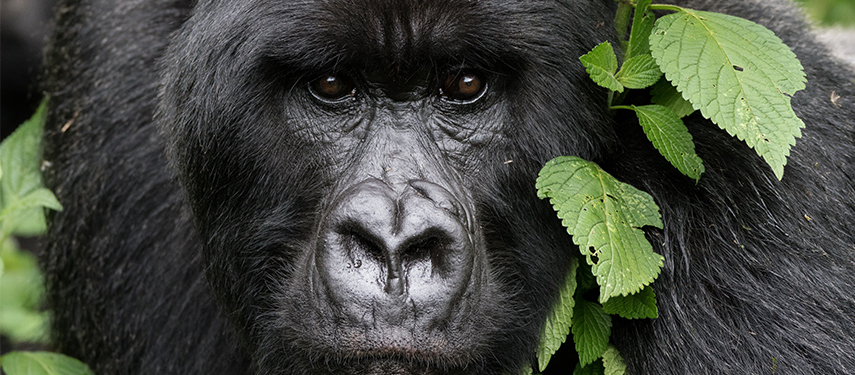
Singita Kwitonda – Volcanoes National Park
Regeneration & conservation
Kwitonda takes its name from a great silverback gorilla who was known locally for his gentleness and was said to embody the spirit of Rwanda. Built with sustainability as its core focus, the lodge accommodates just eight luxurious, low-impact suites as part of an ambitious project to rehabilitate and maintain the biological integrity of the forest.
...
Read More
Itineraries in Rwanda
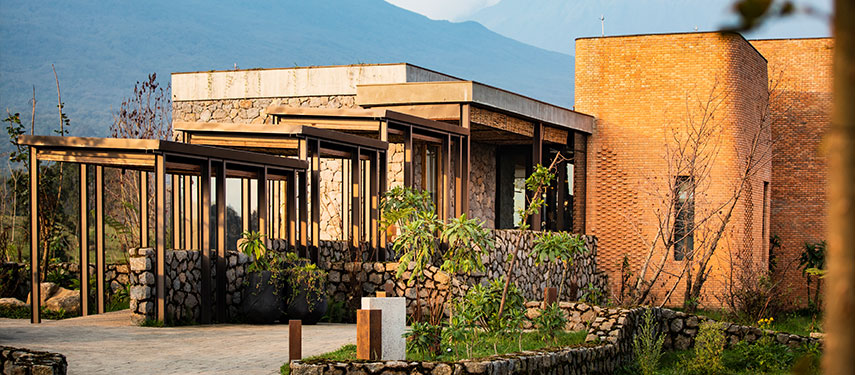
Gorillas with Singita
Inspiration Itinerary | Soul-centering organic rawness
Encountering gorilla families in their natural habitat in Rwanda's Volcanoes National Park is enhanced beyond measure whilst being accommodated in one of Africa's newest and arguably most breathtaking and sustainable lodges....Read More
Gorillas with Sabyinyo
Inspiration Itinerary | Misty Mountain Luxury
Comfort is key after trekking Rwanda's Mountain Gorillas, and Sabyinyo Silverback Lodge offers everything you need from high up in the mighty volcanic Virunga Mountains. It is also an idyllic base from which to fully explore this lush and magical region....Read More
Rwanda: Frequently Asked Questions
Gorilla trekking permits are among the most in-demand wildlife experiences in Africa. With just 96 permits issued daily across eight habituated gorilla families in Volcanoes National Park, availability fills quickly — particularly during the dry season. For travel between June and September, or December and February, booking 6–12 months in advance is strongly recommended. Classic Safari Company manages permit acquisition as part of each bespoke itinerary.
Rwanda can be visited year-round, but the two dry seasons offer the most reliable trekking conditions. The long dry season from June to September is the most popular, with firmer mountain trails and good visibility. The short dry season from December to February is quieter and often excellent value. The wet seasons (March to May and October to November) bring intensely lush scenery and fewer crowds, though trails can be steep and muddy.
Trekking in Volcanoes National Park involves hiking through steep, dense mountain rainforest at altitudes between 2,500 and 4,000 metres. Duration varies from one to six hours depending on where the gorilla family has ranged. A reasonable level of fitness is advisable, though guides set a manageable pace and rest stops are permitted. Porters are available for hire at the trailhead — a worthwhile investment that directly supports the local community.
Unlike a standard trek — which allows one hour with a fully habituated gorilla family — the Gorilla Habituation Experience involves spending up to four hours with a family that is still in the process of becoming accustomed to human presence. This extended, more fluid encounter is particularly rewarding for wildlife photographers and travellers seeking deeper engagement. Fewer permits are available for this experience, making it even more important to book well ahead.
Yes, and this is one of Rwanda’s most distinctive advantages as a destination. Akagera National Park in eastern Rwanda supports lion, leopard, elephant, buffalo, and black rhinoceros — meaning gorilla trekking in the northwest and a Big Five safari in the east can be built into a single Rwanda journey without crossing any borders. Very few African destinations offer this combination in one compact, efficient itinerary.
Both countries share the Virunga ecosystem and offer outstanding gorilla encounters, but the experiences differ in character. Rwanda’s Volcanoes National Park is compact and well-organised, with some of Africa’s most luxurious lodges positioned directly beside the park boundary — ideal for travellers who want exceptional comfort alongside their wildlife experience. Uganda’s Bwindi Impenetrable Forest is more remote and rugged, suiting those combining gorillas with a broader East African itinerary. Rwanda generally commands higher permit costs and lodge rates, but the infrastructure, accessibility, and calibre of properties make it the premium choice.
Rwanda: A Glossary of Terms
- Volcanoes National Park — Rwanda’s flagship national park in the northwest of the country, established to protect the habitat of mountain gorillas across five of the eight volcanoes of the Virunga Massif; the base for all gorilla trekking and golden monkey tracking in Rwanda.
- Silverback — The dominant adult male of a mountain gorilla family group, identifiable by the distinctive silver-grey saddle of hair across his back; the protector and primary decision-maker of the troop, and the animal most encountered during a gorilla trek.
- Habituated Gorilla Family — A gorilla group that has undergone a carefully managed multi-year process of gradual exposure to human presence, enabling guided travellers and researchers to observe them at close range without causing stress or behavioural disturbance.
- Gorilla Habituation Experience — An extended permit (up to four hours with a gorilla family still being habituated) distinct from the standard one-hour gorilla trek; issued in limited numbers in Volcanoes National Park and favoured by photographers and dedicated wildlife travellers.
- Karisoke Research Centre — A field research station established by primatologist Dian Fossey in 1967 between the Karisimbi and Visoke volcanoes; the site of some of the most significant mountain gorilla research in history, and the location of Fossey’s grave.
- Virunga Massif — A chain of eight volcanoes straddling the borders of Rwanda, Uganda, and the Democratic Republic of Congo; the primary habitat of the critically endangered mountain gorilla and one of Africa’s most biodiverse highland ecosystems.
- Akagera National Park — Rwanda’s savannah national park in the east of the country, restored to full Big Five status following the successful reintroduction of lion and black rhinoceros, and home to significant populations of elephant, buffalo, leopard, hippopotamus, and more than 500 bird species.
- Golden Monkey — A critically endangered subspecies found only in the bamboo forests of the Virunga Massif; trackable in Volcanoes National Park as a compelling companion activity to gorilla trekking, with a smaller and more nimble group size making for a very different primate encounter.
- Nyungwe Forest National Park — One of Africa’s oldest and most biodiverse montane rainforests, in southwest Rwanda; home to 13 primate species including chimpanzees and Angola colobus monkeys, over 300 bird species, 100 varieties of orchid, and a celebrated canopy walkway above the forest floor.
- Kwitonda — The name of a celebrated silverback gorilla in Volcanoes National Park, renowned locally for his gentle temperament; kwitonda means “to be humble” in Kinyarwanda. The name identifies one of the park’s habituated gorilla families and is the namesake of Singita Kwitonda Lodge.
An absolutely fantastic travel company - every one of the many trips they have organised for us over 22 years have been faultless and fabulous.
Judith & Roger Williams
Would do it all again and not change a moment. Best holiday ever!
The McGowan Tribe
It certainly was the best trip we have EVER had. The experiences were mind blowing. We want everyone we know to experience Africa - the animals, the people - magical.
Jo-anne & Dean Mifsud
The Classic Safari Company is the best I have dealt with. Extremely knowledgeable & professional, friendly, patient & understanding of first timers to Africa.
Annette Whiley
Classic Safari Company were brilliant - 10/10
Di & Kingsley Yates
Classic Safari is the place to go to for "top end" adventure travel.
Ron & Alison Guthrie
If you want the most sensational experience in Africa let Julia and the staff at Classic Safari Co plan it for you! Their knowledge, expertise and enthusiasm for their job means your every wish will be fulfilled.
Miriam & Joseph Harrison
Their experience and knowledge of Africa is evident and we couldn't have been happier with the total package. This has given us a taste for Africa - now we are ready for more.
Andrew & Pip Stevens
Classic Safari Company has done it again! A unique experience that ticked all the boxes - wildlife, culture and dining experience. A dream come true!
Ros Wheeler
Absolutely everything was first class & so well organised.
Simon & Jackie Adams
The trip of a lifetime, couldn't have dreamt of a better adventure if I tried.
Emma Jeffcoat
You can't improve on perfection. I had my best birthday and holiday with my family celebrating my 80th birthday in Africa. Everything that Julia organised was perfect and the whole trip was a highlight!
Buckingham Family
Everything was perfect! Advice and information on destinations and activities hit everything I had hoped to experience. I contacted the Classic Safari Company upon recommendation and have now, in turn, recommended to others.
Tim Bradley
Very knowledgeable and patient. Our trip was all that we hoped for. Wonderful!
Jane & Robert Happell
Thank you for making our trip to Africa so spectacular. The attention to detail really made it special. It really was the trip of a lifetime.
Paul Cozzi
An amazing experience - the best family holiday we have ever had. We were extremely impressed by the meticulous attention to our itinerary. I can't speak highly enough of all the elements of this exciting journey!
Sheryl & Robert Taylor
We loved it all. Our son wants to go back tomorrow. We would ALL go back again!
Laurence & Remi Cunningham
Classic Safari are the people who genuinely know other culture and offer incredible insight to perfectly meet your expectations.
Melanie McMillan & Iain Jones
The trip exceeded my expectations and was the best family holiday I have ever had. Our children simply loved it and now I know more about African wildlife than they do about our own farm animals.
Rowntree family
We are so happy we put our trust in CSC, we had an amazing adventure and would recommend them to anyone.
Kim & Brad Balance
Julia you did a fantastic job - everything was first class. Well organised, efficient and stress free. We all agreed it was the best holiday we've ever had. Cant wait to travel with CSC again.
Milford family
We wanted the opportunity to see as many wildlife parks as possible and the Classic Safari Company provided an action-packed itinerary that included six, with 11 tiger sightings and nine leopard. This was overlaid with an introduction to Jaisalmer, Jaipur and the 'real' India. Pench and Panna were the hidden gems of a really great trip, very well organised, seamless and enjoyable. As a solo traveller I felt incredibly safe at all times. I want to go back!
Mark Taylor
Exellent and wonderful, reaching way above expectations.
Elizabeth Mackintosh
Thank you for putting together the ancestral adventure of a lifetime. I cannot speak highly enough of the trip.
Jenny Kidd