
Uganda
The Pearl of Africa
Discovering Uganda | In Summary
- Uganda hosts more non-human primate species than any comparably sized country in Africa — thirteen in total — with gorillas, chimpanzees, colobus monkeys and red-tailed monkeys all frequently encountered within a single itinerary, making it uniquely rewarding for primate-focused travellers.
- Over 1,060 bird species have been recorded in Uganda — more than the entirety of North America, in a country smaller than New Zealand — with the prehistoric shoebill stork, endemic to papyrus swamps around Lake Victoria and Murchison Falls, topping most serious birders’ lists.
- Uganda offers two distinct gorilla encounters: the standard one-hour visit on a conventional trekking permit, and the Gorilla Habituation Experience in Rushaga — a full-day immersion with a family still undergoing habituation to human presence, limited to just four visitors per day and among the most exclusive wildlife encounters on the continent.
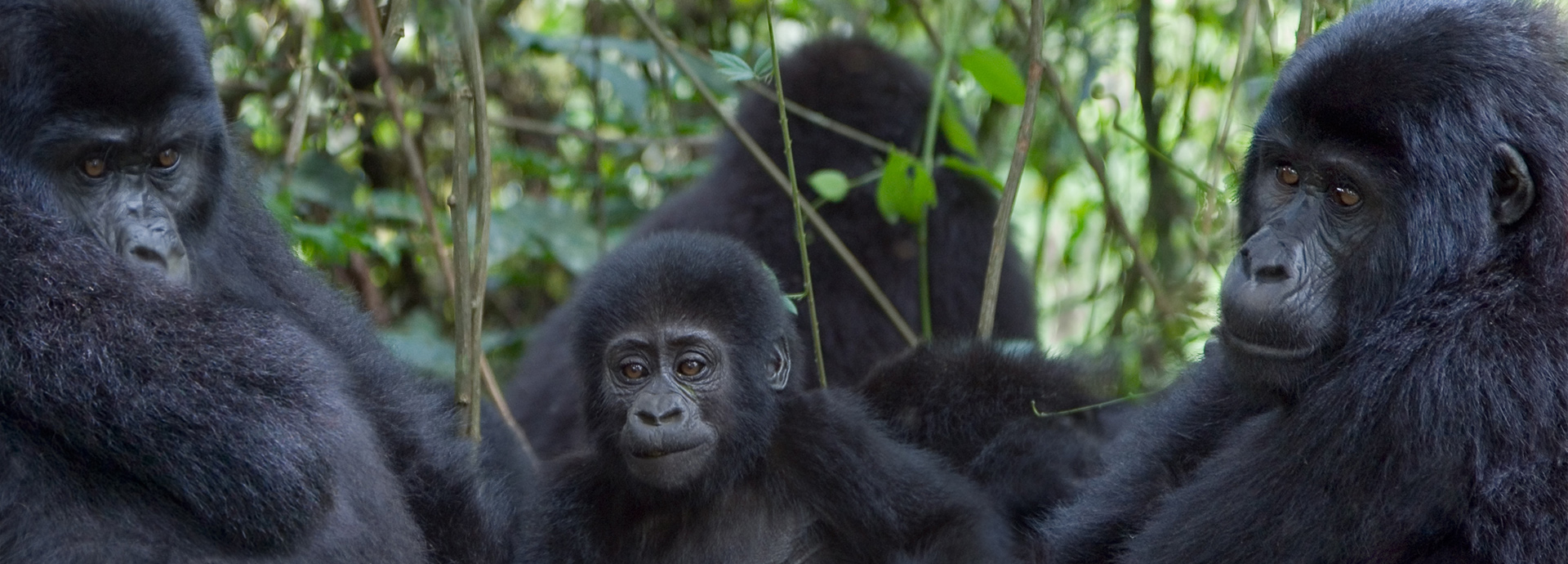
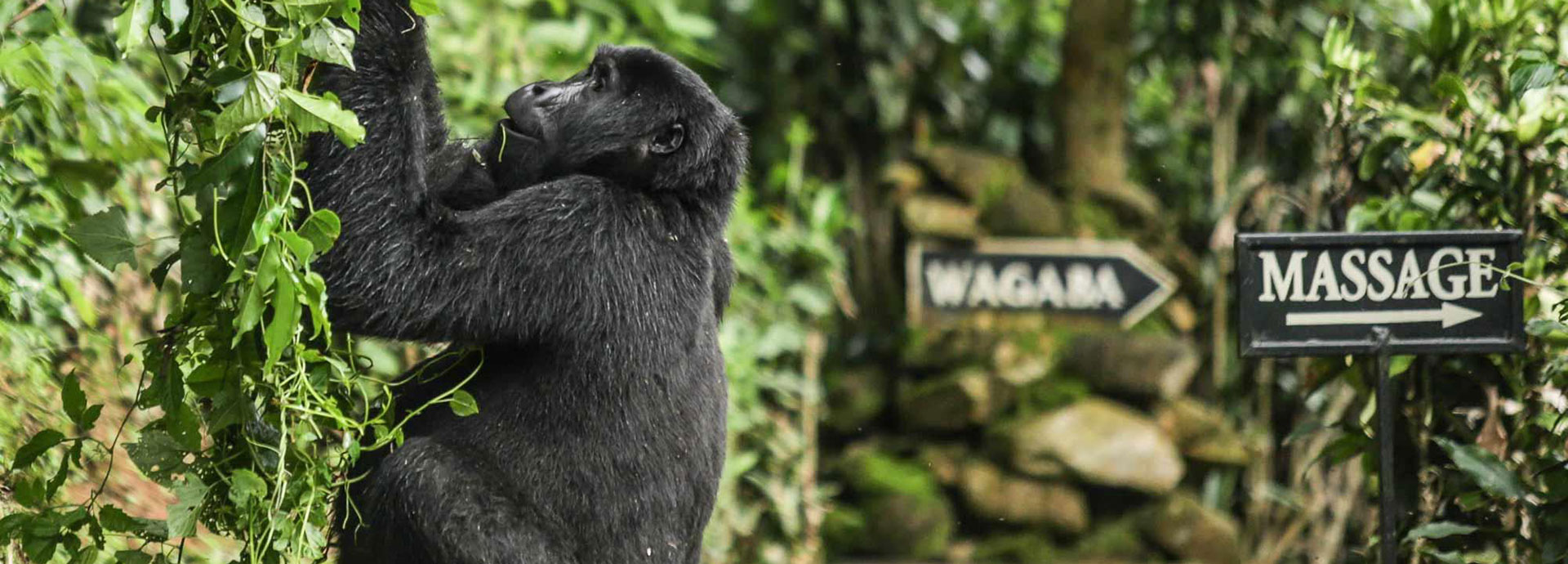
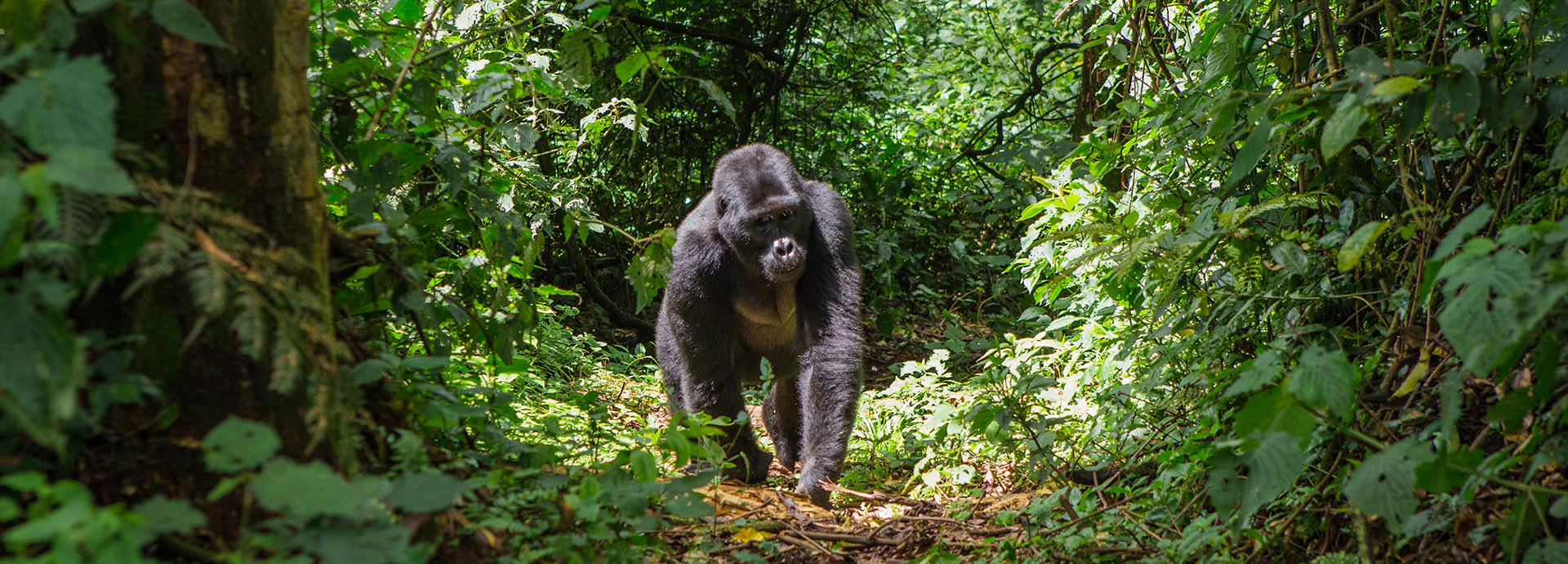
Uganda lays claim to an astonishing number of primate species, some of the richest birding in Africa, plenty of plains game and some elusive and unusual big cats. No other country in Africa ticks all these boxes. The stunning ‘Mountains of the Moon’ are mist-swathed volcanoes that tower above Bwindi Impenetrable Forest where half of the world’s remaining 600-odd mountain gorillas live. As its evocative name suggests, the rainforest is a dense jungle of thick undergrowth and hanging vines concealing not only gorillas, but also colobus monkeys, exotic birdlife and clouds of colourful butterflies.
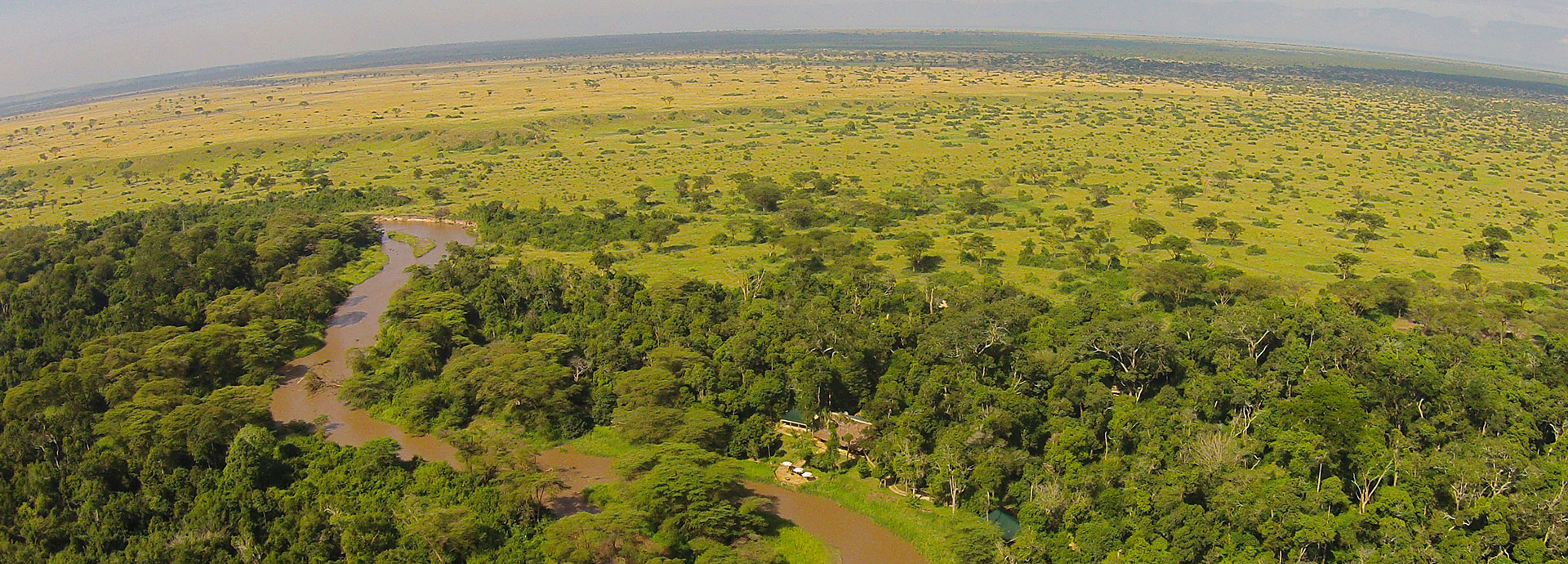
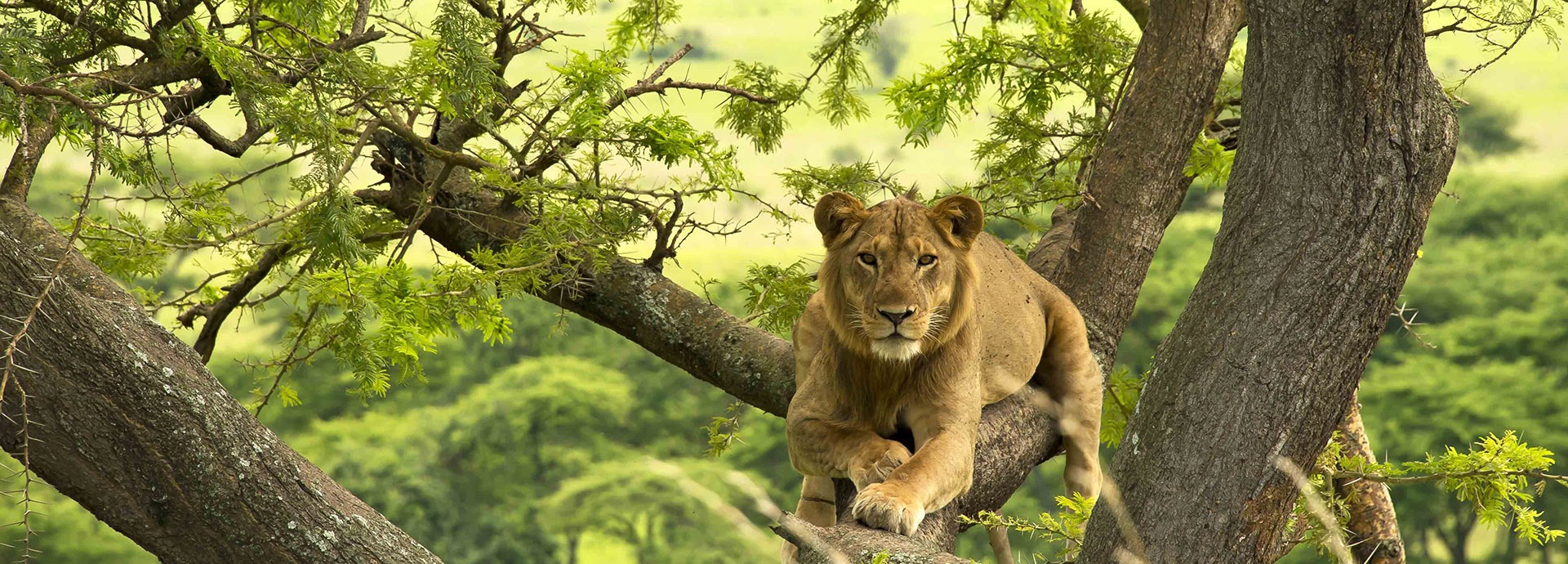
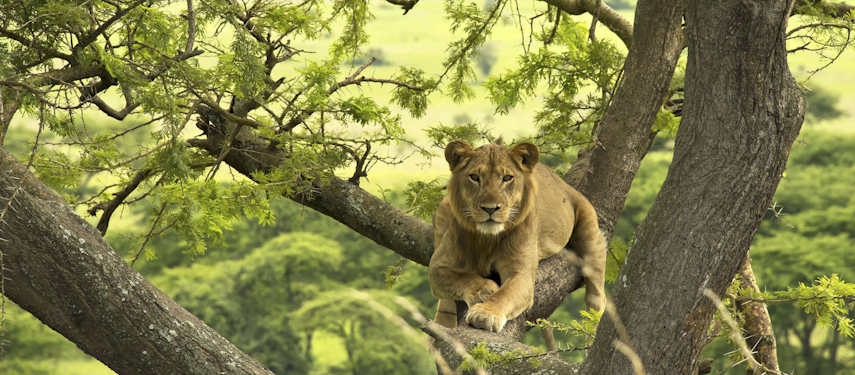
Whilst Uganda’s primary attraction is its primates it also showcases shy sitatunga, great herds of Uganda kob, spotted hyena & leopard in Queen Elizabeth National Park. Tree-climbing lions can be seen in Ishasha, chimpanzees exist in Kibale and there are elephants, hippos & waterbirds galore on the Kazinga Channel. Jinja boasts the source of the Nile and Murchison Falls National Park offers spectacular waterfalls and some of the most exhilarating white water in Africa. Known as the ‘Pearl of Africa’ Uganda offers far more than just primates.
You Will Love
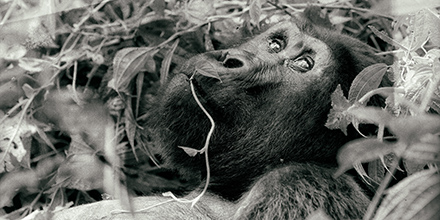
• Gorillas, gorillas, gorillas!
• Chimpanzees in Kibale Forest
• The climbing lions of Ishasha
• Exceptional birding
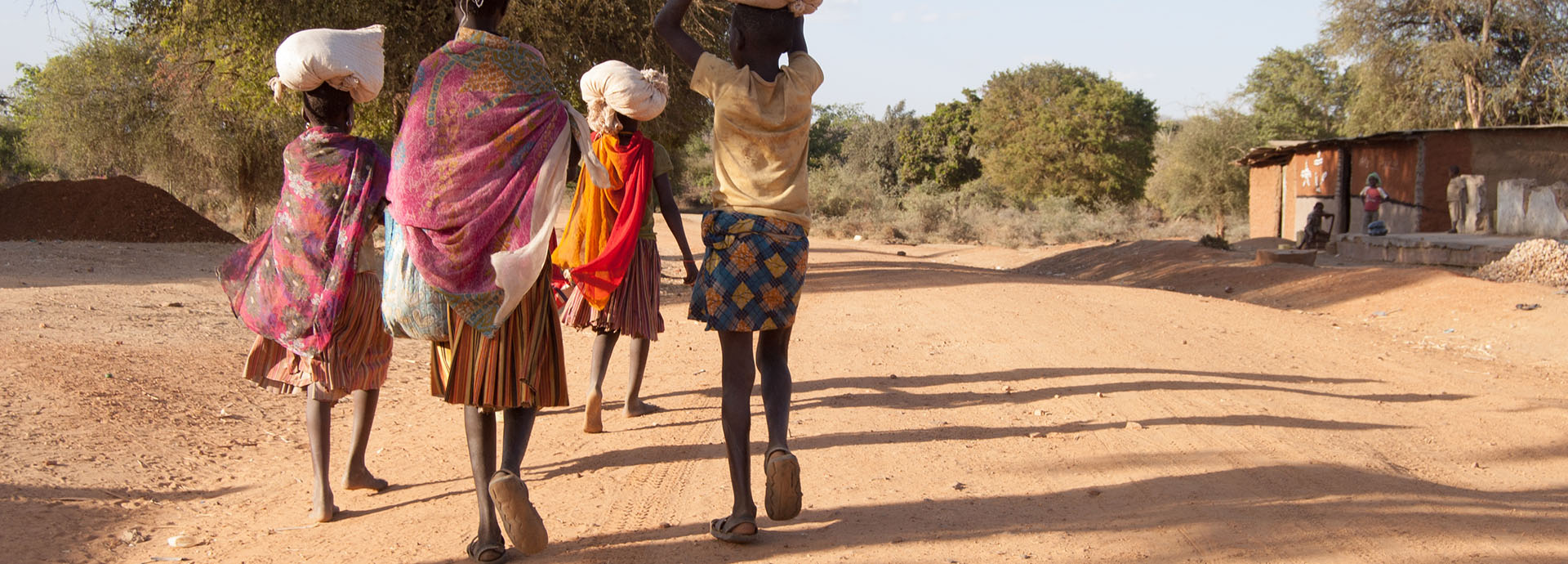
• Fabulously friendly people
Let us design your perfect itinerary.
Unforgettable experiences in Uganda
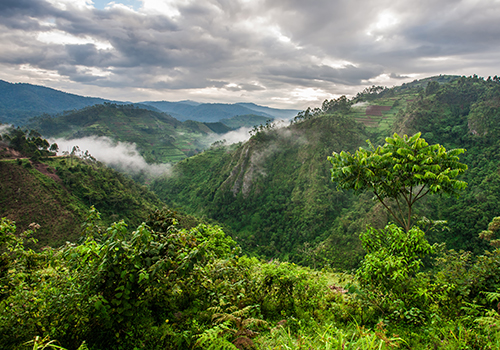
Penetrate the Bwindi impenetrable Forest
Penetrate the Bwindi impenetrable Forest
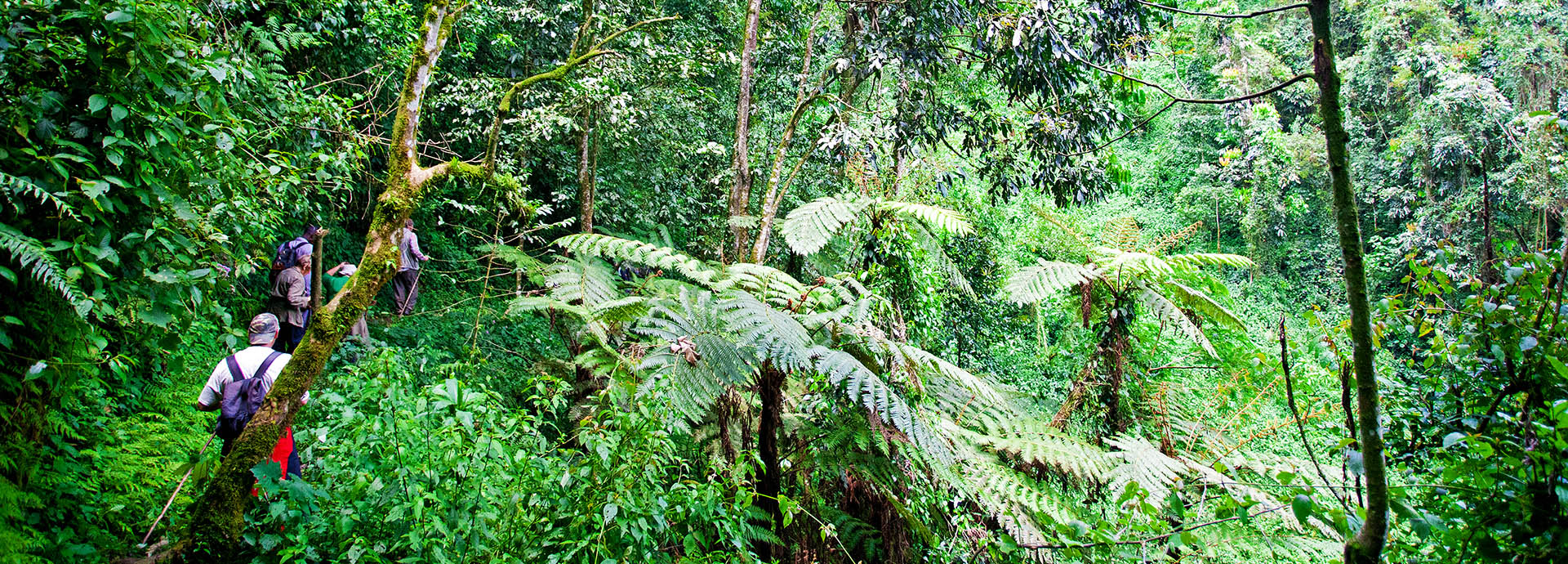
An ancient path that has been used for thousands of years leads through the forest from Buhooma in the north to Nkuringo in the south of Bwindi. The ivy river trail runs for 14kms through thick jungle and takes about 7 hours to hi...
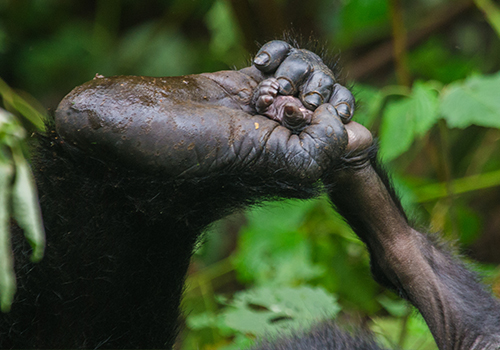
Track Mountain Gorillas
Track Mountain Gorillas
One of the most amazing wildlife experiences in Africa is coming face to face with a family of mountain gorillas. The estimated number of mountain gorillas remaining in the wild is just 1,000. It is no wonder that an encounter wit...
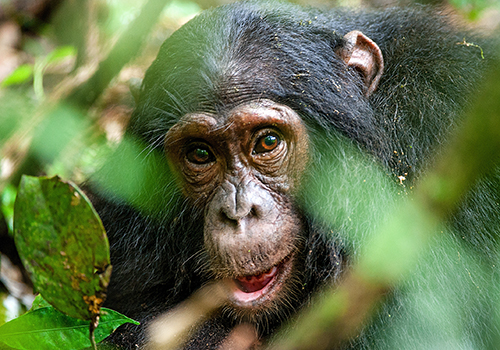
Hang out with wild chimpanzees
Hang out with wild chimpanzees
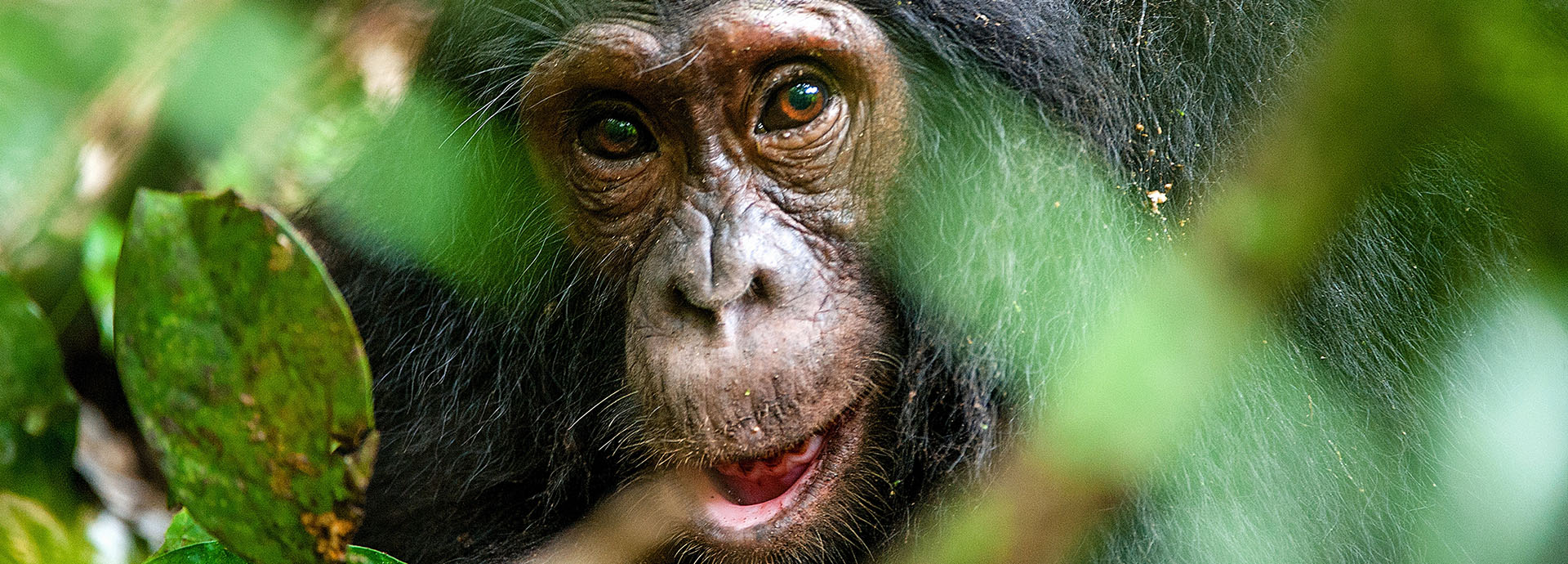
There are several places in Uganda to track chimpanzees including Budongo Forest Reserve, Queen Elizabeth National Park and Toro-Semliki Wildlife reserve, but the best known is Kibale Forest National. Here, the chimps are wild but...
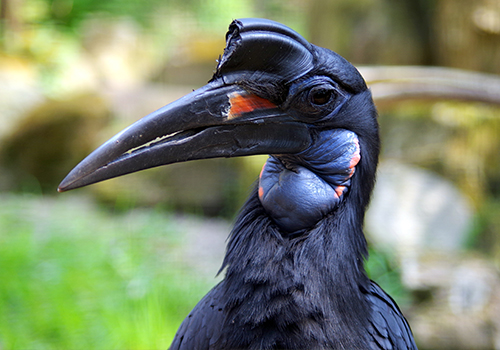
Admire exotic birds in Kidepo Valley National Park
Admire exotic birds in Kidepo Valley National Park
With more than 475 recorded species in Kidepo Valley National Park, it has become a birdwatcher’s paradise destination. Kidepo is Uganda's most remote national park and is a place of scenic beauty, prolific game and, perhaps mos...
A selection of our favourite places to stay in Uganda
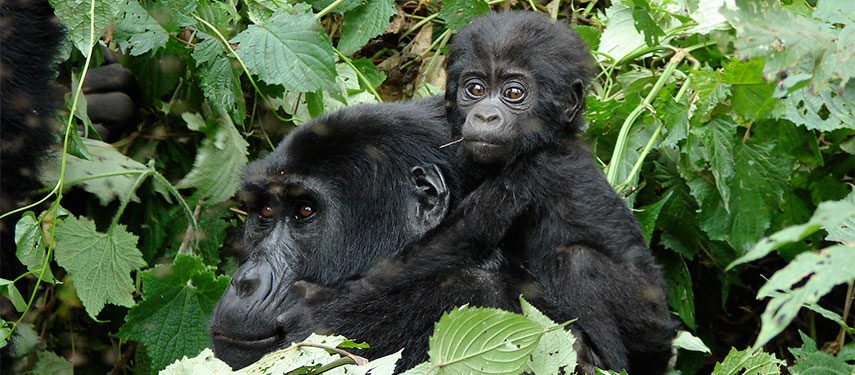
Clouds Mountain Gorilla Lodge – Bwindi Impenetrable Forest
Gorillas in the mist
Clouds Mountain Gorilla Lodge borders Bwindi National Park offering guests an unrivalled location for their gorilla tracking experience. At over 2,000m of altitude, it is Uganda’s highest lodge with views stretching all the way to the Virunga Volcanoes.... Read More
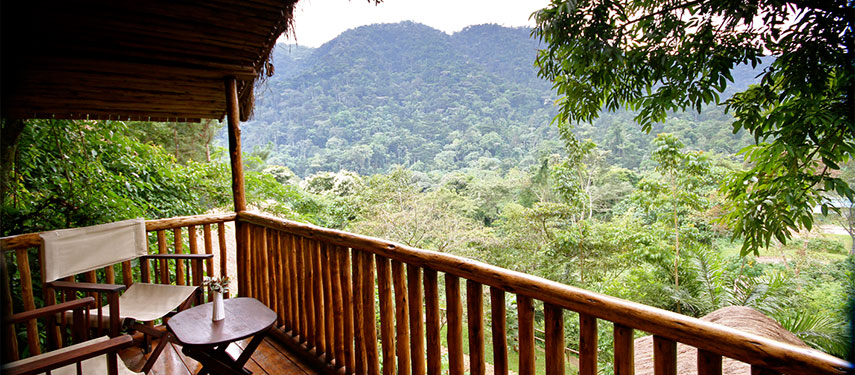
Buhoma Lodge – Bwindi Impenetrable Forest
Gorillas galore
Buhoma Lodge commands uninterrupted views of Bwindi Impenetrable Forest National Park, home to the rare mountain gorilla. Ten comfortable, rustic cottages have been sustainably built, each with its own private veranda, allowing wonderful views of the forest canopy. It is just a short distance from the meeting point for gorilla tracking, placing you perfectly for a primate safari.... Read More
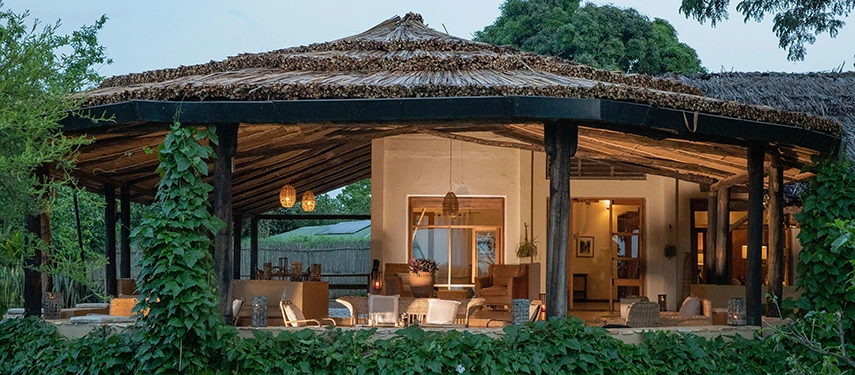
Kyambura Gorge Lodge – Queen Elizabeth National Park
Endless Views
Kyambura Lodge is situated at the eastern side of Queen Elizabeth National Park with fantastic views over the national park and Rwenzori Mountains. The lodge places you perfectly for tracking chimpanzees amidst a plethora of mammal and bird species.... Read More
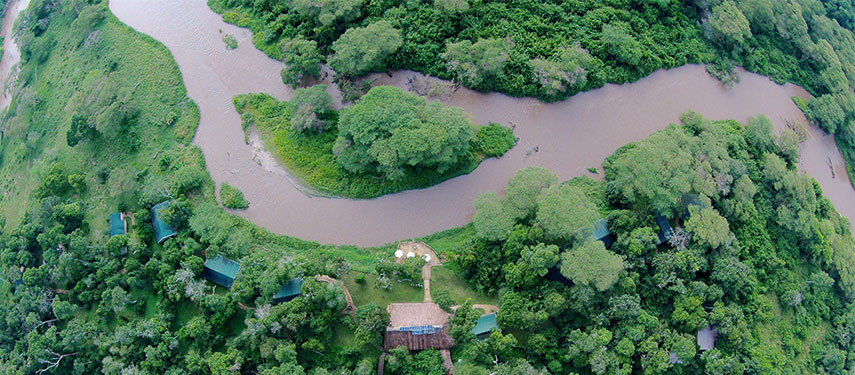
Ishasha Tented Camp – Queen Elizabeth National Park
Tree-climbing lions
Ishasha Wilderness Camp is situated in the Queen Elizabeth National Park beside the idyllic Ntungwe river. Its remote location is famous for tree climbing lions, elephant sightings are also very good here, and the birding is excellent.... Read More
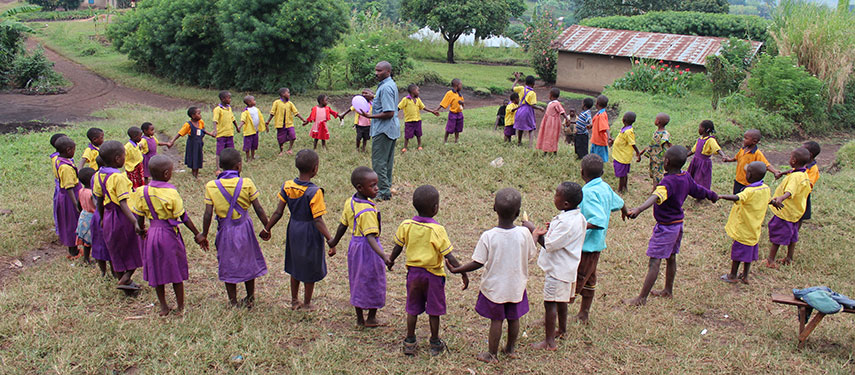
Ndali Lodge – Kibale National Park
Views from a volcano
Perched on the rim of an extinct volcano overlooking a flooded caldera, Ndali Lodge is set on a working tea estate close to Kibale Forest, home to five habituated groups of chimpanzees. Tracking these charismatic creatures on foot is a incredible experience.... Read More
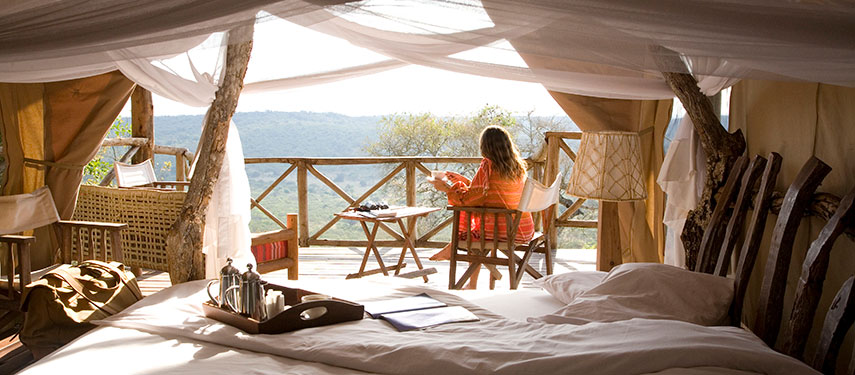
Mihingo Lodge – Lake Mburo
Relaxed safari retreat
Mihingo Lodge is a peaceful and exclusive retreat situated on 200 acres of private land, on a rocky bluff overlooking Lake Mburo National Park in Western Uganda. While here opt for boat trips on Lake Mburo, walks on the savannah, game drives and horseback safaris.... Read More
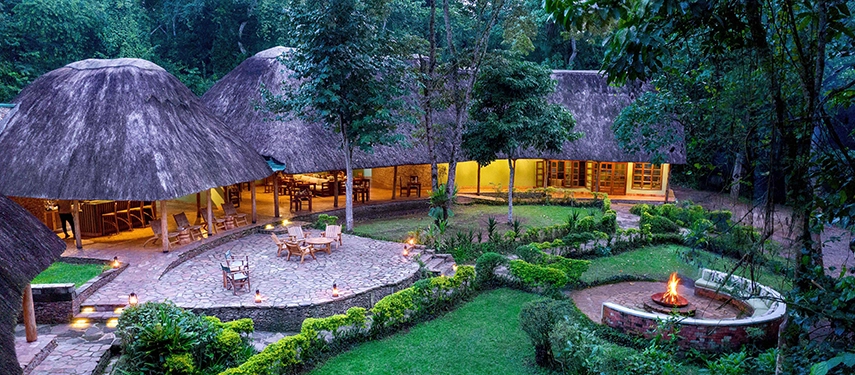
Primate Lodge – Kibale National Park
Relaxed safari retreat
Primate Lodge is an impressive eco‐lodge located within Kibale National park. Set amongst flourishing tropical rainforest it offers a range of comfortable en suite cottages. Here you will see the greatest variety and concentration of primate species found anywhere in Africa.... Read More
A collection of safaris in Uganda
Uganda: Gorillas & Game
Inspiration Itinerary | Primates, Birds & Wildlife
For genuine enthusiasts of all things nature look no further than this variety-packed adventure! Whether you consider yourself to be an 'old hand' when it comes to African safaris or if you have never set foot in it before, Uganda will stand out in your memory for all the right reasons....Read More
Uganda: Frequently Asked Questions
Uganda can be visited year-round, but the dry seasons — June to September and December to February — are generally preferred for gorilla trekking. Trails are less slippery, vegetation is slightly more open and gorillas tend to range at lower elevations, making tracking somewhat easier. That said, the wet season brings vivid green landscapes, fewer crowds and a richer atmosphere inside the forest. Uganda’s equatorial climate means gorillas are active and accessible in every month of the year.
Gorilla trekking permits are issued by the Uganda Wildlife Authority and are required for every visitor. Each permit allows one hour with a habituated gorilla family, with a maximum of eight visitors per family per day. Demand regularly exceeds supply — particularly for peak season departures — and we strongly recommend securing permits six to twelve months in advance. Classic Safari Company handles all permit bookings on behalf of our clients as part of the itinerary planning process.
The level of effort varies considerably depending on where gorillas are ranging on the day. Bwindi Impenetrable Forest lives up to its name: trails are steep, often muddy and require scrambling through dense undergrowth. Treks can range from two to eight hours. A reasonable level of fitness is advisable, though porters are available to assist with bags and to support less mobile visitors on the trail. No prior trekking experience is necessary, and CSC will brief clients thoroughly on what to expect.
Uganda rewards those who look beyond primates. Queen Elizabeth National Park offers leopard, elephant, buffalo, hippo and the famous tree-climbing lions of Ishasha; the Kazinga Channel delivers exceptional boat-based wildlife viewing; Murchison Falls — where the entire force of the Nile is compressed through a seven-metre gap — is one of the continent’s great natural spectacles; and Kidepo Valley in the far north, Uganda’s most remote park, delivers Abyssinian ground hornbills, the Karamoja Apalis and a raw, untouristy wilderness atmosphere found nowhere else in East Africa.
Yes — and it is a natural pairing. Both countries protect mountain gorillas, and combining them allows travellers to experience different habituated families in contrasting landscapes. Rwanda’s Volcanoes National Park borders the Bwindi region, and the overland or short-hop flight transfer is straightforward. A combined itinerary typically adds golden monkey tracking and Nyungwe Forest chimpanzees on the Rwanda side. Classic Safari Company designs seamless cross-border programmes for clients wishing to explore both countries in a single journey.
The Gorilla Habituation Experience (GHE) is a premium alternative to standard gorilla trekking, available only in the Rushaga sector of Bwindi Impenetrable Forest. Rather than one hour, participants spend up to four hours with a gorilla family still in the process of becoming fully accustomed to human observers. Only four visitors are permitted per day, making it one of Africa’s most exclusive wildlife encounters. The GHE demands a higher level of fitness and patience, but rewards visitors with intimate, unhurried observation of gorilla behaviour rarely possible on a standard permit.
Uganda: A Glossary of Terms
- Gorilla Habituation Experience (GHE) — A premium gorilla encounter in Bwindi’s Rushaga sector in which visitors spend up to four hours with a semi-habituated gorilla family; limited to four participants per day and distinct from the standard one-hour trekking permit.
- Bwindi Impenetrable National Park — A UNESCO World Heritage Site in south-western Uganda protecting one of Africa’s oldest and most biodiverse rainforests; home to approximately half of the world’s remaining mountain gorilla population, divided across four trekking sectors: Buhoma, Ruhija, Nkuringo and Rushaga.
- Uganda Wildlife Authority (UWA) — The government body responsible for managing Uganda’s national parks and issuing gorilla trekking permits; the sole authority for permit allocation across all habituated gorilla families in Bwindi and Mgahinga Gorilla National Park.
- Shoebill Stork — A large, prehistoric-looking bird endemic to Central and East African papyrus swamps and one of the world’s most sought-after avian sightings; key Uganda viewing locations include Mabamba Swamp on Lake Victoria and the wetlands of Murchison Falls National Park.
- Kazinga Channel — A 40-kilometre natural waterway connecting Lakes Edward and George within Queen Elizabeth National Park; renowned for some of Africa’s highest concentrations of hippos and waterbirds, and best experienced by guided boat safari.
- Sitatunga — A semi-aquatic antelope with splayed hooves adapted for marshy terrain; one of Uganda’s more elusive plains species, found in papyrus and wetland habitats and most reliably seen by boat along the Kazinga Channel.
- Uganda Kob — Uganda’s national antelope and a common savannah species in Queen Elizabeth and Murchison Falls national parks; males defend clustered mating territories known as leks, producing striking concentrations of wildlife during the breeding season.
- Kibale Forest National Park — A mid-elevation tropical forest in western Uganda protecting the highest density of primates found anywhere in Africa, including thirteen species; best known for its habituated chimpanzee communities and the adjoining Bigodi Wetland Sanctuary.
- Kidepo Valley National Park — Uganda’s most remote national park, situated in the far north near the South Sudan border; receives comparatively few visitors despite extraordinary wildlife and bird diversity, including over 475 recorded species and approximately 60 endemics found nowhere else in Uganda.
- Mountains of the Moon (Rwenzori) — The Rwenzori Range straddling Uganda’s western border with the DRC; Africa’s third-highest massif and one of the continent’s few permanently glaciated mountain ranges, offering multi-day trekking routes to Margherita Peak at 5,109 metres.
We had a fantastic trip through Uganda which was perfectly planned and implemented. The staff associated with our trip was exceptional, from the planning to the very service we received. Fabulous!
Christine & Bruce Laing
Jeffrey organised a seamless trip for us and we enjoyed every single minute. Uganda is stunning, you would never regret visiting. 100% recommendation for the Classic Safari Company!
Steven & Sarah Bird
Their experience and knowledge of Africa is evident and we couldn't have been happier with the total package. This has given us a taste for Africa - now we are ready for more.
Andrew & Pip Stevens
Classic Safari Company has done it again! A unique experience that ticked all the boxes - wildlife, culture and dining experience. A dream come true!
Ros Wheeler
Julia you did a fantastic job - everything was first class. Well organised, efficient and stress free. We all agreed it was the best holiday we've ever had. Cant wait to travel with CSC again.
Milford family
You can't improve on perfection. I had my best birthday and holiday with my family celebrating my 80th birthday in Africa. Everything that Julia organised was perfect and the whole trip was a highlight!
Buckingham Family
Classic Safari is the place to go to for "top end" adventure travel.
Ron & Alison Guthrie
Thank you for making our trip to Africa so spectacular. The attention to detail really made it special. It really was the trip of a lifetime.
Paul Cozzi
The Classic Safari Company is the best I have dealt with. Extremely knowledgeable & professional, friendly, patient & understanding of first timers to Africa.
Annette Whiley
Thank you for putting together the ancestral adventure of a lifetime. I cannot speak highly enough of the trip.
Jenny Kidd
Classic Safari Company were brilliant - 10/10
Di & Kingsley Yates
Everything was perfect! Advice and information on destinations and activities hit everything I had hoped to experience. I contacted the Classic Safari Company upon recommendation and have now, in turn, recommended to others.
Tim Bradley