





Colombia
Resurgent Latin America
Colombia | In Summary
- Colombia holds the world record for avian diversity with approximately 1,950 documented bird species across its five ecological zones — more than the entire continent of North America — making it the undisputed global capital of birdwatching.
- Australian travellers require no visa to enter Colombia and may stay up to 90 days, making it one of the most accessible long-haul destinations in Latin America for spontaneous, extended or multi-region itineraries.
- The Llanos — Colombia’s vast eastern savannah — delivers a wildlife spectacle to rival the African plains, with giant anteaters, anacondas, capybaras, caimans and pumas roaming a landscape that floods dramatically each wet season to concentrate extraordinary concentrations of wildlife.
It is often said that in Colombia you get five destinations for the price of one: the Pacific Coast, the Andes, the Amazon, the eastern plains and the Caribbean. Across the country this diversity has given rise to one of the most impressive and innovative gastronomic scenes of the world as modern chefs turn natural abundance and rare ingredients upside down.
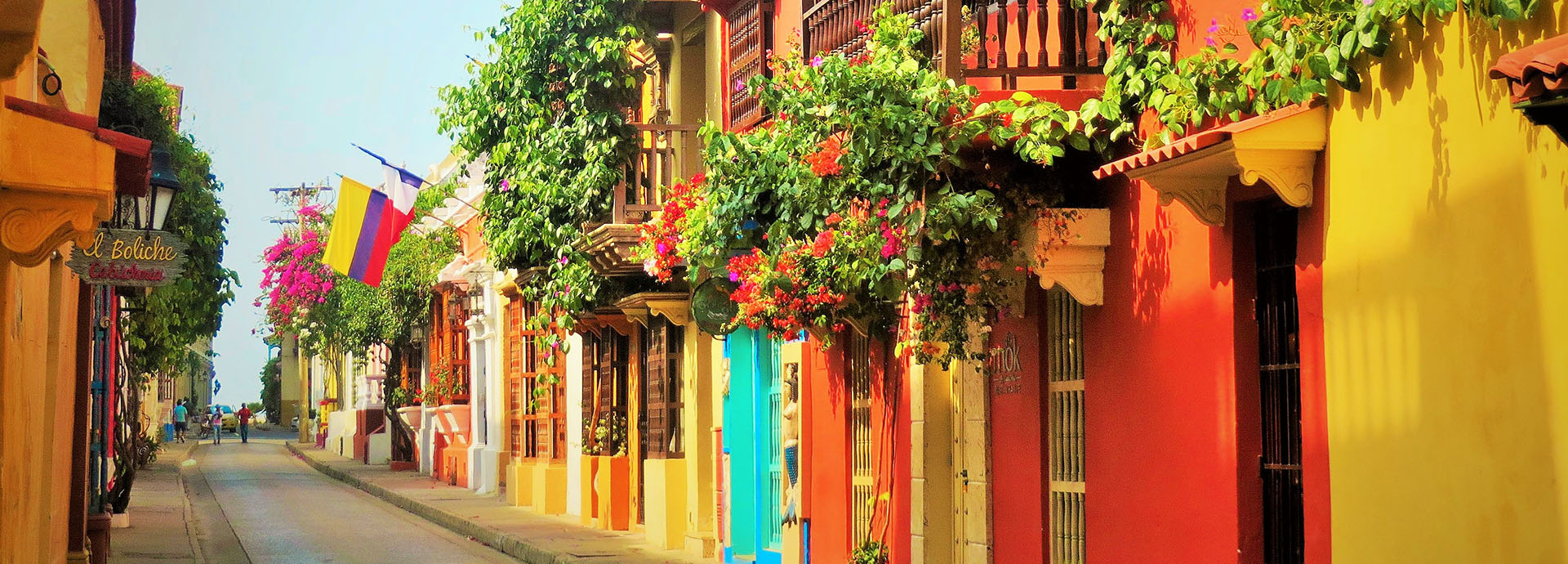
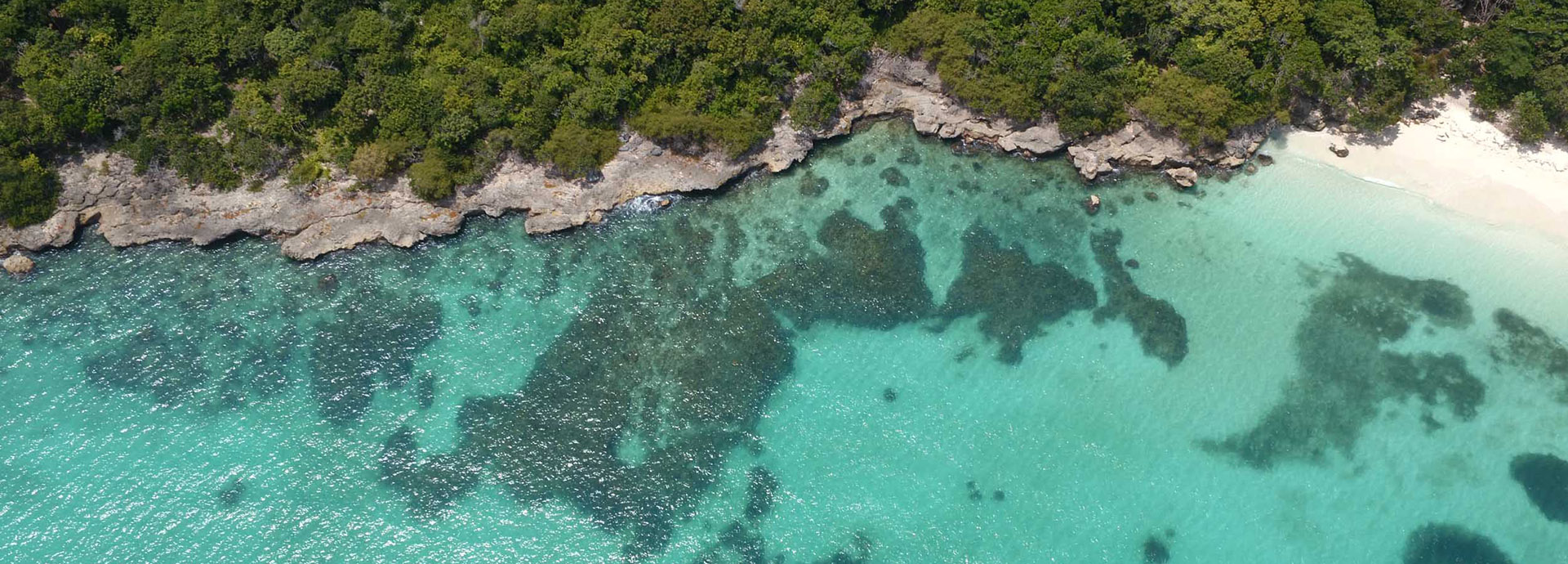
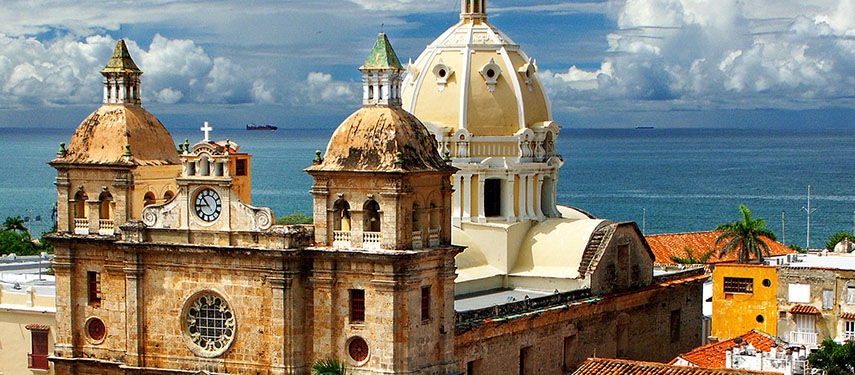
Perched alongside the sparkling Caribbean, the UNESCO World Heritage colonial town of Cartagena is considered the prettiest and best-preserved colonial city in South America with its colourful streets of mansions, bougainvillea-clad balconies and cobbled colonial charm. In the capital, Bogota, visit the Gold Museum’s immense wealth of artefacts, take the cable car to the top of Monserrate for breathtaking vistas and sample rare, exotic fruits at the famous Paloquemao Market. Known as the ‘City of Eternal Spring’, Medellin beats to the salsa rhythms of a lively cultural scene while the pre-Hispanic town of Pueblito harbours the ruins of a lost city built by the Tayrona people. Away from the cities explore the jungle-fringed coastline, take an expedition into the Amazon and spot some of the 1,850 species of native birds. And once you are done exploring enjoy afternoon siestas in a hammock, shaded by coconut palms, on one of the many hundreds of white-sand beaches!

You Will Love
- Jungle covered Caribbean coast
- Picturesque colonial Cartagena
- Gold Museum in colourful Bogota
- Salsa dancing in Medellin
- Coffee rich cloud forests
- Innovative gastronomy
Let us design your perfect itinerary.

Unforgettable experiences in Colombia
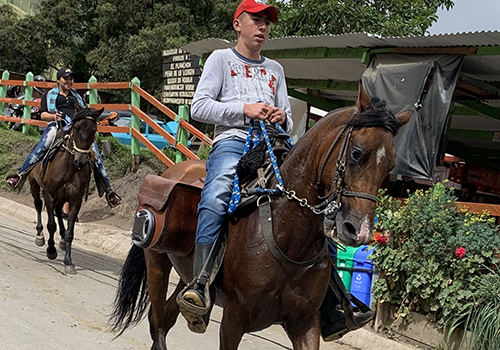
Hike to remote civilisations in Pueblito
Hike to remote civilisations in Pueblito
A snaking pathway leads through the foothills of Tayrona National Park offering spectacular views and silence broken only by the chatter of birdsong. Pueblito harbours the ruins of a lost city built by the Tayrona people and upon ...
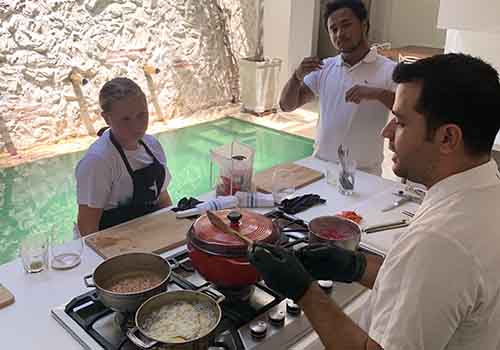
Cook Colombian cuisine in Cartagena
Cook Colombian cuisine in Cartagena
Spend time with one of the city’s most renowned chefs, learning their recipes and hearing the fascinating stories and secrets behind each dish. You’ll begin by visiting the largest market of Cartagena, Bazurto, with the chef t...
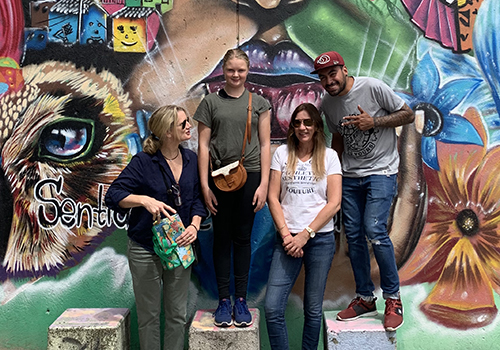
Visit the gold museum in Bogota
Visit the gold museum in Bogota
With a permanent exhibition of some 32,000 pieces of gold, plus 20,000 stones, ceramics and textiles to see, the Gold Museum in Bogota has the largest collection of artefacts in the world. These are precious to the Quimbaya, Calim...
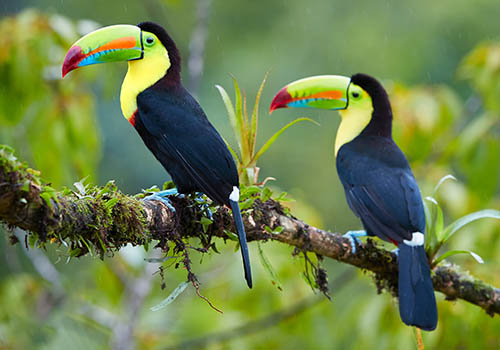
Birdwatch in Tayrona National Park
Birdwatch in Tayrona National Park
Across its diverse ecosystems, Colombia boasts over 1,900 bird species - more than any other country in the world. Delving into the lush rainforest of Tayrona National Park, you’ll find unmatched avian diversity. In the company...

A selection of our favourite places to stay in Colombia

Four Seasons Casa Medina – Bogota
Colonial elegance
Set in Zona T, where the city’s high society comes to see and be seen, the Four Seasons provides a welcoming haven in the city that never sleeps. Housed in a historic apartment building, originally built in 1946, the Four Seasons is one of Bogota’s most intimate hotels with many of Bogotá’s top attractions on your doorstep.... Read More
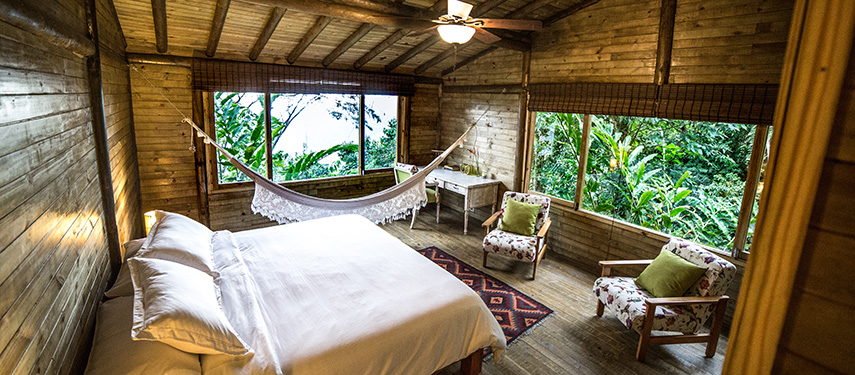
Casa Galavanta – Sierra Nevada
Cloud forest escapism
Casa Galavanta enjoys a truly spectacular location deep within a dense cloud forest, overlooking distant coffee fields and the turquoise Caribbean Sea beyond. This stunning private lodge in the heart of the Sierra Nevada cloud forest is the perfect retreat for those looking for a balance of natural beauty and relaxation.... Read More
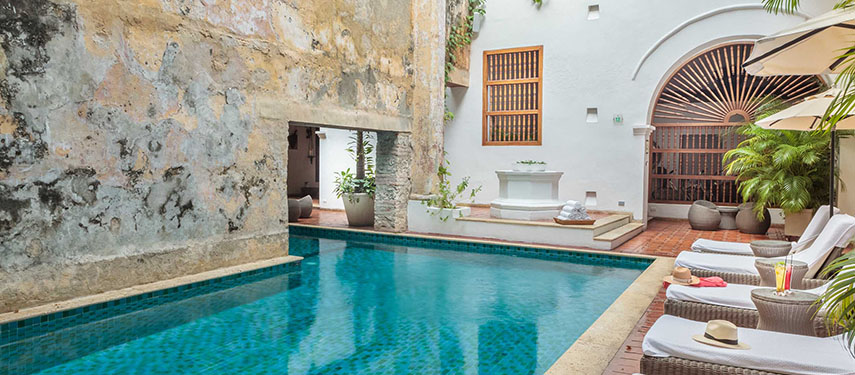
Casa San Agustin – Cartagena
Charming boutique luxury
Casa San Agustin is located at the heart of Cartagena’s historic centre within the walls of the Old Town. The boutique hotel comprises three colonial homes dating from the 17th Century. It is sympathetically reimagined for a new generation of travellers, which echoes Cartagena’s proud heritage and colourful Caribbean soul.... Read More
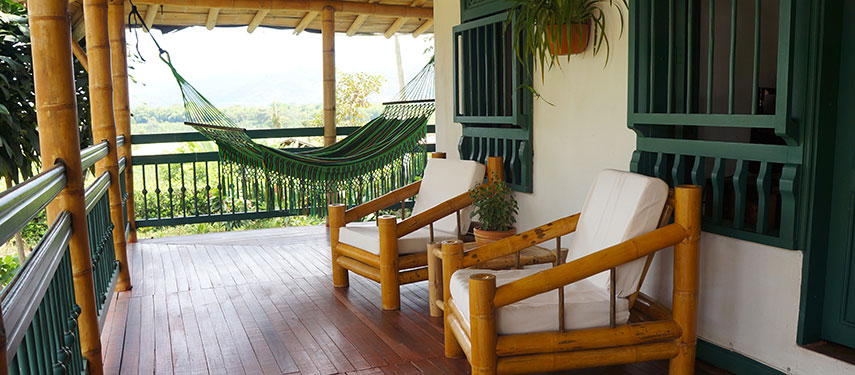
Hacienda Bambusa – Coffee Region
An authentic coffee-loving getaway
Hacienda Bambusa is located in the southern part of the Zona Cafetera, the cradle of Colombian coffee. Activities available to experience include coffee tasting, horseback riding and more. A stay at Hacienda Bambusa is an opportunity to reconnect with nature and to relax amongst beautiful surroundings.... Read More
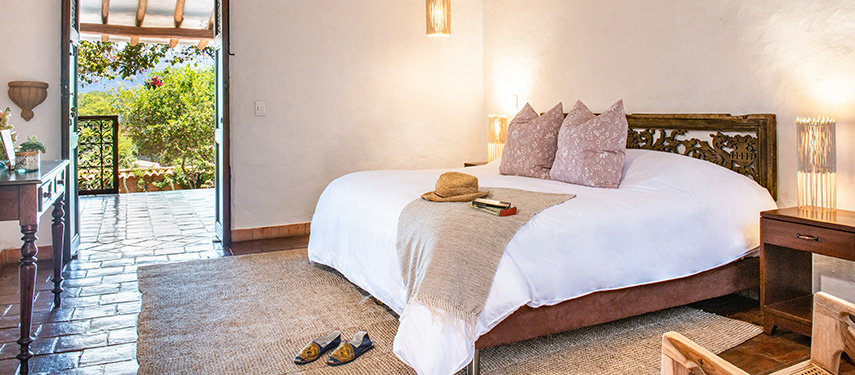
Casa del Presidente – Barichara
Colonial Colombian Heritage
Casa del Presidente, Barichara, is quite literally the former home of the late president Belisario Betancur. The adventure seeker can venture out to bike, trek or embark in extreme sports within the adjacent Chichamoya Canyon or those interested in art and nature can stroll the town's cobbled streets, people watch and take it all in.... Read More
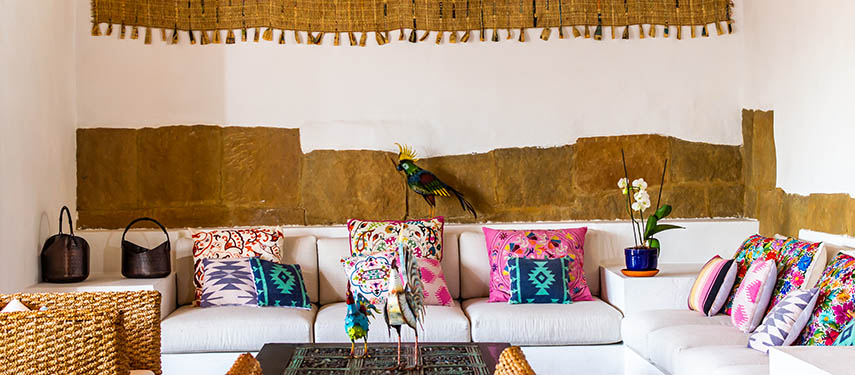
Yahri Villa – Barichara
Charm and exclusivity intertwined
Located in La Loma neighbourhood of Barichara, the most exclusive zone of the city, Yahri is a carefully decorated and fully furnished beautiful villa with views of the dramatic Andean landscape. Three separate styles of accommodation are on offer - a boutique house, a fully furnished villa and a carefully decorated villa.... Read More
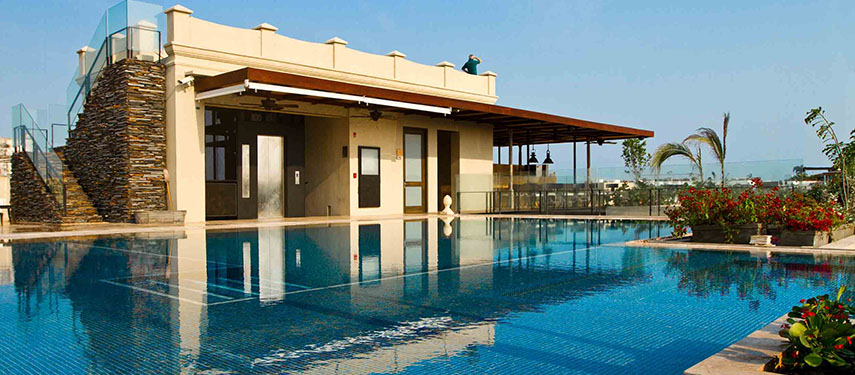
Bastion Luxury Hotel – Cartagena
History in the architecture
Bastion Luxury Hotel is just metres away from some of the old town of Cartagena's best original architecture. The property itself combines 16th-century craftsmanship with modern architecture in the heart of the walled city. Soak in the architecture while enjoying modern comforts at Bastion Luxury Hotel.... Read More
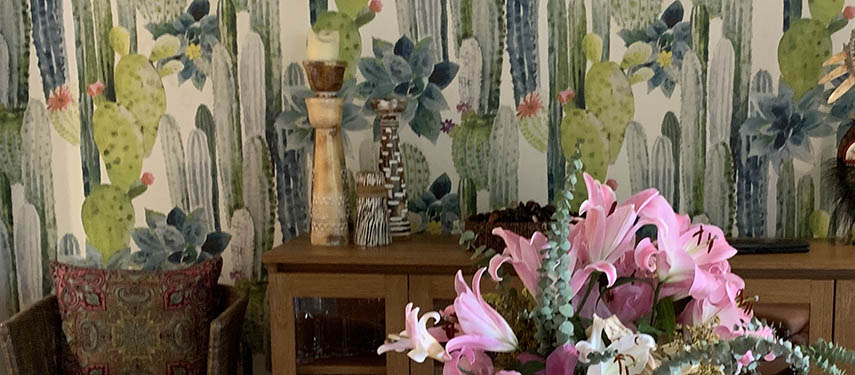
Patio del Mundo – Medellin
A relaxed spot in the heart of the big smoke
Patio del Mundo in the heart of Medellin's popular El Poblado district is a magnificent example of calm, quietude and tranquility. The garden is stunning, filled with mango trees and wild orchids. Patio del Mundo the ideal spot to retreat to amongst exploring the city's fascinating sights and dining at many of its fabulous establishments.... Read More
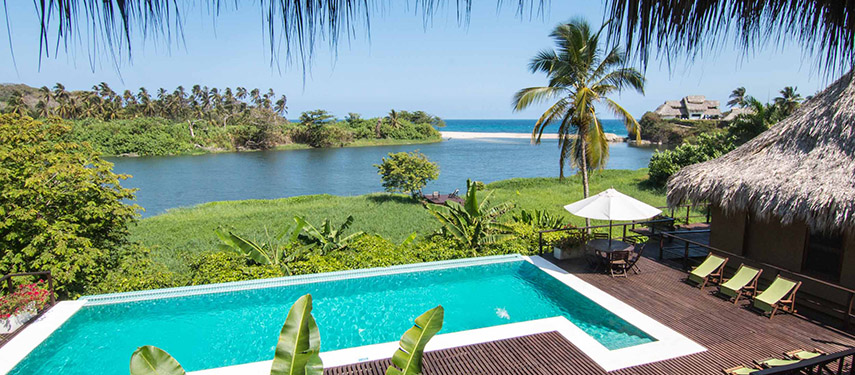
Villa Playa – Tayrona
R&R by the water's edge
Villa Playa is situated just two kilometres from the main entrance to Tayrona Park, thirty kilometres from Santa Marta. It is a fantastic option for those wishing to explore Tayrona Park, for friends looking for an easy getaway by the river, or for couples wanting a romantic getaway and that can retreat within the garden environment.... Read More

A collection of journeys in Colombia
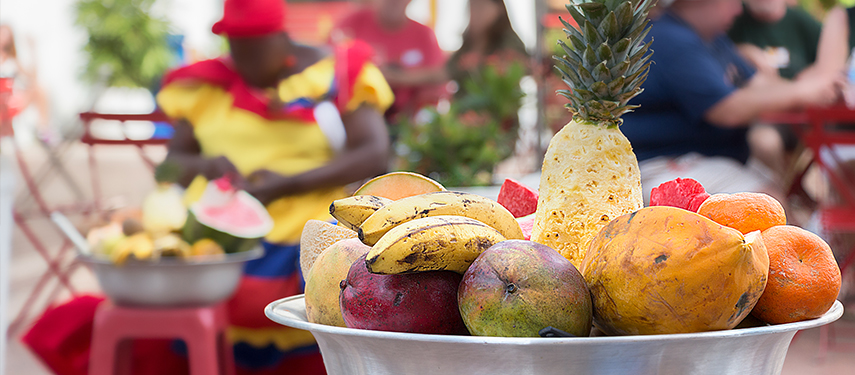
Colombia: Tropical Fruits food Safari
Itinerary Inspiration | A Colombian Food Safari
It is often said that in Colombia you get five destinations for the price of one: the Pacific Coast, the Andes, the Amazon, the eastern plains and the Caribbean. This huge diversity and abundance gives rise to some of the finest gastronomic experiences in the world. Modern chefs are turning traditional culture, produce, colour and flavour upside down and the results are taking the world by storm. ...Read More
Coffee Culture & Caribbean Colombia
Itinerary Inspiration | Colombia
Journey through Colombia's coffee region and explore the highlights of Cartagena and Medellin on this 11-day itinerary. Visit street markets, meander the cobblestone streets, visit UNESCO World Heritage areas, get off the beaten track and sample great local food, stop at a rum distillery and interact with the locals....Read More
Colombia: El Presidente
Itinerary Inspiration | Colonial Heritage
A 12-day itinerary with variety - explore the busy metropolis of Bogota, head off the grid to Los Llanos and on safari in a luxury tented camp, meander the cobblestone streets of quaint Barichara and delight in the coffee, colours, culture and charm of bustling Cartagena. A journey of relaxed experiences and also those for the outdoor adventurer, along with differing styles of accommodation throughout.
...Read More
Colombia: Cowboys & Coffee Beans
Itinerary Inspiration | Rural Life at its best
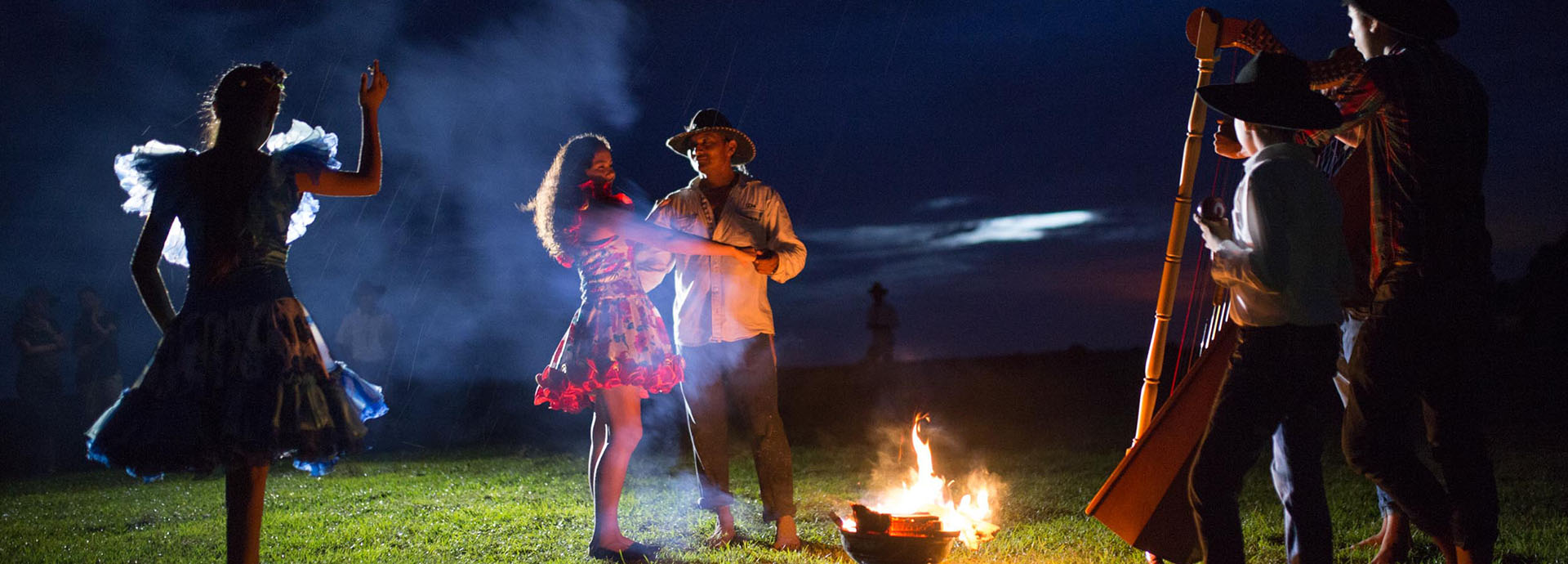
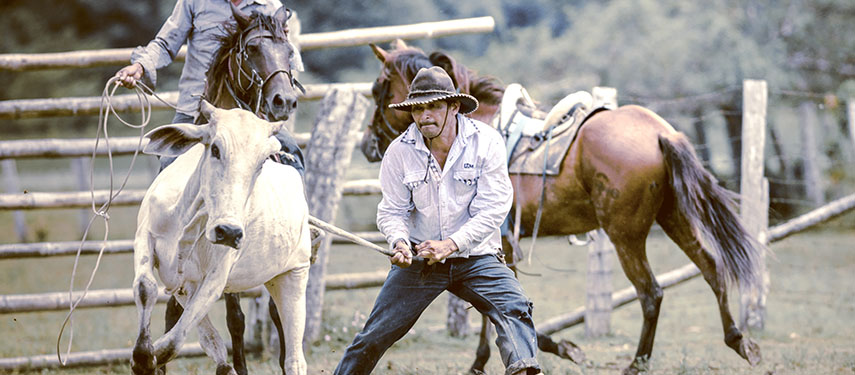
Instead of the typical tourist trail, head out to explore rural Colombia on a journey meandering five different regions with a focus on cuisine, culture and the cowboy lifestyle. Get an insight into street art, enjoy canoeing, birdwatching or artisanal fishing, sit around bonfires in the evening, learn about one of the previously most dangerous neighbourhoods of Medellin and enjoy great food, coffee, rum and Colombian life.
...Read More
Colombia: Frequently Asked Questions
Colombia’s climate varies dramatically by region, so the ideal timing depends on your itinerary. December to March and July to August are generally the driest months across much of the country and the most popular for travel. The Coffee Region is at its lushest after the rains, while the Llanos is best for wildlife from December to March when receding floodwaters concentrate animals around water sources. Birding is productive year-round, though the dry season tends to offer clearer forest access.
No. Australian passport holders can enter Colombia visa-free for stays of up to 90 days, which may be extended once for a further 90 days. Entry requirements are straightforward — a valid passport, a return or onward ticket, and proof of sufficient funds. This makes Colombia one of Latin America’s most accessible long-haul destinations for Australian travellers.
Colombia’s extraordinary culinary diversity stems directly from its five ecological zones — the Pacific Coast, Andes, Amazon, Caribbean and eastern Llanos — each contributing rare, hyper-local ingredients that rarely reach global markets. Chefs in Bogotá, Cartagena and Medellín are transforming ingredients such as copoazú, chontaduro and ají amarillo into some of the most innovative cuisine in the Americas, earning Colombia a growing reputation as one of the world’s great gastronomic frontiers.
Colombia’s biodiversity extends well beyond its record-breaking birdlife. In the Llanos, the annual flood cycle creates a wildlife spectacle comparable to the African savannah, with capybaras, giant river otters, anacondas, spectacled caimans, pumas and giant anteaters. The Amazon region supports jaguars, pink river dolphins, tapirs and hundreds of primate species, while cloud forests shelter spectacled bears and ocelots. Wildlife enthusiasts need not restrict themselves to a single region.
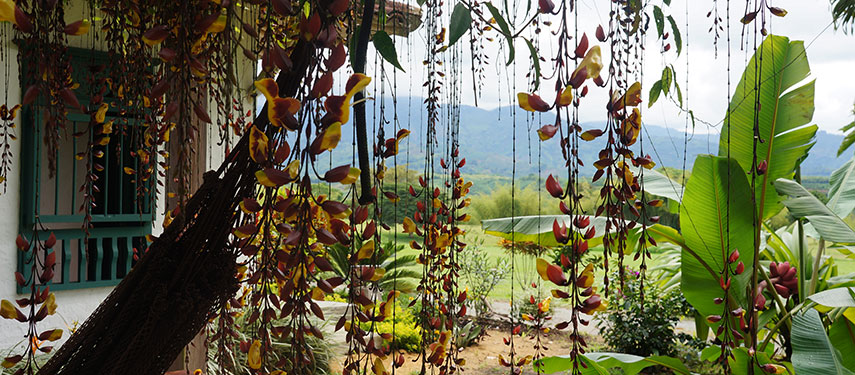
The Zona Cafetera — Colombia’s UNESCO-listed Coffee Cultural Landscape — pairs naturally with Cartagena, Medellín or Bogotá as part of a 10–14 day itinerary. Staying at a working hacienda such as Hacienda Bambusa offers an immersive insight into the bean-to-cup process alongside horseback riding, hiking and birdwatching. The region’s mild climate, vivid wildflowers and charming Paisa architecture make it one of the most visually distinctive rural landscapes in Latin America.
Colombia is an excellent family destination, combining accessible history, active adventure and extraordinary nature at a relatively modest price point. Cartagena’s walled city is ideal for curious younger travellers, Tayrona National Park offers jungle hiking and Caribbean beaches within the same visit, and the Llanos introduces children to wildlife in a setting that feels genuinely wild. The Classic Safari Company can tailor a family-focused itinerary across any combination of regions, paced to suit mixed age groups.
Colombia: A Glossary of Terms
Zona Cafetera — Colombia’s Coffee Cultural Landscape, a UNESCO World Heritage Site covering the departments of Caldas, Risaralda, Quindío and Valle del Cauca, where the country’s prized arabica coffee has been cultivated for over a century.
Los Llanos — The vast tropical savannah of eastern Colombia (extending into Venezuela), subject to dramatic seasonal flooding that concentrates extraordinary concentrations of wildlife and has earned comparisons with the great game plains of Africa.
Tayrona National Park — A protected area on Colombia’s Caribbean coast encompassing dense tropical forest, coral reefs and pristine beaches, and home to one of the country’s greatest concentrations of bird species as well as the ruins of the ancient Tayrona civilisation at Pueblito.
Pueblito — A pre-Columbian archaeological site within Tayrona National Park, comprising terraced stone structures, bridges and dwellings built by the Tayrona people, accessible via a jungle trail that remains one of Colombia’s most rewarding cultural hikes.
Vallenato — Colombia’s most emblematic musical tradition, originating on the Caribbean coast and built around the accordion, caja drum and guacharaca. Recognised by UNESCO as Intangible Cultural Heritage of Humanity, it remains a living, celebrated art form throughout the region.
Walled City (Ciudad Amurallada) — The fortified historic centre of Cartagena, a UNESCO World Heritage Site whose 13 kilometres of Spanish colonial walls, bastions and ramparts were constructed from the 16th century to protect the city’s strategic Caribbean port from piracy and rival empires.
Birdwatching Corridor — A network of complementary ecosystems — Caribbean coast, Andean cloud forest, Amazon lowlands and Llanos savannah — that together give Colombia more recorded bird species than any other country on Earth, making it the global benchmark destination for serious ornithological travel.
Corozo — A small wild palm fruit native to Colombia’s Caribbean coast and savannah regions, prized in traditional cuisine and increasingly championed by Colombia’s new-wave chefs as a rare, hyper-local ingredient representative of the country’s culinary biodiversity.
Paisa — Referring to the culture, people and regional identity of the Antioquia department and surrounding Coffee Region, the Paisa tradition is characterised by entrepreneurial spirit, distinctive cuisine, brightly coloured architecture and a warmth of hospitality widely regarded as among the most generous in Latin America.
Cumbia — A Colombian musical and dance form with Indigenous and African roots, originating along the Caribbean coast and widely considered one of the foundational rhythms of Latin American popular music, with distinctive percussion, flute and couples’ choreography that remains central to Colombian cultural celebrations.
Thank you so much for putting together the most memorable holiday for us. The experiences we have had in the last couple of weeks have gone beyond all expectations.
Jane & Col Loveday
It certainly was the best trip we have EVER had. The experiences were mind blowing. We want everyone we know to experience Africa - the animals, the people - magical.
Jo-anne & Dean Mifsud
The Classic Safari Company is the best I have dealt with. Extremely knowledgeable & professional, friendly, patient & understanding of first timers to Africa.
Annette Whiley
Classic Safari Company were brilliant - 10/10
Di & Kingsley Yates
Would do it all again and not change a moment. Best holiday ever!
The McGowan Tribe
Classic Safari is the place to go to for "top end" adventure travel.
Ron & Alison Guthrie
If you want the most sensational experience in Africa let Julia and the staff at Classic Safari Co plan it for you! Their knowledge, expertise and enthusiasm for their job means your every wish will be fulfilled.
Miriam & Joseph Harrison
An absolutely fantastic travel company - every one of the many trips they have organised for us over 22 years have been faultless and fabulous.
Judith & Roger Williams
Their experience and knowledge of Africa is evident and we couldn't have been happier with the total package. This has given us a taste for Africa - now we are ready for more.
Andrew & Pip Stevens
Classic Safari Company has done it again! A unique experience that ticked all the boxes - wildlife, culture and dining experience. A dream come true!
Ros Wheeler
Absolutely everything was first class & so well organised.
Simon & Jackie Adams
The trip of a lifetime, couldn't have dreamt of a better adventure if I tried.
Emma Jeffcoat
You can't improve on perfection. I had my best birthday and holiday with my family celebrating my 80th birthday in Africa. Everything that Julia organised was perfect and the whole trip was a highlight!
Buckingham Family
Everything was perfect! Advice and information on destinations and activities hit everything I had hoped to experience. I contacted the Classic Safari Company upon recommendation and have now, in turn, recommended to others.
Tim Bradley
Very knowledgeable and patient. Our trip was all that we hoped for. Wonderful!
Jane & Robert Happell
Thank you for making our trip to Africa so spectacular. The attention to detail really made it special. It really was the trip of a lifetime.
Paul Cozzi
An amazing experience - the best family holiday we have ever had. We were extremely impressed by the meticulous attention to our itinerary. I can't speak highly enough of all the elements of this exciting journey!
Sheryl & Robert Taylor
We loved it all. Our son wants to go back tomorrow. We would ALL go back again!
Laurence & Remi Cunningham
Classic Safari are the people who genuinely know other culture and offer incredible insight to perfectly meet your expectations.
Melanie McMillan & Iain Jones
The trip exceeded my expectations and was the best family holiday I have ever had. Our children simply loved it and now I know more about African wildlife than they do about our own farm animals.
Rowntree family
We are so happy we put our trust in CSC, we had an amazing adventure and would recommend them to anyone.
Kim & Brad Balance
Julia you did a fantastic job - everything was first class. Well organised, efficient and stress free. We all agreed it was the best holiday we've ever had. Cant wait to travel with CSC again.
Milford family
We wanted the opportunity to see as many wildlife parks as possible and the Classic Safari Company provided an action-packed itinerary that included six, with 11 tiger sightings and nine leopard. This was overlaid with an introduction to Jaisalmer, Jaipur and the 'real' India. Pench and Panna were the hidden gems of a really great trip, very well organised, seamless and enjoyable. As a solo traveller I felt incredibly safe at all times. I want to go back!
Mark Taylor
Exellent and wonderful, reaching way above expectations.
Elizabeth Mackintosh
Thank you for putting together the ancestral adventure of a lifetime. I cannot speak highly enough of the trip.
Jenny Kidd