Namibia
Ruggedly Beautiful & Refreshingly Distinctive
Discovering Namibia | In Summary
- At an estimated 55 to 80 million years old, the Namib is one of the oldest deserts on Earth — a geological timeframe that has produced extraordinary endemic species found nowhere else on the planet, including the welwitschia plant, which can live for over a thousand years.
- Namibia was the first country in the world to enshrine environmental protection directly into its national constitution, a founding commitment that has since driven the creation of more than 80 communal conservancies and helped restore wildlife populations to levels rarely seen elsewhere in southern Africa.
- NamibRand Nature Reserve is one of a small number of International Dark Sky Reserves in Africa, making Namibia equally spectacular after dark — a natural complement to the famously pure light that draws photographers from around the world.
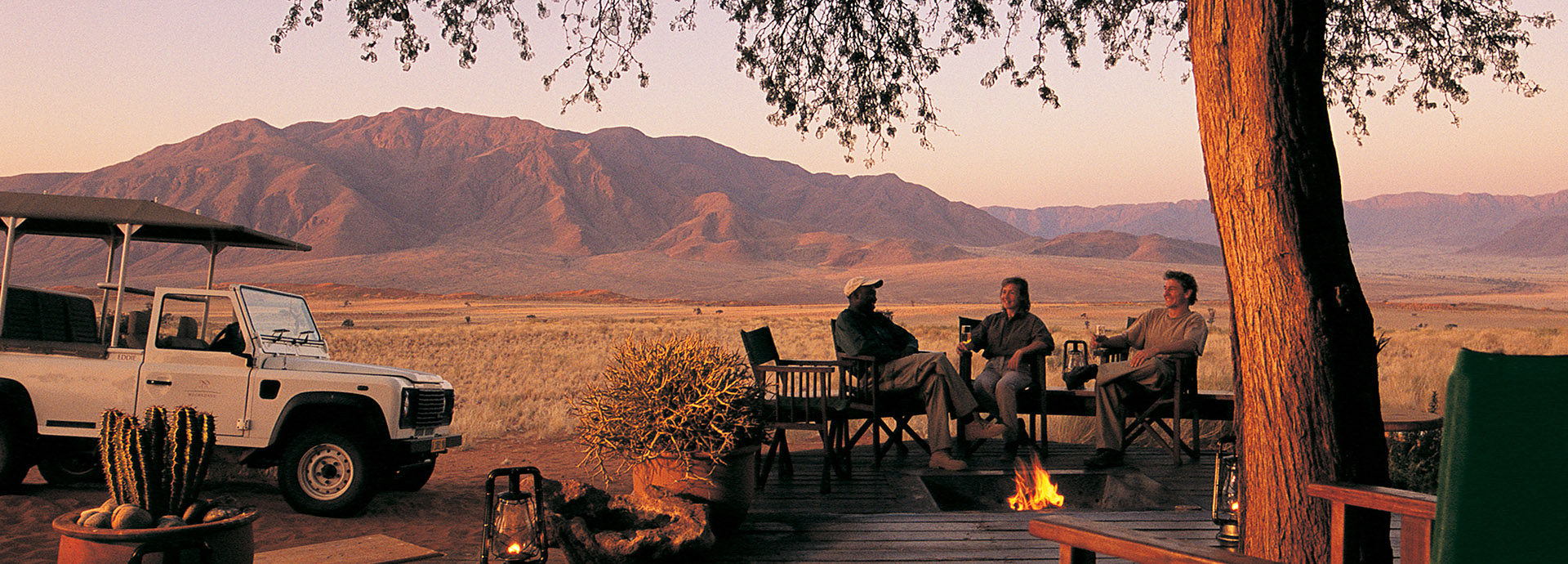
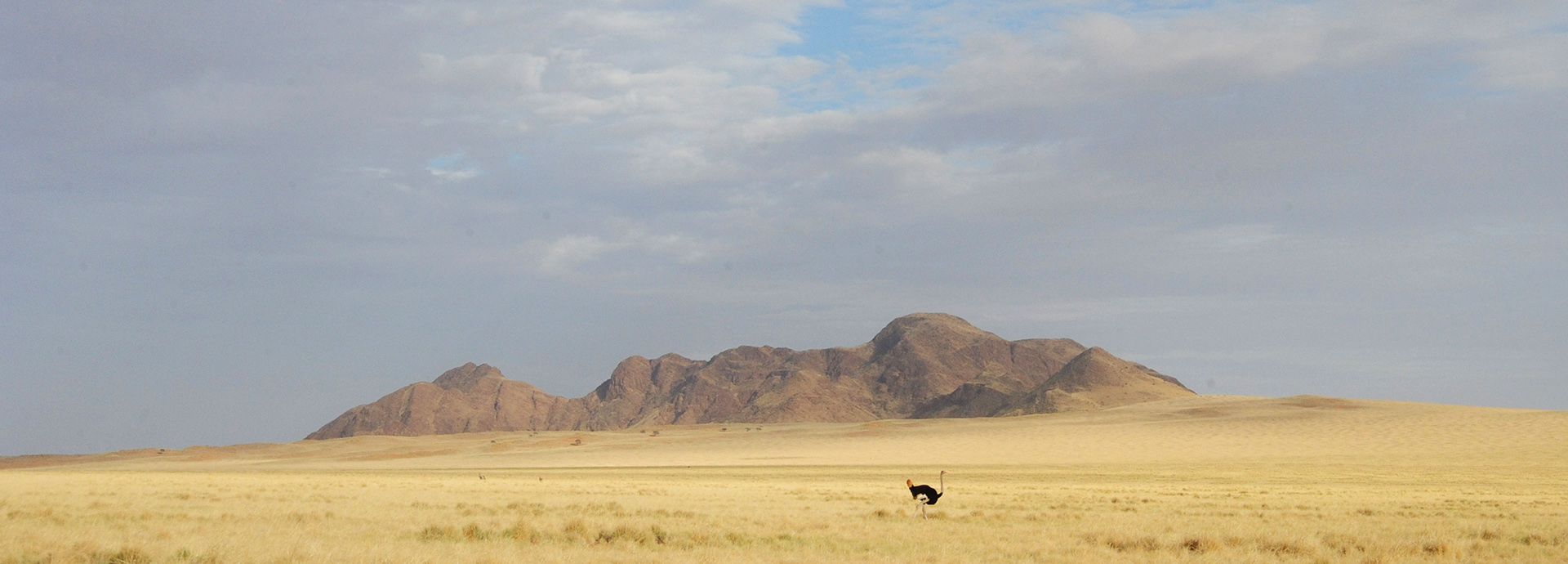
Straddling two great deserts, Namibia is a country of sweeping sands and eerie landscapes. Dramatic environments host spectacular desert-adapted wildlife & fascinating tribal communities, whilst the cities are a contradictory muddle of modern African vivacity and old world German influence.
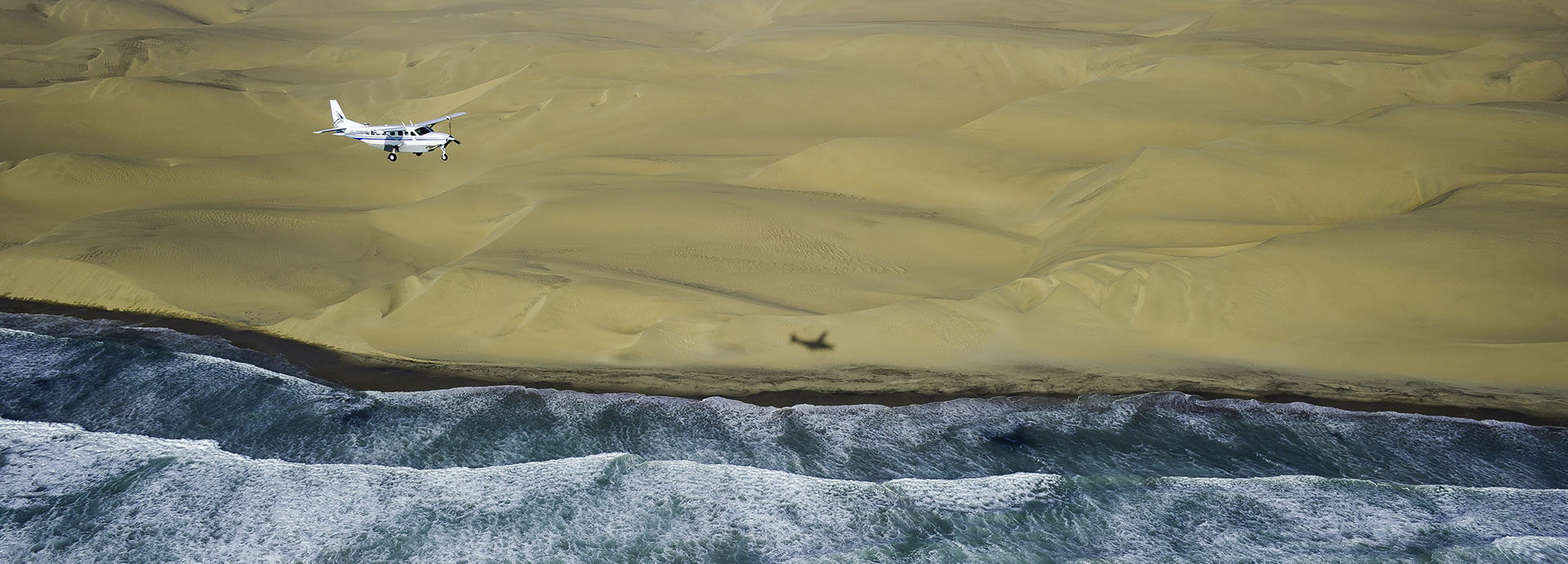
Climb to the top of some of the world’s highest sand dunes in Sossusvlei or explore the wild Skeleton Coast, littered with ghostly shipwrecks and whale bones. Kayak amongst vast seal colonies and discover a unique bio-diversity of creatures surviving solely on the mist that rolls in from the Atlantic, then head to Deadvlei to wander through a graveyard of petrified forests. Interact with the indigenous Himba and Herero tribes, game view in the pans of Etosha National Park and track some of Africa’s last truly wild black rhino on foot in Damaraland – a huge, untamed, ruggedly beautiful region. The intensity of colour and the pureness of the light make Namibia a magnet for landscape and wildlife photographers, solid infrastructure makes it an excellent destination for 4×4 self-drivers and a flying safari over the dunes and rugged coastline is spectacular.
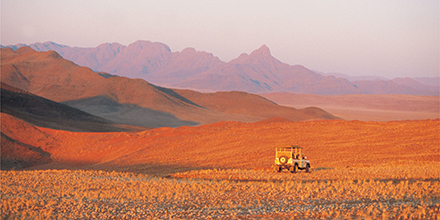
You Will Love
• Stark landscapes, dramatic deserts & dunes
• The eerie Skeleton Coast
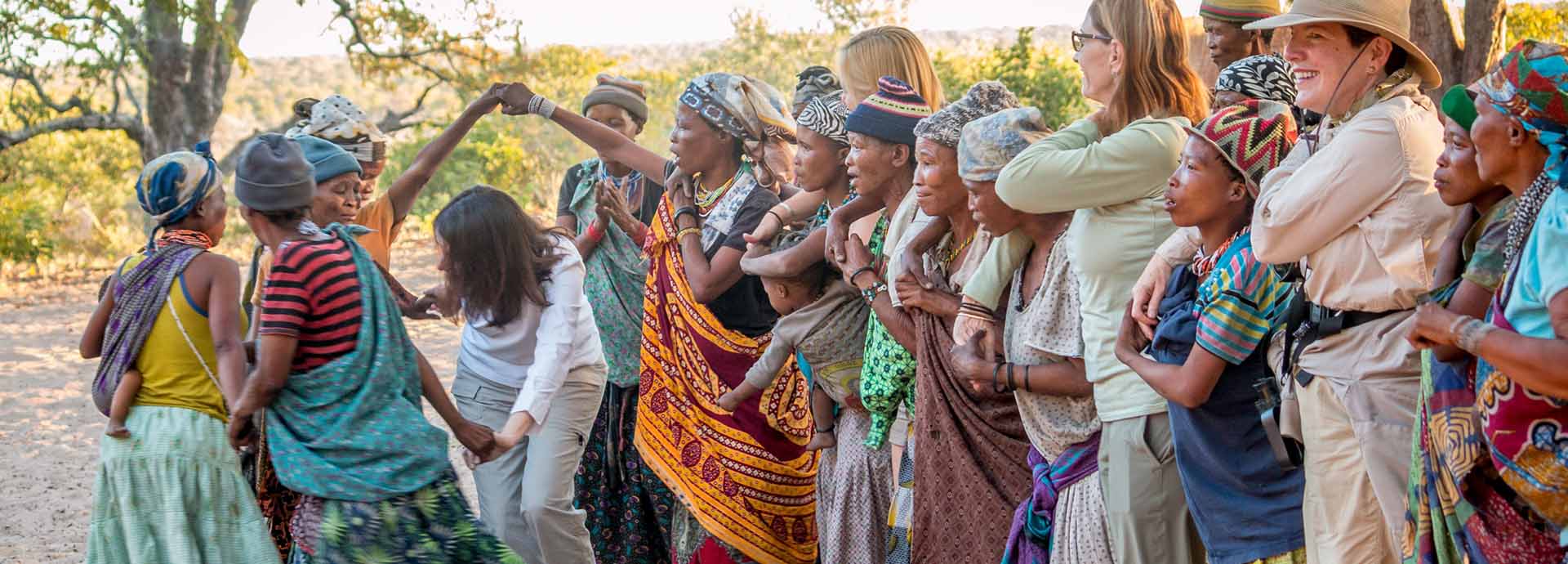
• The Himba and Herero people
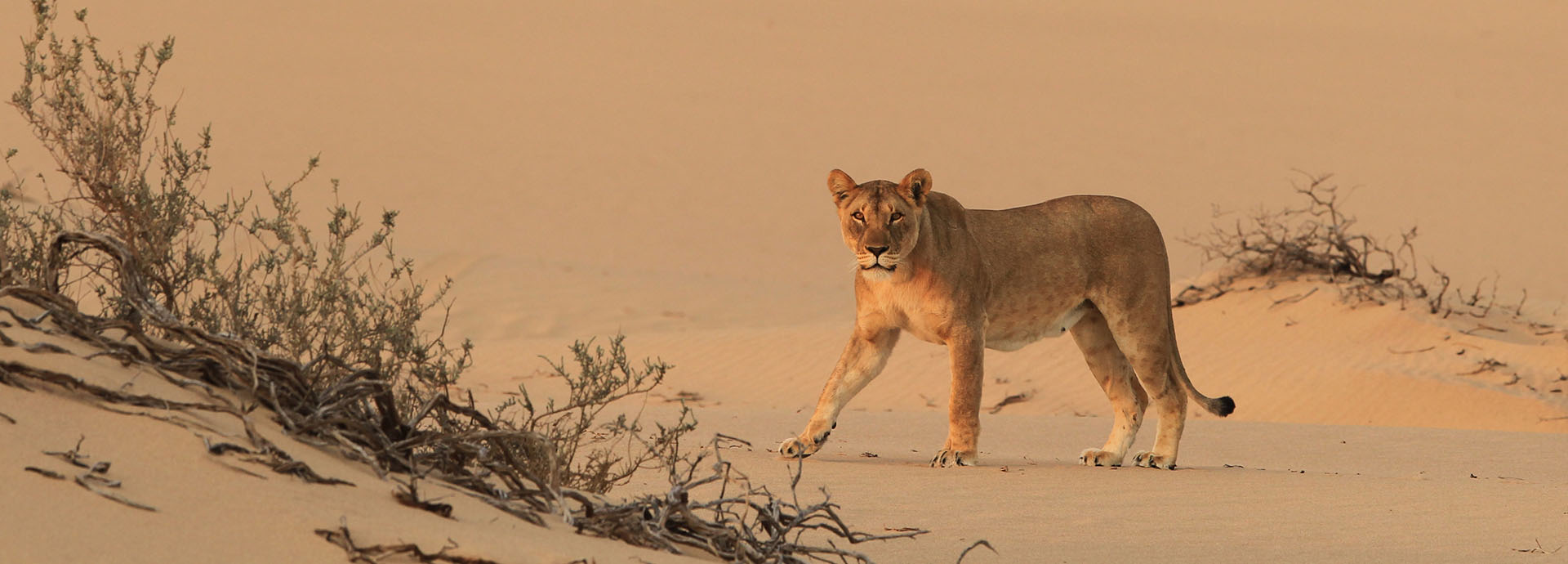
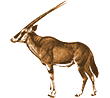
• Desert adapted plants & wildlife
• Striking photographic opportunities
Let us design your perfect itinerary.
Namibia's diverse regions
from Etosha to the Skeleton Coast
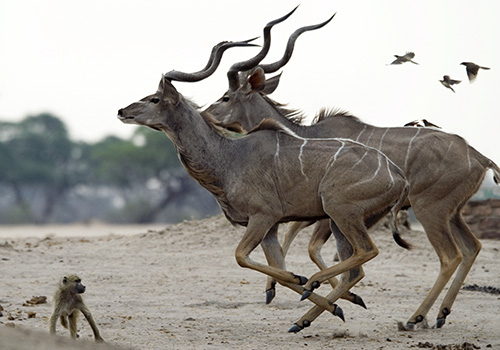
Etosha & Surrounds
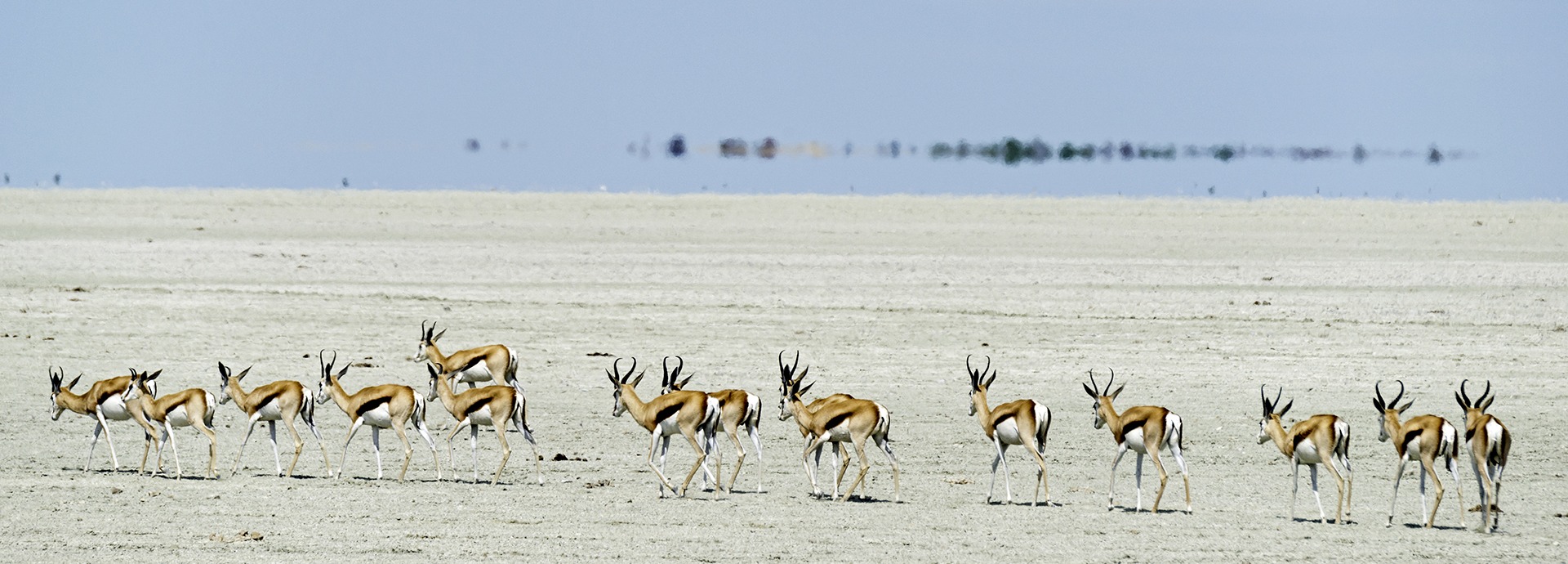
Etosha National Park offers excellent game viewing. It particularly excels during the dry season (June to November) when huge herds of animals gather around remaining water sources and provide some the most incredible photographic opportunities as predator and prey alike drink side by side. Along with healthy populations of endangered species, such as black rhino and black-faced impala, Etosha also offers rare and exciting birding opportunities and the chance to see desert-adapted lion.
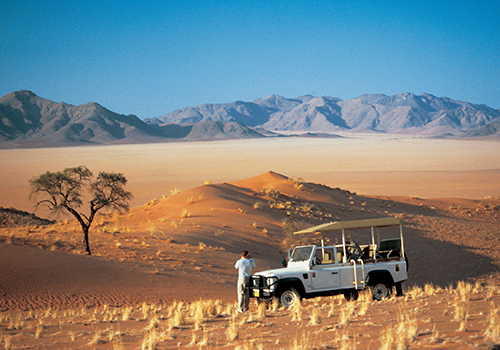
Namib Naukluft & Sossusvlei
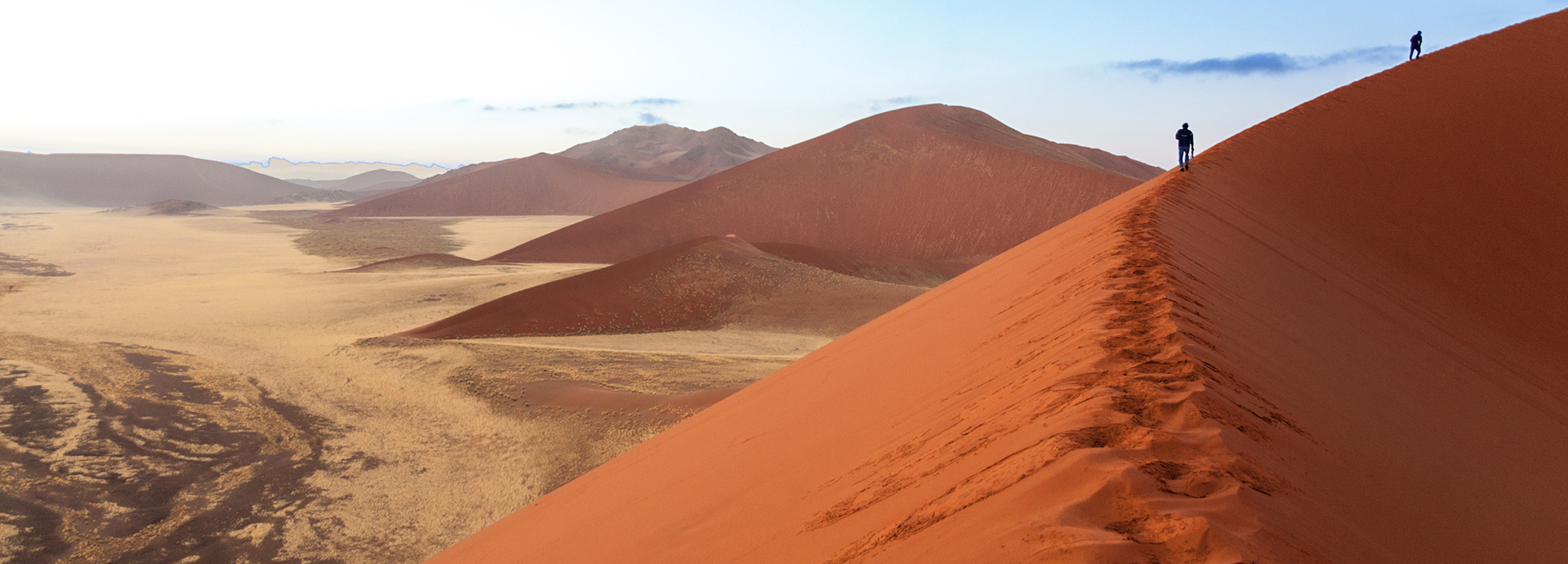
The Sossusvlei, a highlight in the heart of the Namib Desert, is a huge clay pan, enclosed by giant sand dunes. Some of the dunes are more than 300 metres high - the tallest in the world. You will find dead acacia trees that mark old river courses, now dried up, and some of these trees have been dated at over 500 years old. It's a stunning, surreal environment where the pure light emblazes the orange dunes against the blue sky, and some of the most iconic pictures captured in Namibia are taken here. Spectacular!
Skeleton Coast, Damaraland, Kunene & surrounds
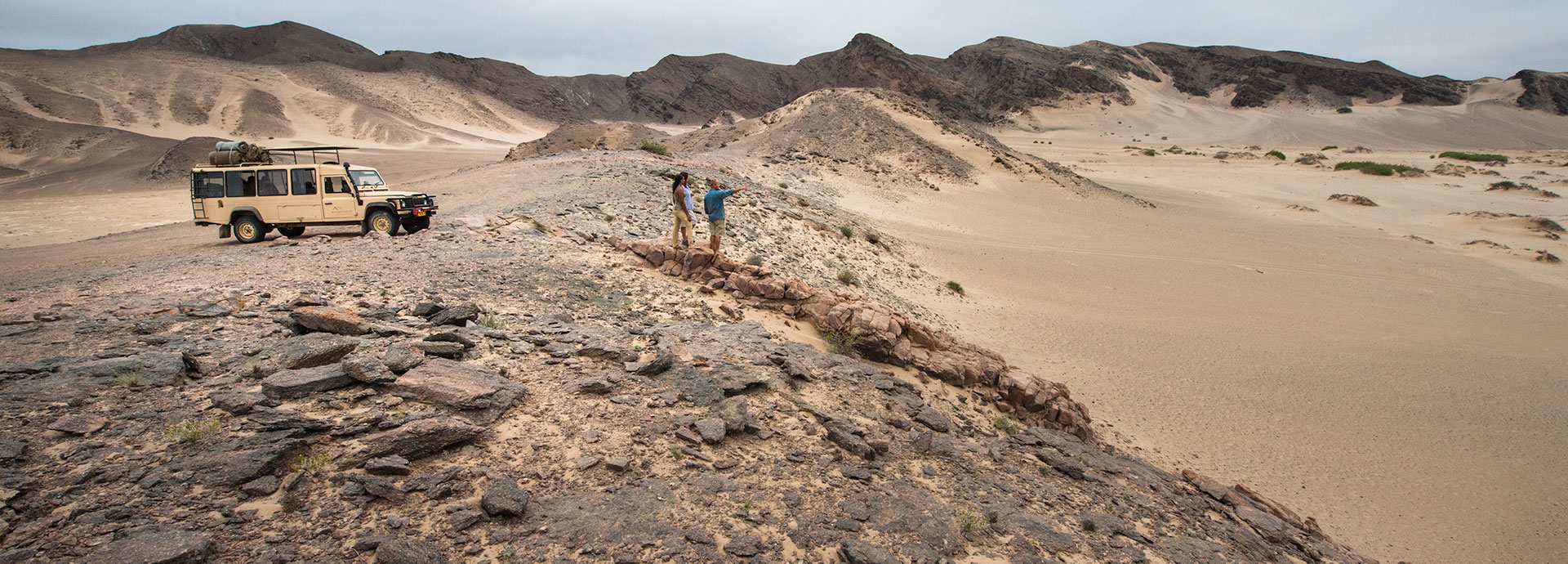
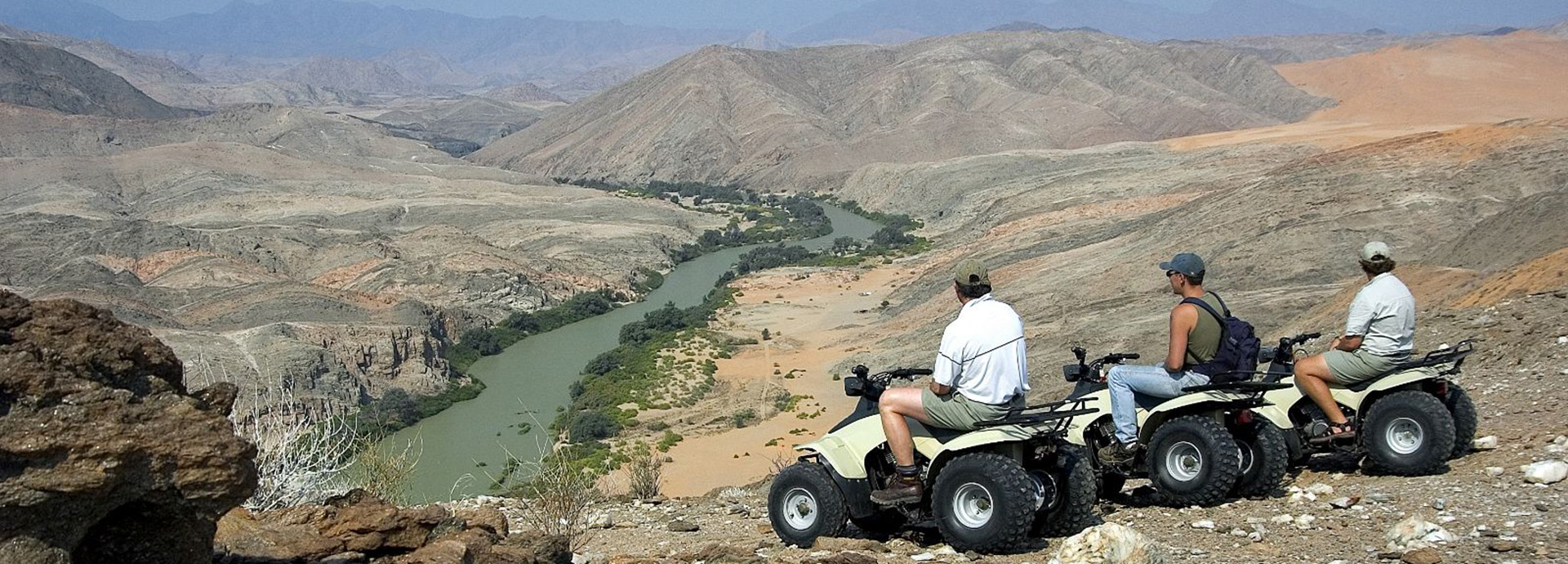
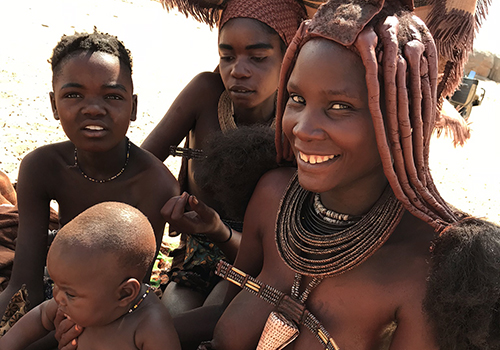
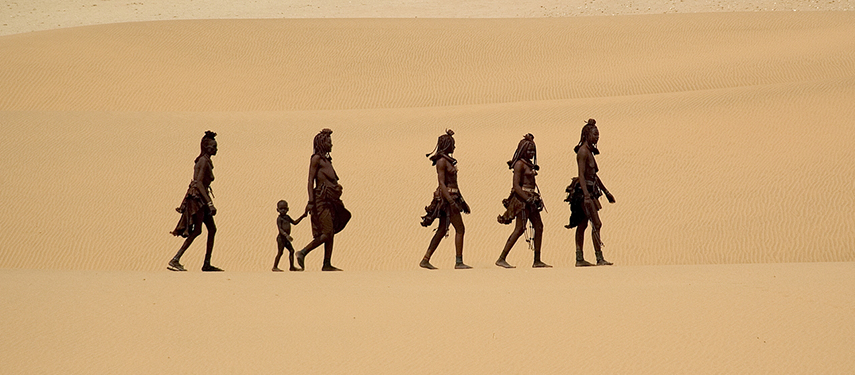
The remote northwest of Namibia, known as Koakoland (or the Kunene Region), is home to dramatic scenery and small populations of the nomadic Himba people, whose way of life has remained remarkably unchanged. Beside Kunene lies the coastline of the famous Skeleton Coast, which owes its name to the skeletons of whales and ships that have come to rest here. Inland, Koakoland is a huge, scenic wilderness, almost devoid of people. This is remote, raw Namibia at its best.
Unforgettable experiences in Namibia
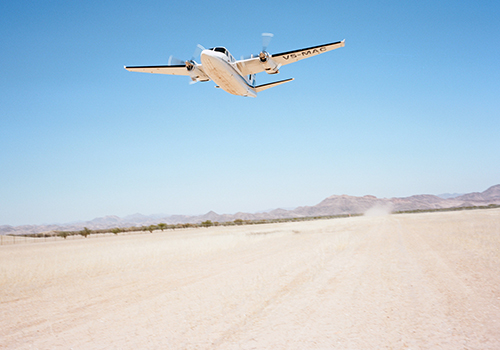
Soar over Namibia in a scenic flight
Soar over Namibia in a scenic flight
To truly appreciate Namibia’s scale and raw beauty you must hop into a light aircraft and take a flight over its stunning landscapes. It is possible to take short scenic flights over Swakopmund, Sossusvlei and the NamibRand Rese...
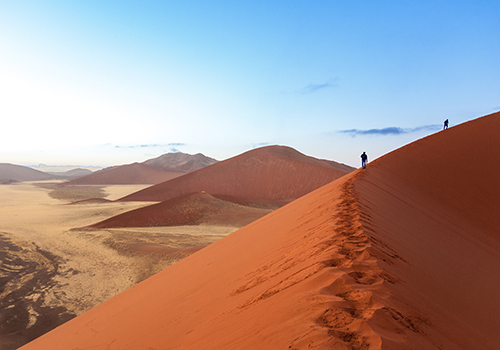
Scale the world’s highest sand dune
Scale the world’s highest sand dune
The NamibRand Nature Reserve is one of the driest, oldest and pristine areas on earth. Here you’ll find the endless horizons of flowing copper and gold sand that form the largest dune field south of the Sahara. The biggest dune ...
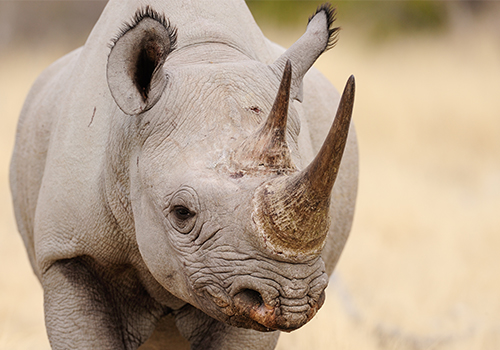
Track black rhino on foot
Track black rhino on foot
Namibia is home to almost half of the world's population of black rhino and almost all of these live in the semi-desert wilderness of Damaraland. This is one of the only places on the planet where you can track these critically en...
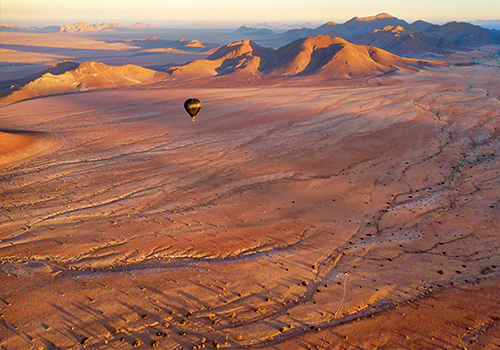
Glide over the desert in a hot air balloon
Glide over the desert in a hot air balloon
Undoubtedly the best way to view Namibia’s otherworldly landscapes is to take to the air. As you ascend you will witness the oldest desert in the world wake up as the sun rises. You’ll float silently over endless sand dunes an...
A selection of our favourite places to stay in Namibia
Serra Cafema – Kunene River
Far away remote adventure camp
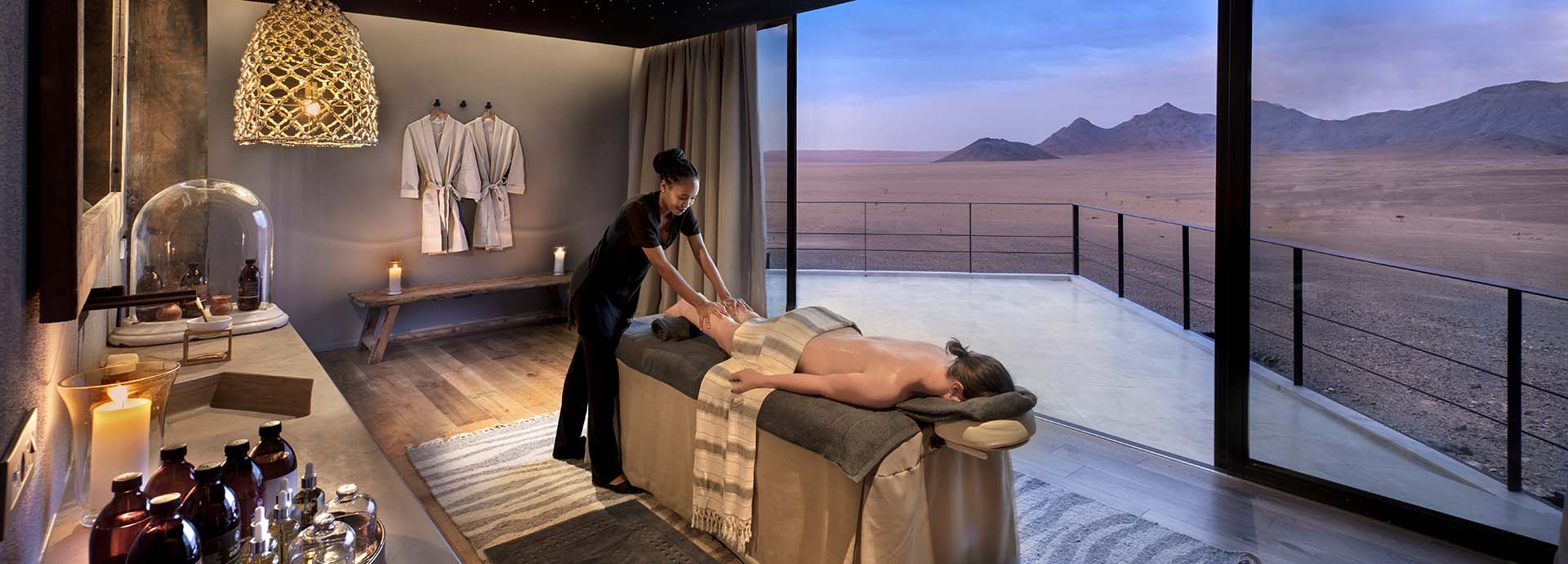
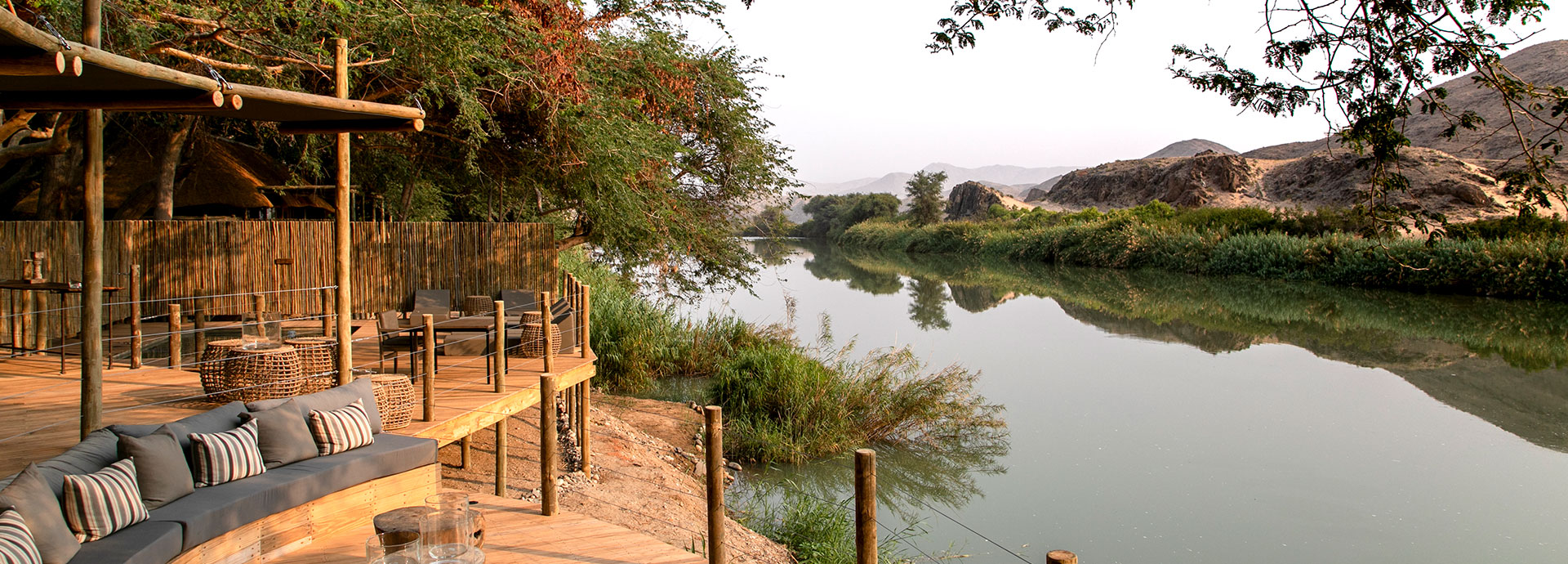
Set on the banks of the Kunene River, bordering Angola, Serra Cafema is one of the most remote camps in southern Africa. The eight wood, canvas and thatched villas are spacious and luxurious, styled in chic greys and natural timber to blend into the picturesque surroundings. Serra Cafema is a unique and wildly beautiful destination.... Read More
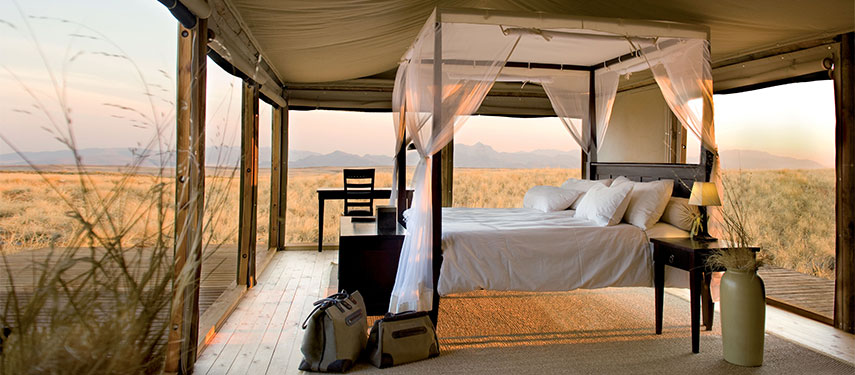
Wolwedans Dunes Lodge – NamibRand Nature Reserve
Desert and dunes immersion
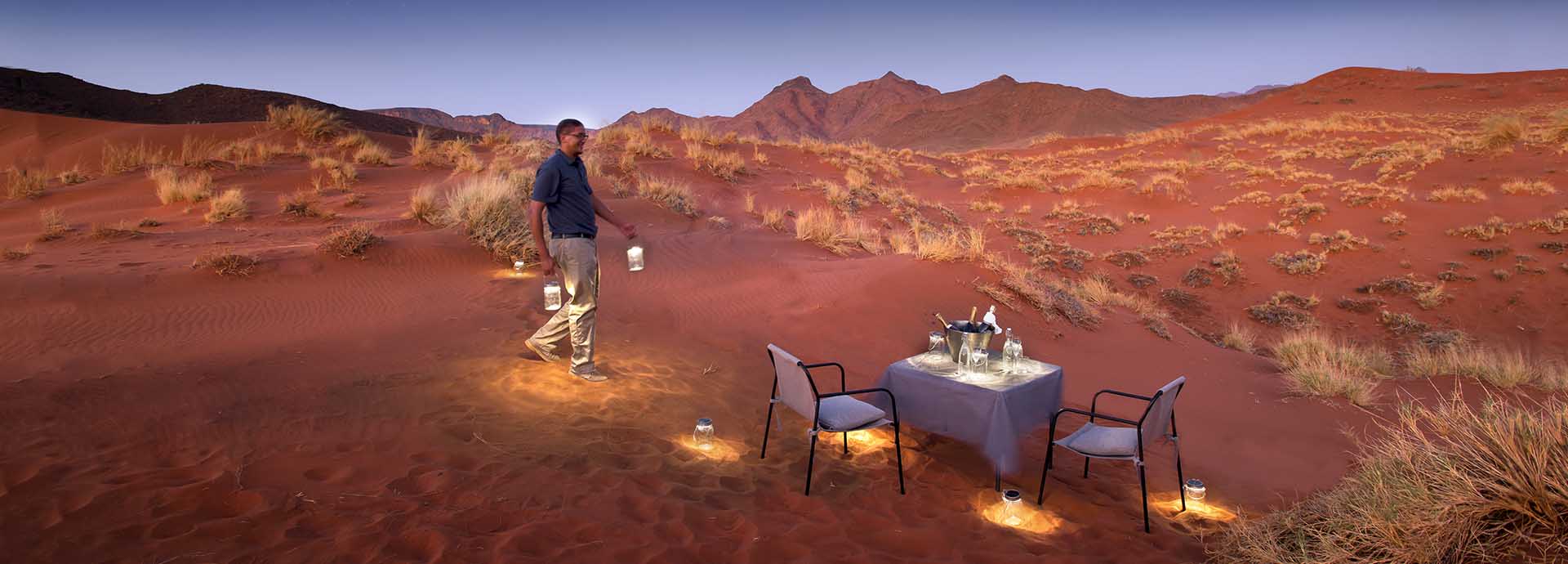
Wolwedans Dunes Lodge prides itself on offering an experience that is luxurious, unpretentious and authentic. Scenic drives, flights and nature walks take in the endless horizons and desertscapes, as do picnics in the wild, sundowners on the dunes and outdoor dinners by lantern light.... Read More
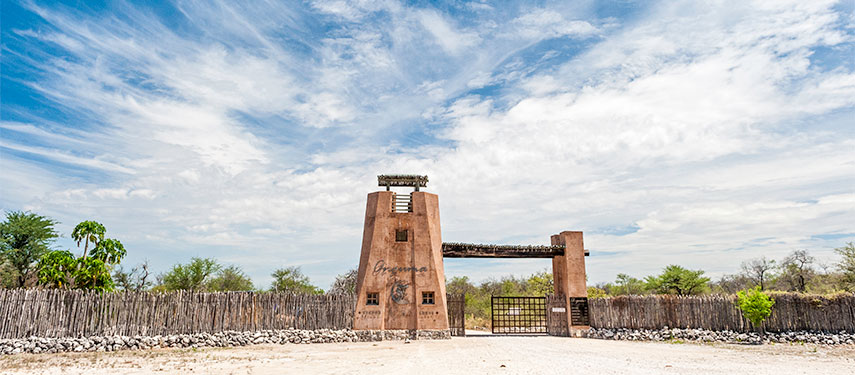
Onguma Fort – Onguma Reserve
Luxury Etosha Retreat
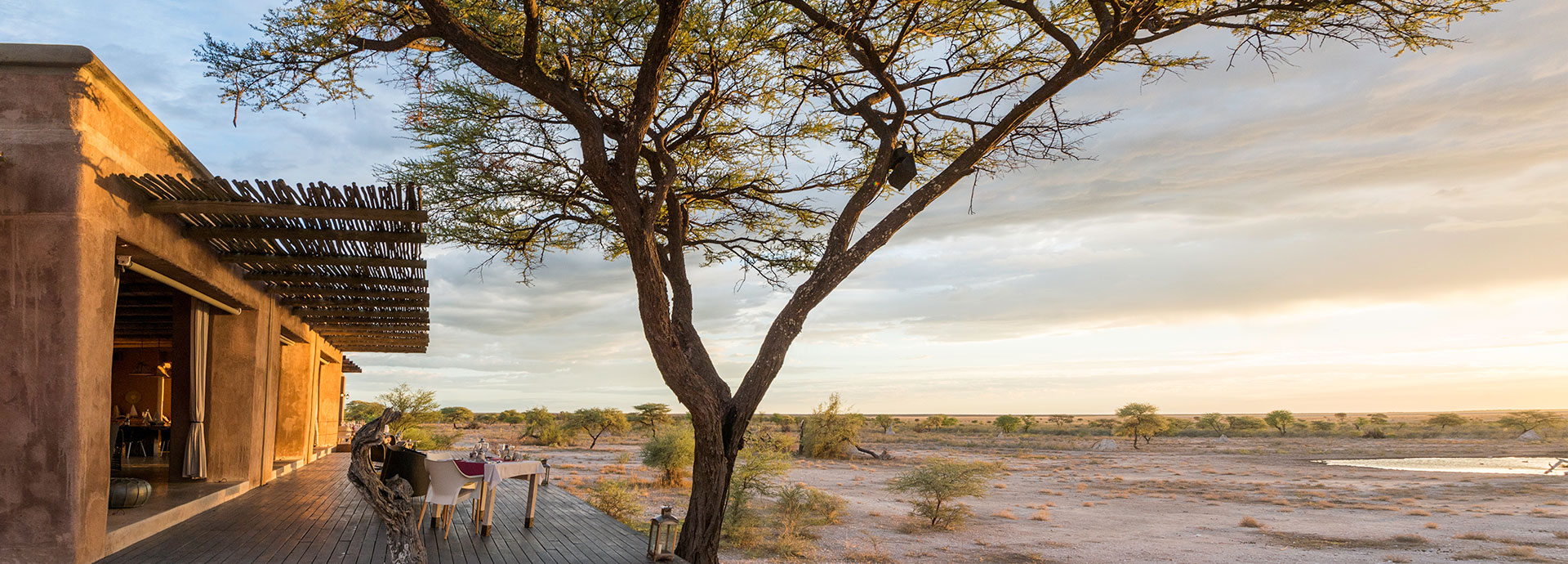
Onguma The Fort is unlike any other. Inside, you will find a classical African feel combined with a touch of Moroccan and Indian influence and on the outside, The Fort has been built in exactly the right spot to offer enchanting sunset views to make for an unforgettable stay. Expect to constantly be surrounded by raw beauty inside and out.... Read More
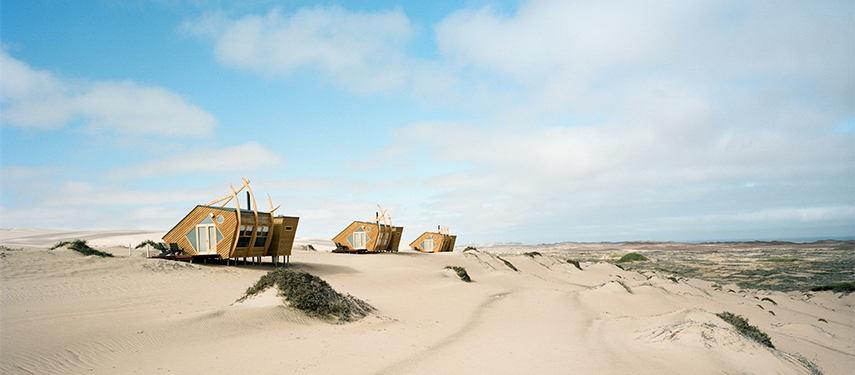
Shipwreck Lodge – Skeleton Coast
Freedom, beauty and solitude
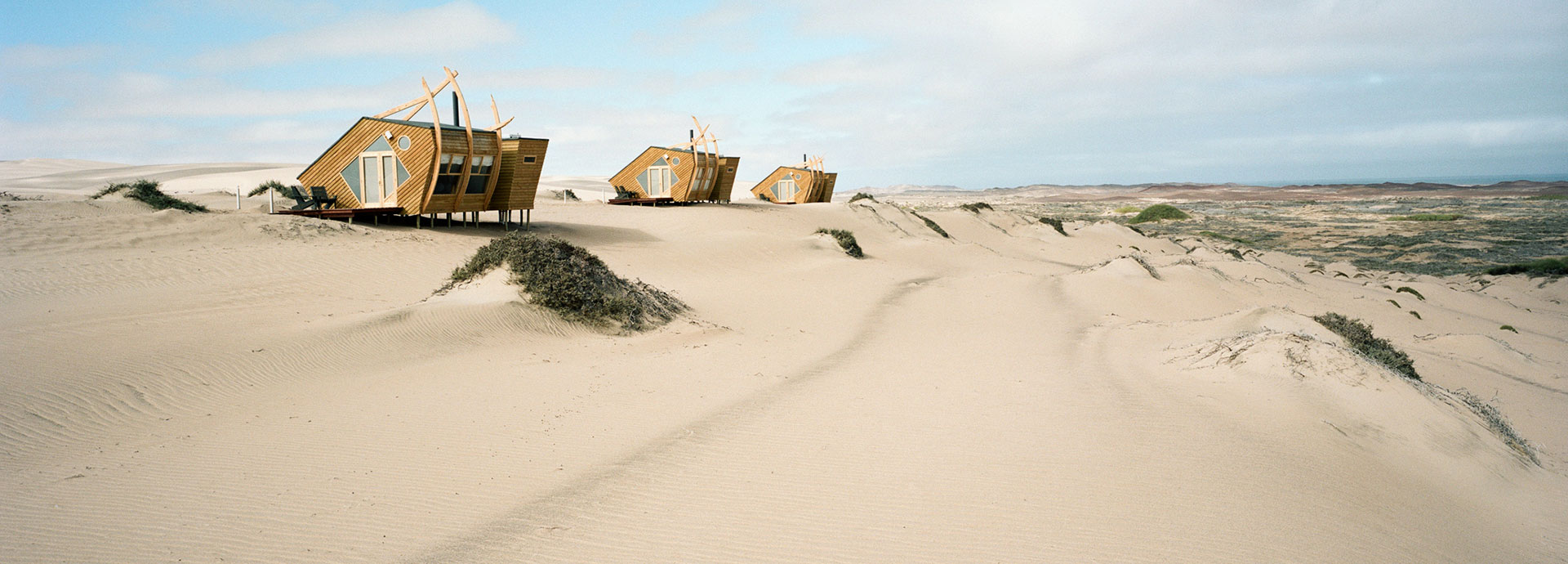
The Skeleton Coast is a raw, rugged and impossibly remote slice of African wilderness. Each of Shipwreck Lodge's ten freestanding chalets has been architecturally designed to artfully mimic the ghostly shipwrecks that line these beaches and a stay here is your gateway to one of Africa’s most mysterious and enchanting landscapes.... Read More
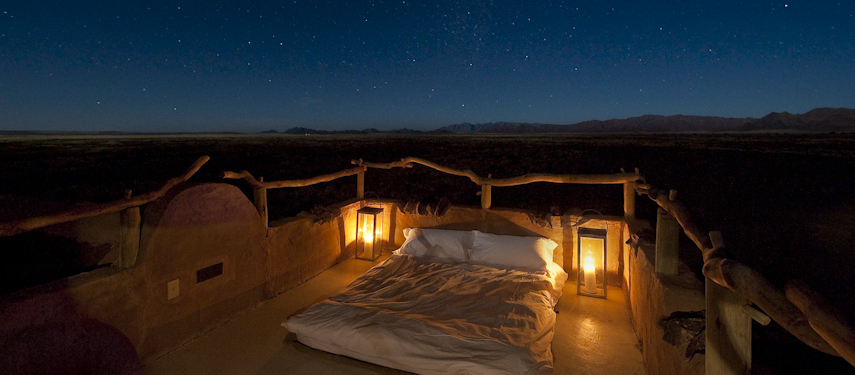
Little Kulala – Sossusvlei
Desert dunes meets safari chic
Little Kulala is located in the Kulala Wilderness Reserve - a 40,000 hectare tract of land bordering the expansive Namib Naukluft Park. It is home to all forms of desert life and its 11 thatched villas merge seamlessly into the timeless desert landscape, each with a private plunge pool and rooftop skybed for romantic stargazing.... Read More
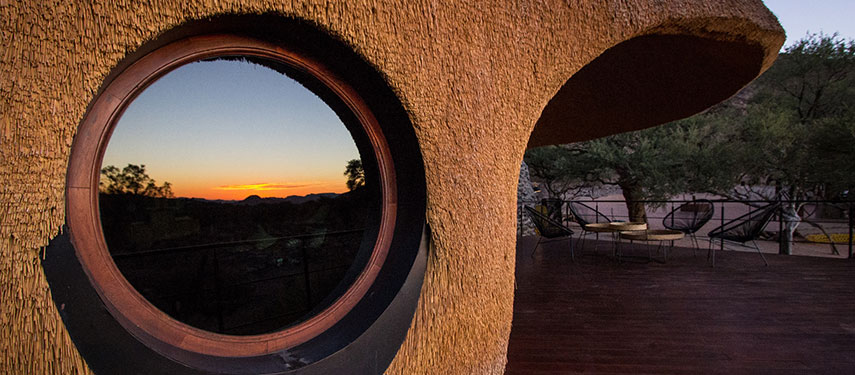
The Nest at Sossus – Sossusvlei
Extraordinary private villa
The design of The Nest at Sossus was inspired by the unique structure of a sociable weaver nest and the result is one of Namibia’s most extraordinary private-use villas. Tucked away in a lush pocket of the private Namib Tsaris Conservancy, it opens onto an oasis valley boasting natural waterfalls and pools in an otherwise desert landscape.... Read More
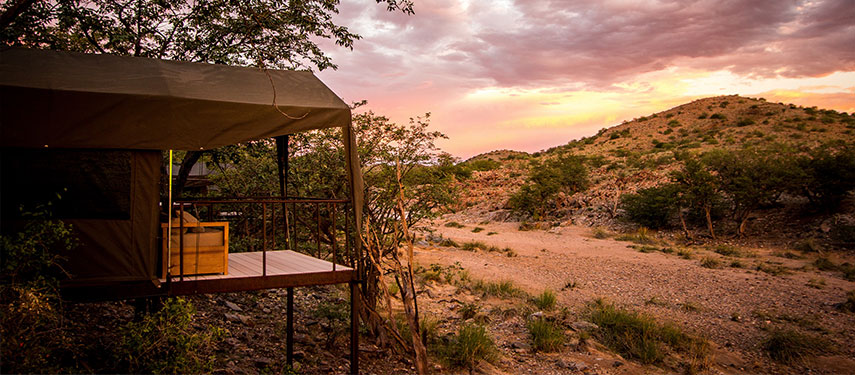
Huab Under Canvas – Damaraland
Private mobile camp
Huab Under Canvas is an exclusive, semi‐mobile camp designed specifically to provide an authentic safari experience in the wilds of Namibia without ever compromising on comfort. The camp is booked on a private use basis so you will never share it, heightening your sense of space and solitude. It is unapologetically comfortable yet undeniably wild.... Read More
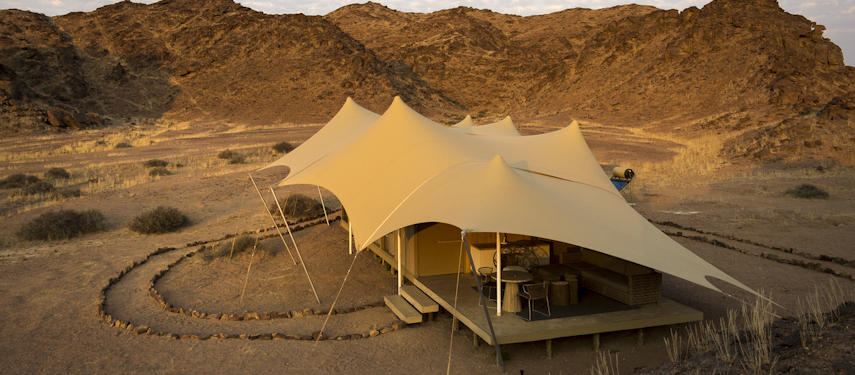
Hoanib Skeleton Coast – Skeleton Coast
Stylish desert camp meets ocean adventure
Flanked to the east and west by rugged hills, this luxurious tented camp looks out over stunning, starkly beautiful scenery. Marvel at the ancient welwitschia plant, savour landscapes that have remained untouched for hundreds of years and discover the wealth of desert-adapted wildlife during game drives and by assisting with research projects.... Read More
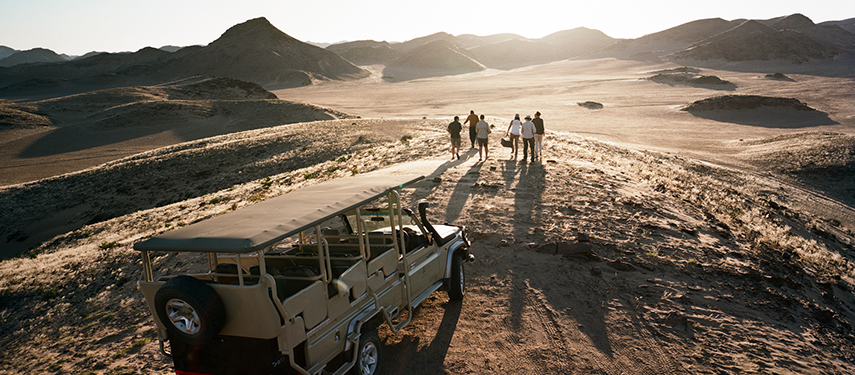
Hoanib Valley Camp – Kaokoland
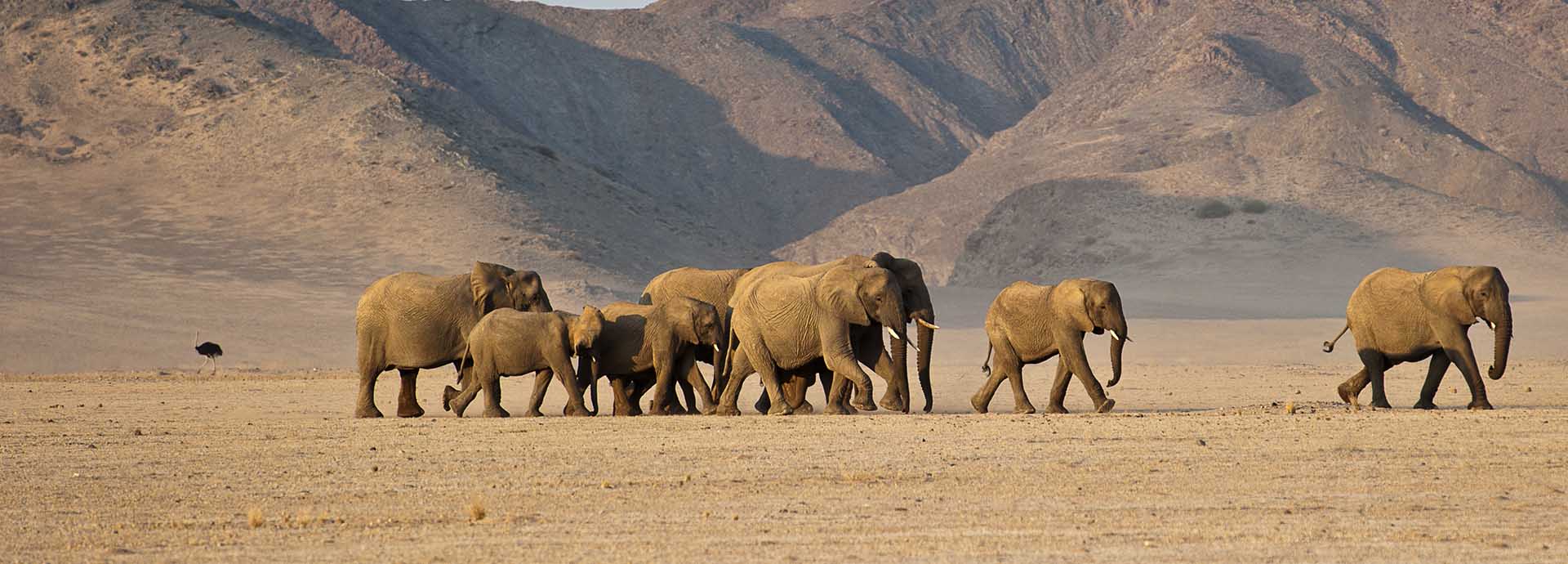
Where elephants roam
In a country jam-packed with vast, strikingly beautiful landscapes, Hoanib Valley Camp is located in perhaps the most spectacular of them all - Kaokoland. A stay at Hoanib Valley camp combines fantastic wildlife, stunning scenery and strong ethics providing a perfectly rounded Namibian safari experience.... Read More
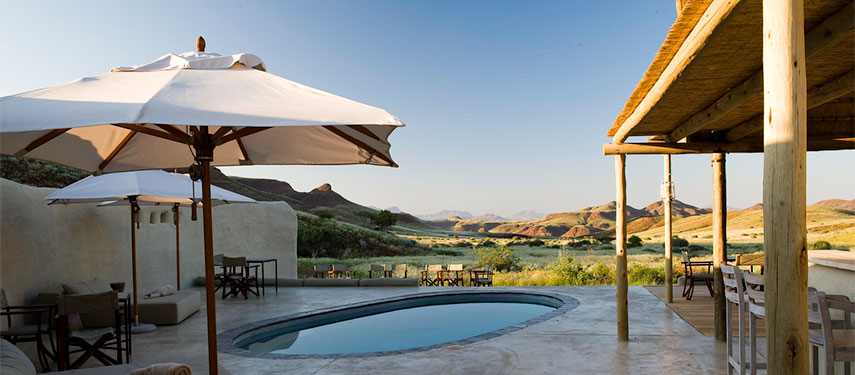
Damaraland Camp – Damaraland
Unique desert wildlife
Damaraland Camp is situated in one of Namibia’s best areas for scenery, offering views over the plains with a stunning ochre-purple mountain backdrop. Ten large en-suite, adobe-style thatched units are raised off the ground, each with a walk-in dressing area and a large deck on which to sit and contemplate the desert.... Read More
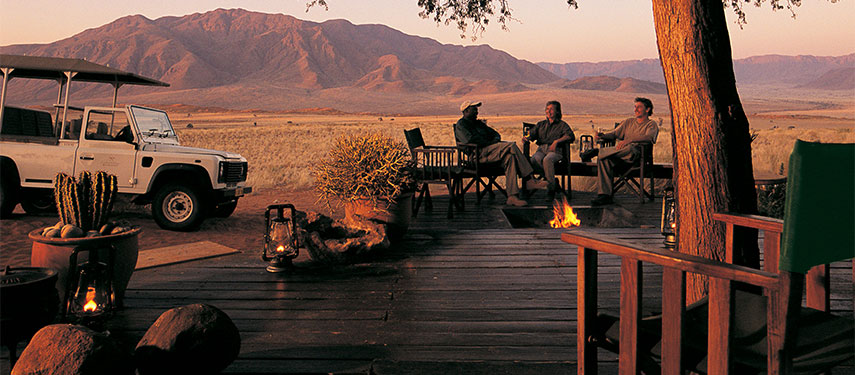
Wolwedans Dune Camp – NamibRand Nature Reserve
Tented desert eco camp
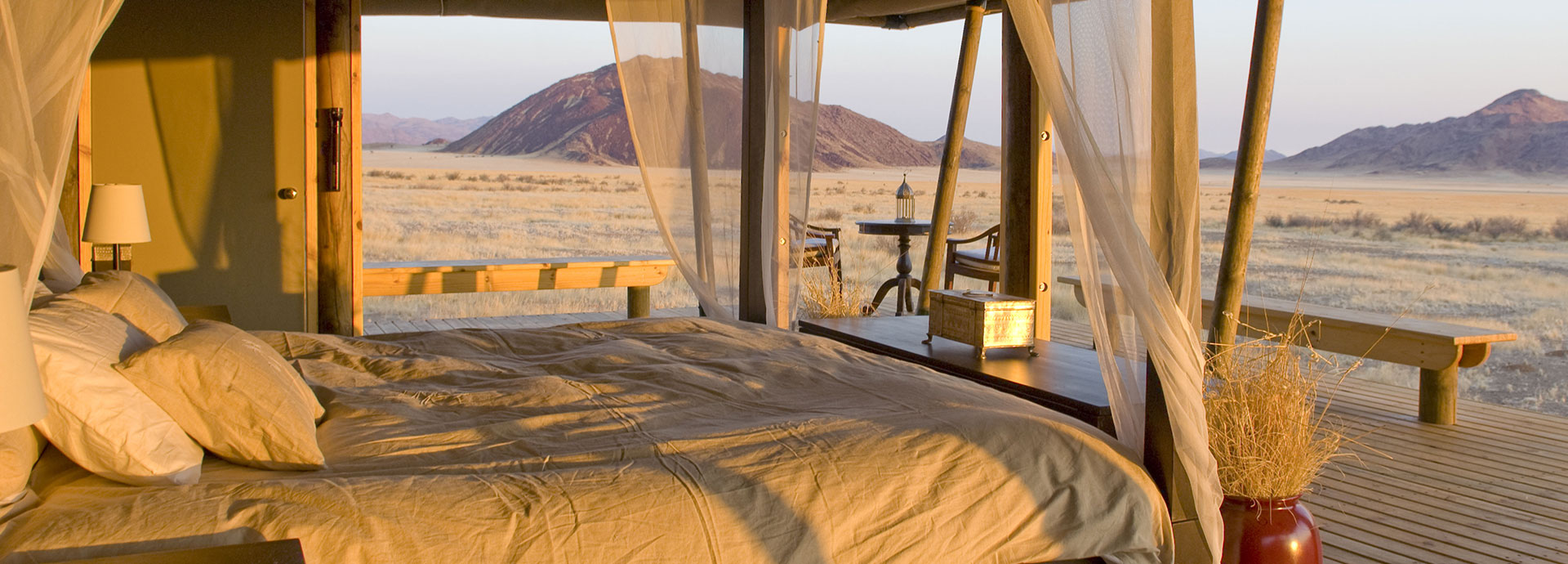
Wolwedans Dune Camp provides a down-to-earth, yet stylish safari experience in the heart of the Namib Rand Nature Reserve. With an unparalleled natural charm that lies in its tranquil and intimate atmosphere, it is the perfect base from which to explore this vast and awe-inspiring region.... Read More
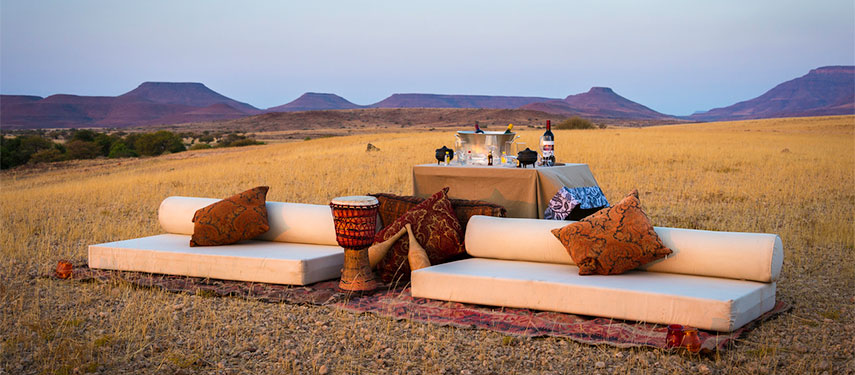
Desert Rhino Camp – Damaraland
An exclusive wilderness experience
In an area between the Etosha National Park and the Skeleton Coast sits Desert Rhino Camp in Damaraland. The camp offers an original and exclusive wilderness experience and the possibility of seeing some of the largest free-ranging population of desert adapted black rhino in Africa.... Read More
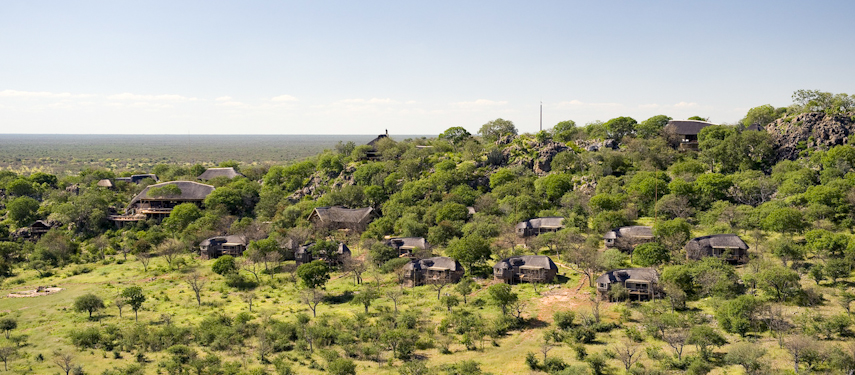
Ongava Lodge – Ongava Reserve
Enjoy resident black and white rhino
Ongava Lodge provides comfortable accommodation, all which have impressive views over a well-frequented waterhole and the plains beyond. During your stay head out for game drives into Etosha National Park, visit any of the nearby hides and enjoy nature walks into the reserve where you will find resident black and white rhino.... Read More
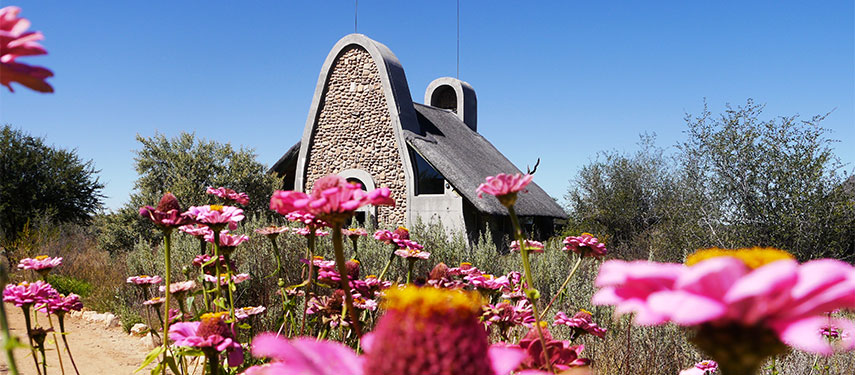
Naankuse – Windhoek Surrounds
Perfect start or end to any Namibian safari
Na’an Ku Se Lodge is an intimate, boutique hotel, wildlife sanctuary and animal orphanage, nestled in the stunning African bush just a thirty minute drive from Windhoek Airport. The award winning Na’an Ku Se Lodge is the perfect base from which to start or end your Namibian safari.... Read More
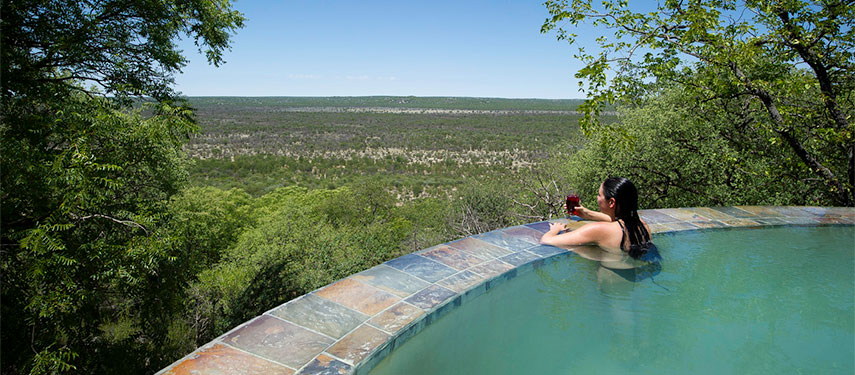
Little Ongava – Ongava Reserve
Sweeping Etosha views
With only three spacious suites, Little Ongava is a small luxury camp well-suited to couples and small groups that guarantees an intimate safari experience. It is perched on the crest of a hill commanding magnificent views of the plains beyond providing an extraordinary focal point on any Etosha safari.... Read More
A collection of safaris in Namibia
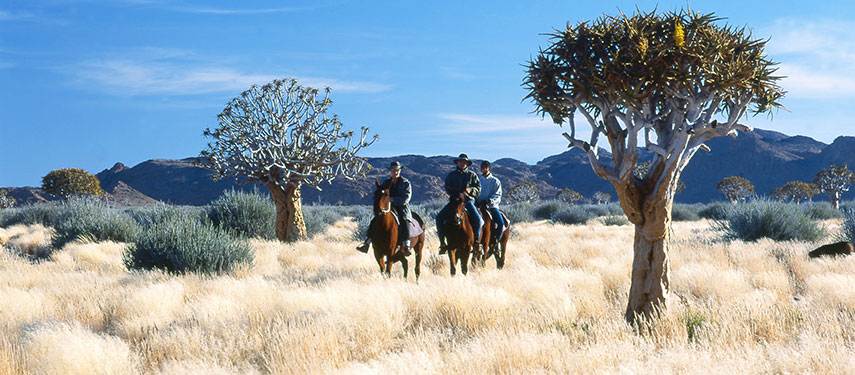
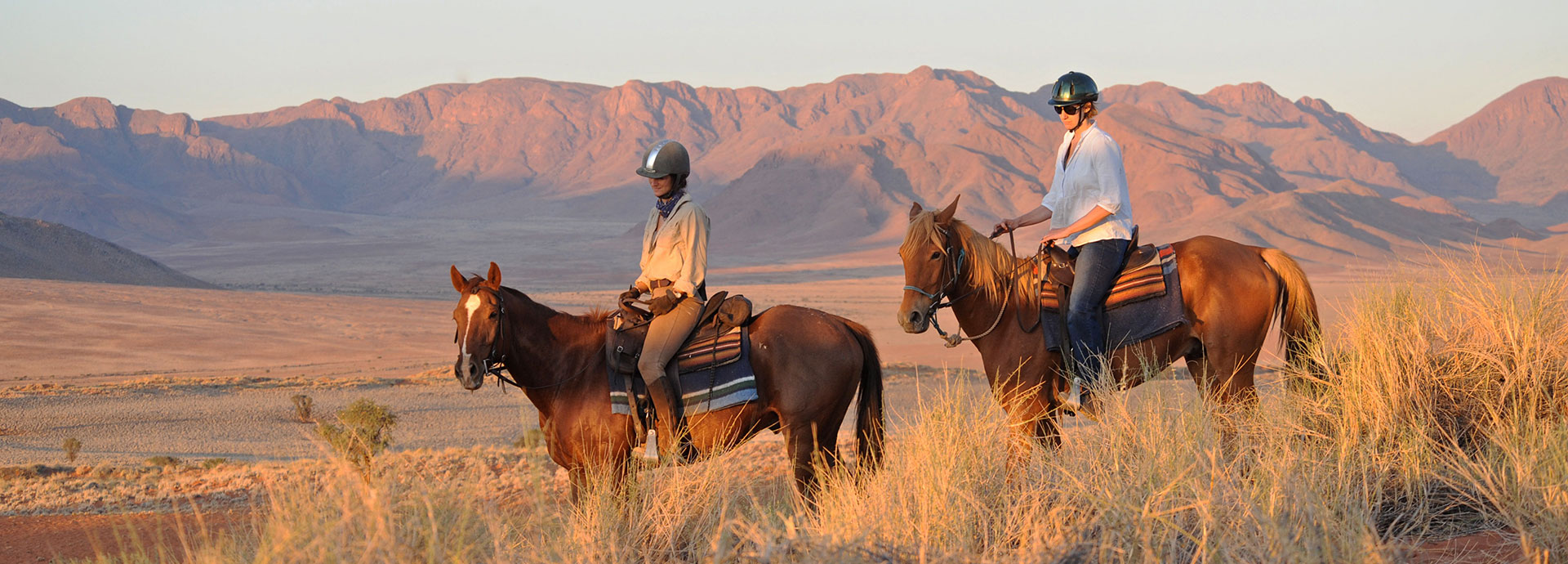
Namibia Horse Safaris
Set Departure | Epic Desert Riding
The Namibia Horse Safari Company has over 20 years’ experience guiding a variety of horse riding safaris, taking in Namibia’s stunning beauty and diversity along with the hauntingly beautiful Namib Desert. Being lightweight and expeditionary in style, these are not 'luxury horse riding holidays’ per se, but they move far and fast, covering the ground required to showcase the ethereal enormity of the Namibian landscape. The solitude is the real luxury!...Read More
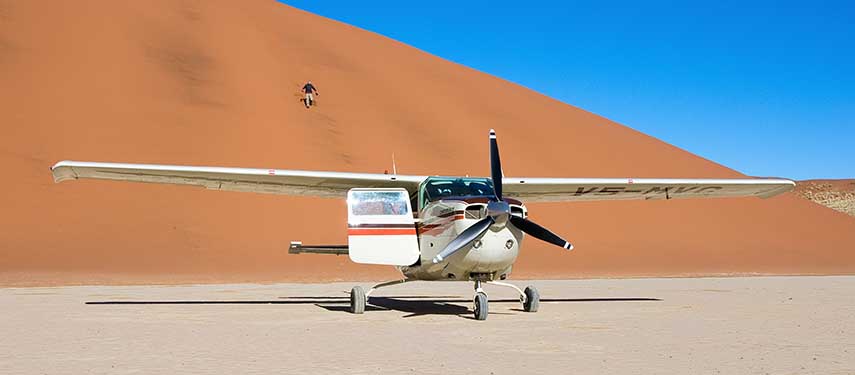
Namibia: Skeleton Coast Flying Safari
Inspiration Itinerary | Namibian flying adventure like no other
In this one-of-a-kind air safari adventure, your guide doubles as the pilot and might land your plane whenever he wants to offer you a closer look at something unique from the desert. You might even land right on the beach in front of a colony of seals, and why not....it all adds to the exclusivity of experience along the unforgiving Skeleton Coast, one of the most inaccessible regions of south-west Africa....Read More
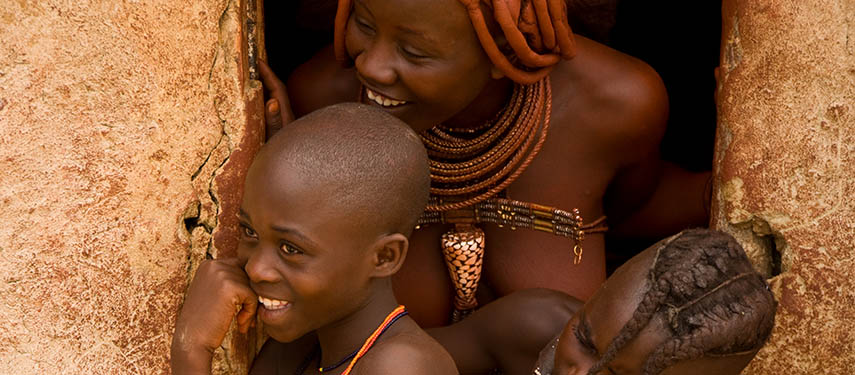
Namibia Himba Safari
Inspiration Itinerary | Sossusvlei, Skeleton Coast & Etosha
This one is for those who wish to sample the very best that Namibia has to offer with iconic locations, exclusivity, and exposure to an ancient culture. Discover the shifting dunes of the Sossusvlei, the other-worldly ancient magnificence of the Kunene River region of the Skeleton Coast, and the prolific wildlife viewing around the salt pans of Etosha. Learn about the lifestyle, culture and tradition of the Himba, one of the last semi-nomadic peoples on the planet....Read More
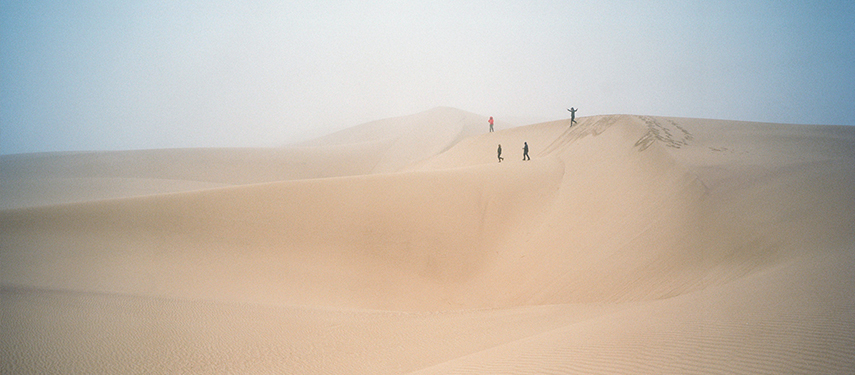
Namibia: Skeleton Coast & Namib Desert
Inspiration Itinerary | Namibia's Wilderness Diversity
Yearning for wide open spaces and horizons, in a mystical desert space where you feel like you have it all to yourself? Then this one is for you. Namibia accentuates the diversity of Africa, and none more so than its contrasting desert landscapes where you will feel the freedom and marvel at the great expanse of nothingness. This top notch suggestion allows you to satisfy your dreams by exploring these ancient lands with a healthy dose of adventure and fun thrown in....Read More
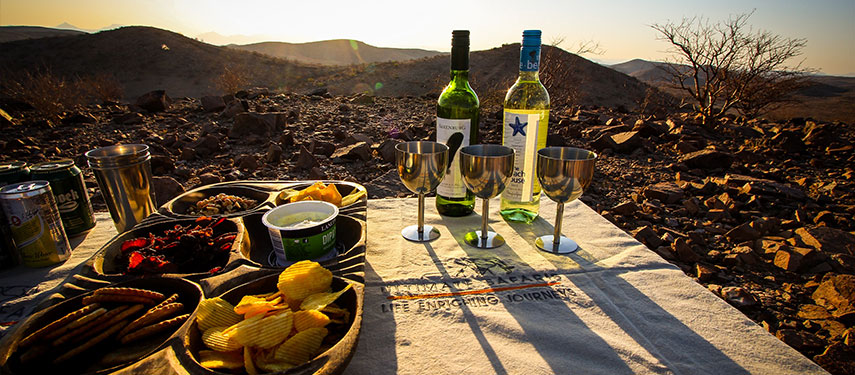
Namibia Under Canvas
Set Departure | Back to Nature Hosted Safari
Whilst appealing to the more adventurous traveller and those seeking a more in-depth Namibia experience, this safari has been designed to offer great value. A fully on-the-road adventure, you will be hosted by one of Namibia's most reputable naturalist guides on a “back to nature” and experientially focused safari that does not compromise on comfort, exclusivity and flexibility....Read More
Namibia: Frequently Asked Questions
The dry season, running from June to November, is the prime window for wildlife viewing — particularly around Etosha’s waterholes, where predator and prey congregate in extraordinary numbers. For photographers, the low golden light of the shoulder months, May and September, is especially rewarding. Visitors seeking solitude and lush post-rain scenery may prefer the green season from December to April.
Namibia suits multiple travel styles. Self-drivers with a 4×4 enjoy tremendous freedom on a well-maintained network of gravel roads, while those covering greater distances often combine fly-in safaris with road transfers. Light aircraft connections between remote camps — Sossusvlei, the Skeleton Coast and Kaokoland — are not just practical; they deliver some of the most spectacular aerial perspectives in Africa.
Australian passport holders do not require a visa to enter Namibia for stays of up to 90 days. A valid passport, return ticket and proof of sufficient funds are standard requirements at the border. Entry conditions can change, so it is always worth confirming current requirements with Namibia’s High Commission or your Classic Safari Company consultant before departure.
Etosha National Park delivers exceptional sightings of elephant, lion, leopard, cheetah, wild dog and endangered black rhino alongside vast antelope herds. Damaraland is home to desert-adapted elephant and some of Africa’s last free-ranging black rhino, while the Skeleton Coast teems with enormous Cape fur seal colonies. Namibia also holds the world’s largest free-ranging cheetah population — a fact that rarely fails to surprise first-time visitors.
Namibia is widely regarded as one of Africa’s most stable and accessible travel destinations. Political stability, relatively low crime rates and a well-developed tourism infrastructure make it suitable for both guided and independent travellers. Standard precautions apply — particularly in Windhoek’s urban areas — and your Classic Safari Company consultant will brief you fully on what to expect at every stage of your journey.
Namibia is well suited to families, particularly those with older children who are comfortable with longer drives and remote environments. Many of CSC’s preferred lodges welcome children of all ages, and the combination of dramatic landscapes, desert wildlife and encounters with Himba communities makes for profoundly memorable experiences. Age restrictions apply at some camps for activities such as black rhino tracking on foot, so it is worth discussing family-specific requirements with your consultant early in the planning process.
Namibia: A Glossary of Terms
- Sossusvlei — a vast salt-and-clay pan enclosed by towering red sand dunes in the heart of the Namib Desert; home to ‘Big Daddy’, one of the tallest dunes on Earth at over 300 metres, and widely considered Namibia’s most iconic and photogenic landscape.
- Deadvlei — a white clay pan within Namib-Naukluft National Park, distinguished by centuries-old camel thorn acacia skeletons blackened by sun and preserved in the arid air, their stark silhouettes set against terracotta dunes in a scene that feels entirely otherworldly.
- Etosha National Park — Namibia’s premier wildlife reserve, centred on a vast salt pan covering over 4,700 square kilometres; during the dry season, its floodlit waterholes attract extraordinary concentrations of elephant, lion, black rhino, leopard and a remarkable diversity of antelope species.
- Skeleton Coast — Namibia’s remote and hauntingly atmospheric northern coastline, named for the whale bones and shipwrecks strewn across its shores; the cold Benguela Current drives a unique fog-based ecosystem sustaining Cape fur seal colonies, brown hyena and desert-adapted lion.
- Damaraland — a vast, semi-arid wilderness in northwest Namibia defined by dramatic granite formations, prehistoric rock engravings at Twyfelfontein and one of the world’s last free-ranging populations of desert-adapted black rhino, trackable on foot with specialist guides.
- Himba — a semi-nomadic Bantu-speaking people of the Kunene Region, distinguished by their use of otjize — a mixture of red ochre and butterfat — applied to skin and hair, and widely regarded as among the last communities in southern Africa to have maintained a largely traditional, pre-colonial way of life.
- NamibRand Nature Reserve — one of the largest private nature reserves in southern Africa, spanning over 200,000 hectares in the southern Namib; designated an International Dark Sky Reserve, it offers some of the most luminous stargazing conditions anywhere on the continent.
- Welwitschia — an extraordinary desert plant endemic to the Namib, producing only two leaves throughout its entire lifespan and capable of surviving for more than a thousand years; regarded as a living fossil, it is among the most scientifically significant plants on Earth.
- Benguela Current — a cold Atlantic ocean current running northward along Namibia’s coastline that creates the fog-rich conditions sustaining the Namib’s unique ecology; it also supports one of the most productive marine environments on the African coast, driving the enormous seal colonies found along the Skeleton Coast.
- Communal Conservancy — a community-managed conservation area under which local Namibian communities gain legal rights over wildlife on their land in exchange for sustainable management practices; with over 80 conservancies now operating, Namibia is recognised internationally as a model for community-based conservation.
Home to some of the world’s oldest and most breathtaking desert landscapes, Namibia is like nowhere else in Africa. It is all about vast horizons and big blue sky, the inhospitable Skeleton Coast, shifting sands and ancient Moon-like landscapes.
Jeffrey Shewell - Namibia Specialist
Their experience and knowledge of Africa is evident and we couldn't have been happier with the total package. This has given us a taste for Africa - now we are ready for more.
Andrew & Pip Stevens
The Classic Safari Company is the best I have dealt with. Extremely knowledgeable & professional, friendly, patient & understanding of first timers to Africa.
Annette Whiley
Absolutely everything was first class & so well organised.
Simon & Jackie Adams
Thank you so much for putting together the most memorable holiday for us. The experiences we have had in the last couple of weeks have gone beyond all expectations.
Jane & Col Loveday
Julia you did a fantastic job - everything was first class. Well organised, efficient and stress free. We all agreed it was the best holiday we've ever had. Cant wait to travel with CSC again.
Milford family
Everything was perfect! Advice and information on destinations and activities hit everything I had hoped to experience. I contacted the Classic Safari Company upon recommendation and have now, in turn, recommended to others.
Tim Bradley
Exellent and wonderful, reaching way above expectations.
Elizabeth Mackintosh
Thank you for putting together the ancestral adventure of a lifetime. I cannot speak highly enough of the trip.
Jenny Kidd
We wanted the opportunity to see as many wildlife parks as possible and the Classic Safari Company provided an action-packed itinerary that included six, with 11 tiger sightings and nine leopard. This was overlaid with an introduction to Jaisalmer, Jaipur and the 'real' India. Pench and Panna were the hidden gems of a really great trip, very well organised, seamless and enjoyable. As a solo traveller I felt incredibly safe at all times. I want to go back!
Mark Taylor
We loved it all. Our son wants to go back tomorrow. We would ALL go back again!
Laurence & Remi Cunningham