Bhutan
Spiritual Kingdom of Happiness
Majestic Mountains & Monasteries
Bhutan | In Summary
- Bhutan operates a strictly controlled tourism model: all international visitors must book through a licensed operator and pay the government’s Sustainable Development Fee — currently USD 100 per person per night — a policy that directly funds conservation, education, and healthcare and ensures the kingdom remains uncrowded and authentic.
- Paro International Airport, the country’s sole international gateway, is served by Druk Air and Bhutan Airlines, with most Australian travellers connecting via Bangkok, Singapore, Delhi, or Kathmandu; the dramatic mountain approach — among the most technically demanding in commercial aviation — is itself a memorable beginning to the journey.
- The black-necked crane, a sacred and endangered migratory species, winters in the Phobjikha Valley between late October and early March, its arrival coinciding with the annual Black-Necked Crane Festival at Gangtey Monastery — one of the most distinctive wildlife and cultural experiences in Asia.
Enigmatic, unspoilt and deeply spiritual, the Kingdom of Bhutan is regarded as one of the world’s last ‘Shangri‐La’s’. It measures its wealth not by GDP but by ‘Gross National Happiness’, is carbon negative by absorbing more carbon than it emits and has environmental legislation which stipulates that least 60 percent of the country must remain forested for all future generations; it currently stands above 70 percent. For a limited number of visitors, this means peaceful forests, authentic cultural heritage and a sense of spiritual purity.
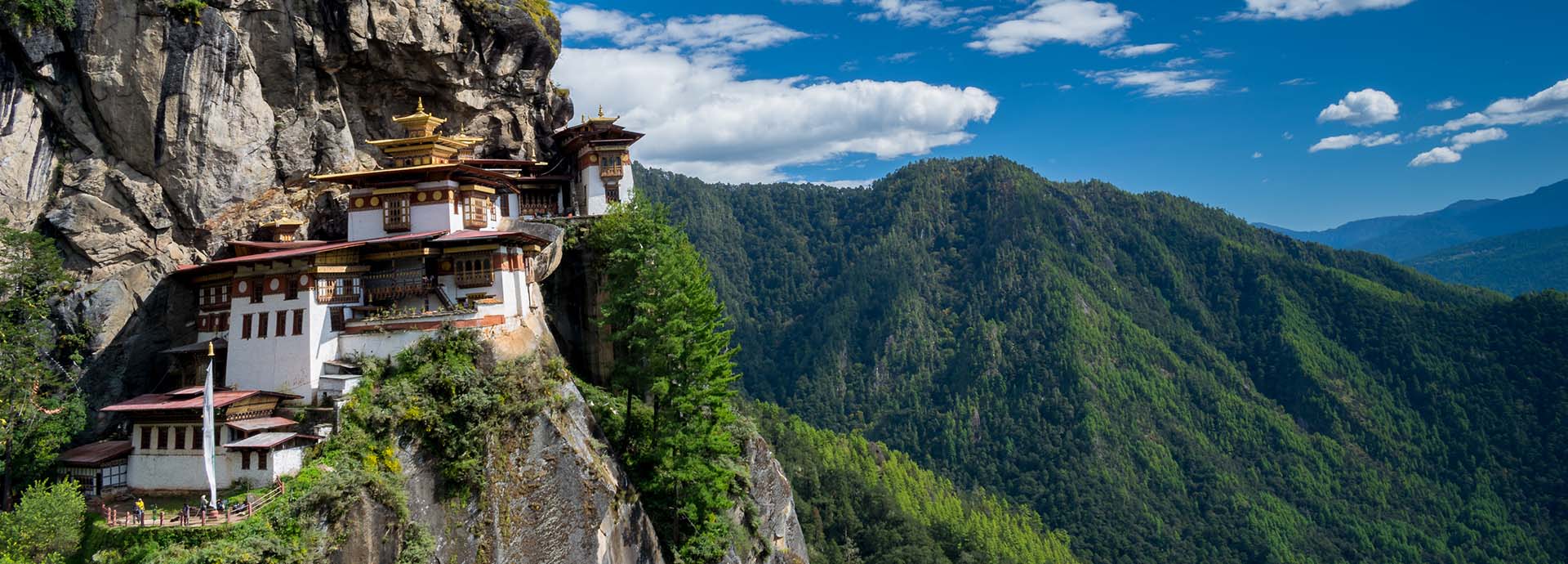
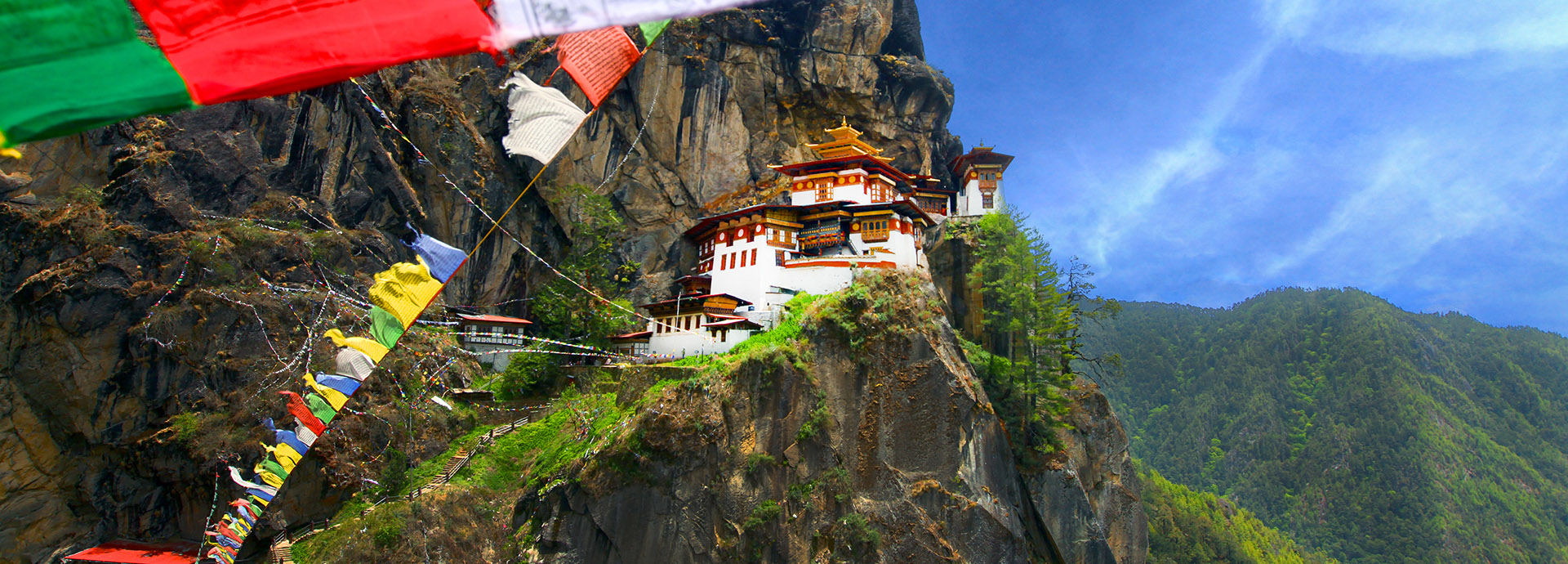
Visiting Bhutan you can spend your time hiking among the pristine Himalayas, admiring fortress-like dzongs, attending cultural festivals and visiting teetering monasteries such as the famous ‘Tigers Nest’, perched on a rocky ledge 900 metres above the Paro Valley floor. Nature lovers will delight in spotting 700 species of birds, over 50 species of rhododendron, and plenty of wildlife including golden langur, blue sheep and even snow leopards. Browsing and shopping for textiles and handicrafts you’ll find artisanal craftsmanship is proudly preserved along with age‐old social customs and traditions. If you are jaded by having ‘done and seen it all’, a visit to this beautiful and unique pocket of Asia is a must for you.
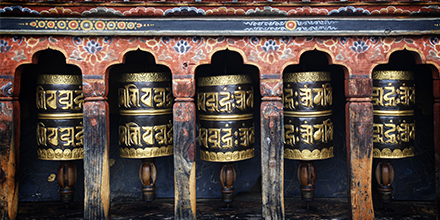
You Will Love
• A slice of Himalayan heaven
• Fascinating cultural heritage
• Ancient monasteries clinging to cliffs
• High value, low volume tourism
• A spiritual haven
Let us design your perfect itinerary.

Unforgettable experiences in Bhutan
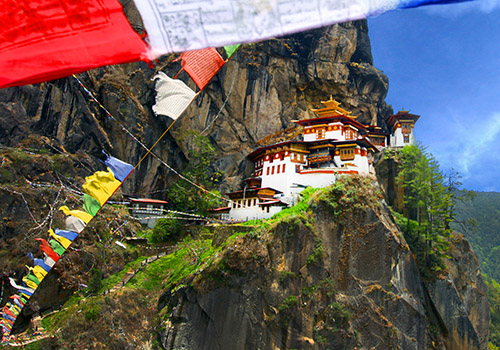
Reach new heights at the Tigers Nest Monastery
Reach new heights at the Tigers Nest Monastery
One of the Himalaya’s most iconic sites, Paro Taktsang (the Tiger's Nest Monastery) is a must see for anyone that travels to Bhutan. The astoundingly beautiful sacred Buddhist temple miraculously clings to a cliff face 900m abov...
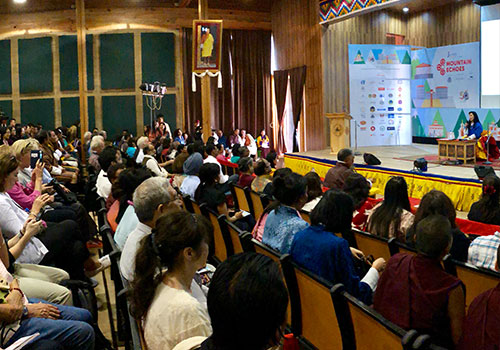
Learn at the Mountain Echoes Literary Festival
Learn at the Mountain Echoes Literary Festival
Spend three blissful days in the mountains at the Mountain Echoes Literary Festival. This is held every year at the end of august in Bhutan’s stunning capital, Thimphu. It is a celebration of Bhutan’s varied cultural heritage ...

A selection of our favourite places to stay in Bhutan
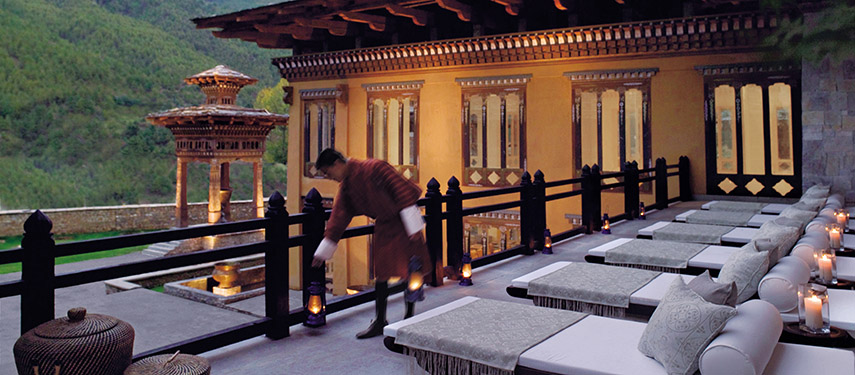
Taj Tashi Hotel – Thimpu Valley, Bhutan
Authentic five-star experience
Taj Tashi is nestled in the heart of the stunningly picturesque Thimphu Valley, high in the Himalayas. It provides a gateway to Bhutan’s mythical and deeply spiritual mountain landscape and which blends ancient culture with modern technology and first-class hospitality to give you an authentic yet luxurious five star experience.... Read More
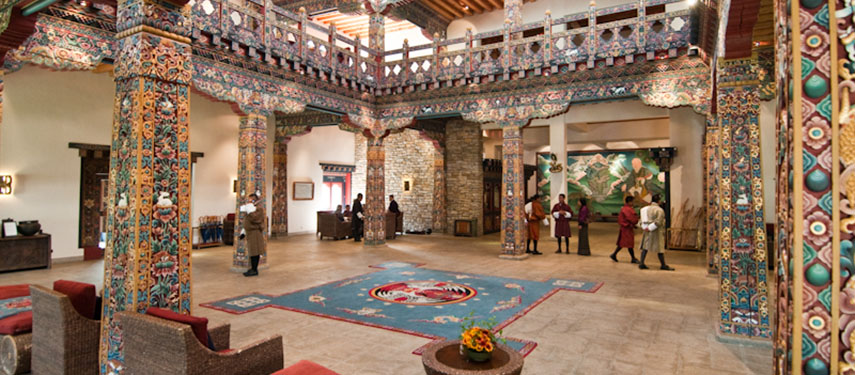
Zhiwa Ling Hotel – Paro Valley, Bhutan
A peaceful work of art
Nestled in the hills outside Paro, Zhiwa Ling is an architectural gem with hand-decorated intricate carvings and that unites Bhutanese culture and heritage with 21st‐century comforts. Within easy reach of Bhutan’s most revered temples, the hotel is a work of art, painstakingly constructed, carved, and painted by Bhutanese artisans.... Read More
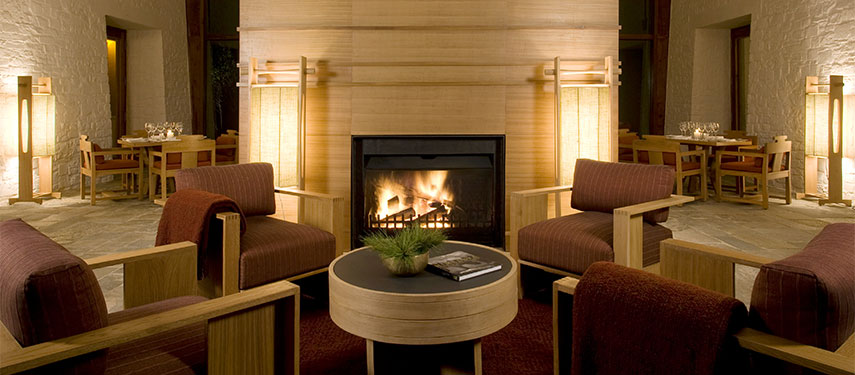
Amankora Bumthang – Bumthang Valley
Remote Hideaway
Amankora Bumthang is nestled in the Choekhor Valley, adjacent to the first King of Bhutan’s royal palace. The region is often referred to as the religious heartland of Bhutan and is home to some of its oldest temples and monasteries. Immerse yourself in Bhutanese culture at this remote hideaway in one of Bhutan’s least visited corners.... Read More
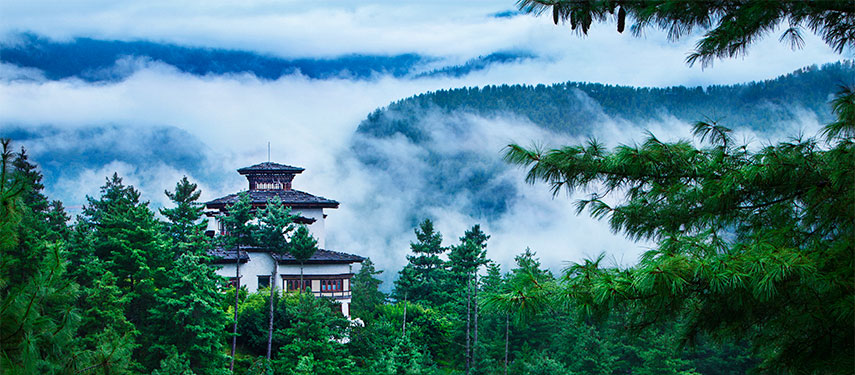
COMO UMA Paro – Paro Valley, Bhutan
Land of the Thunder Dragon
COMO Uma Paro embraces Bhutan’s sense of untouched tranquility, perching proudly on a Himalayan mountainside, flanked by thick pine forest and showcasing breathtaking views. It is a sanctuary where you can truly relax and be at one with the enormity and serenity of nature whilst indulging in a little luxury.... Read More
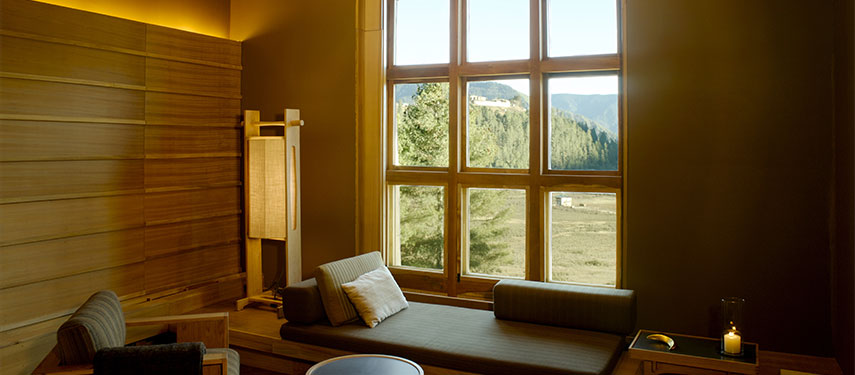
Amankora Gangtey – Gangtey Valley, Bhutan
A cozy oasis
Amankora Gangtey is located in the Phobjikha Valley. The valley is part of the Black Mountains National Park, one of Bhutan’s most important wildlife sanctuaries and in winter home to a flock of 300 rare and endangered black-necked cranes which arrive from Tibet. Numerous nature walks and treks are offered throughout the valley.... Read More
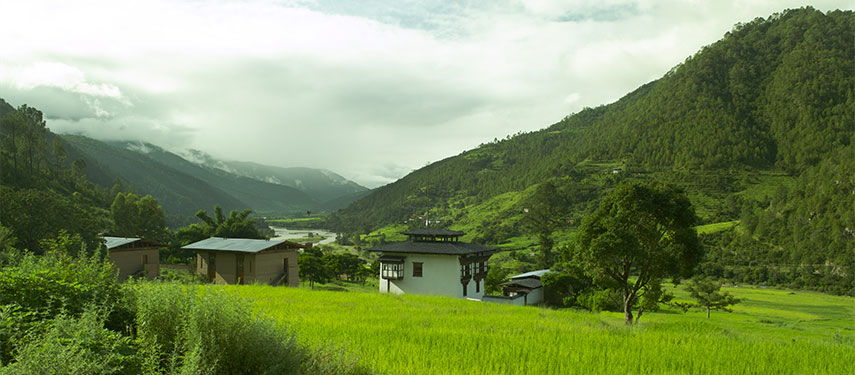
Amankora Punakha – Punakha Valley
Surrounded by nature
Amankora Punakha lies at an elevation of 1,300m above sea level in the Punakha Valley. The lodge itself includes a traditional Bhutanese farmhouse built as a residence by a previous Je Kempo (spiritual and religious leader). The courtyard is suitable for outdoor dining and relaxation in Punakha’s temperate climate.... Read More
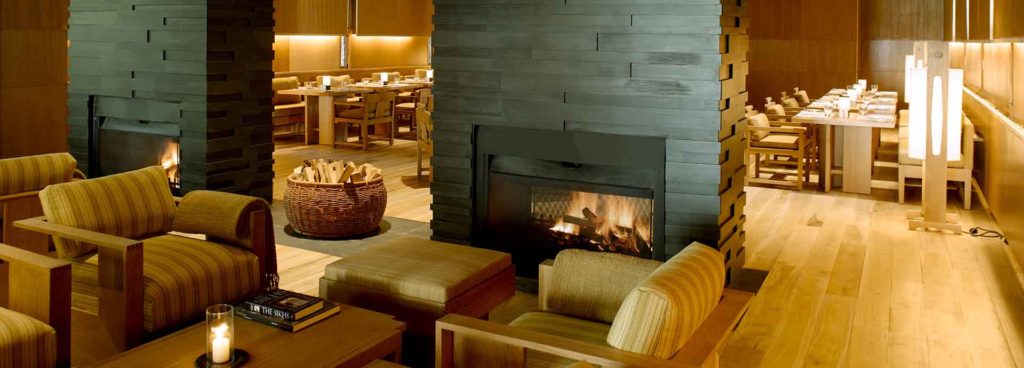
Amankora Thimphu – Thimphu Valley, Bhutan
City meets country hideaway
Amankora Thimphu sits in a blue pine forest in the upper reaches of the Motithang area of the Thimphu Valley. The valley is at an altitude of 2,350m surrounded by richly forested mountains dotted with ancient monasteries and temples. It remains a quiet retreat away from the hustle and bustle of the Kingdom’s main commercial centre.... Read More
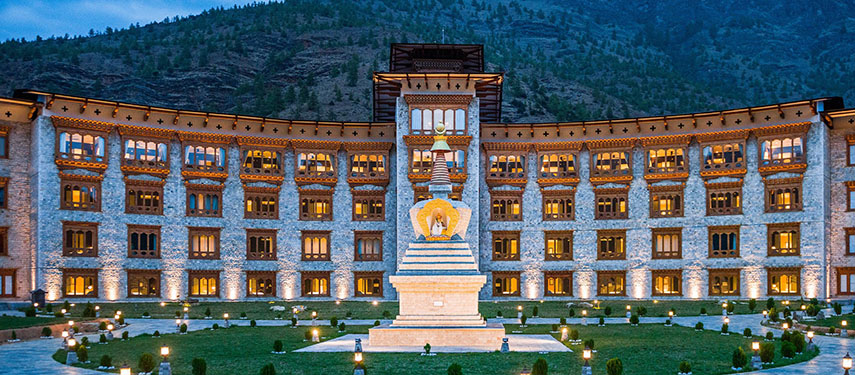
Le Meridien Paro – Paro Valley, Bhutan
Understated luxury and location
The Le Meridien Riverfront Hotel is perfectly located on the edge of the Paro River surrounded on all sides by panoramic views of the Eastern Himalayas. Poised to be a creative hub in Bhutan with its idyllic swimming pool, it is the perfect place to unwind after a busy day of exploring the surrounding foothills and ancient sites.... Read More

A collection of journeys in Bhutan
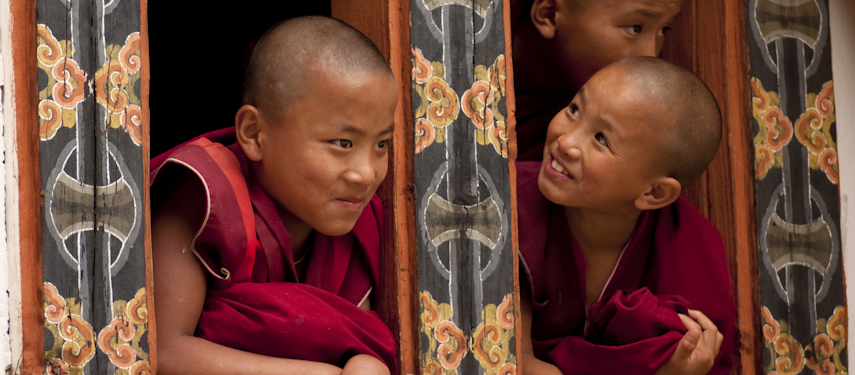
Bhutan Heartland
Inspiration Itinerary | Exploring an ancient way of life
Nestled between India, Sikkim, Assam and Tibet lies the magical, mystical country of Bhutan. Historically cut off from the rest of the world by its own desires, and its geographical positioning, Bhutan now welcomes visitors with wide smiles and warm hearts. Travel to a land where the religion is uplifting, the air is pure, the architecture inspiring, the mountains magnificent and the people are absolutely delightful!...Read More
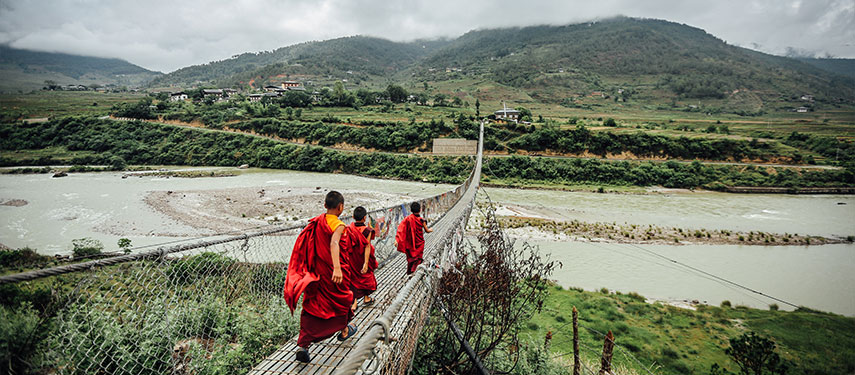
Bhutan’s Mountains & Monasteries
Inspiration Itinerary | Explore the tiny kingdom of Bhutan
Chant with monks, explore temples and marvel at monasteries and museums that house hundreds of years of treasures! Hike to Tiger's Nest, natter with nuns, be inspired by the fresh air and the endless stunning scenery. Bhutan is truly one of the last 'shangri las' and this journey can be tailored to as energetic or as gentle as you wish. Explore the country where happiness reigns supreme!...Read More
Bhutan: Frequently Asked Questions
The two peak seasons are spring (March to May) and autumn (September to November). Spring brings warm days, blooming rhododendrons, and some of the clearest Himalayan views of the year; autumn offers stable skies, cooler temperatures, and the highest concentration of tsechu festivals. Winter (December to February) is cold but rewards visitors with the spectacle of black-necked cranes in the Phobjikha Valley and uncrowded dzongs. The monsoon months of June through August bring heavy rainfall, though the literary festival Mountain Echoes takes place in Thimphu in late August. For Australian travellers, autumn aligns well with school holiday windows and is generally the most sought-after season.
Australian passport holders require a visa to enter Bhutan. Unlike most destinations, the visa cannot be applied for independently — it must be arranged through a licensed Bhutanese tour operator or an overseas agent partnered with one. The visa is approved in Thimphu before departure and stamped on arrival at Paro International Airport. In addition to the visa fee, all visitors pay the Sustainable Development Fee of USD 100 per person per night, which funds public services and underpins Bhutan’s low-volume tourism model. The Classic Safari Company manages the full entry process on behalf of its clients.
The Sustainable Development Fee (SDF) is a government levy of USD 100 per person per night, charged to all international visitors except Indian, Bangladeshi, and Maldivian nationals. Introduced by the Royal Government of Bhutan, the fee funds free education, universal healthcare, and conservation programs across the kingdom. It is separate from accommodation, guide fees, and transport costs. Rather than a tax, the SDF is best understood as an investment in the preservation of the very qualities — cultural integrity, ecological health, and uncrowded landscapes — that make Bhutan so extraordinary.
There are no direct flights from Australia to Bhutan. Paro International Airport, the kingdom’s sole international gateway, is served primarily by Druk Air and Bhutan Airlines. Most Australian travellers connect through Bangkok (Suvarnabhumi), Singapore, Delhi, or Kathmandu — all of which offer onward flights to Paro. The mountain approach into Paro is widely considered one of the most dramatic in commercial aviation, threading between Himalayan peaks at low altitude; flights typically operate in daylight hours only and are subject to weather conditions. The Classic Safari Company coordinates all flight logistics, including connections, as part of each itinerary.
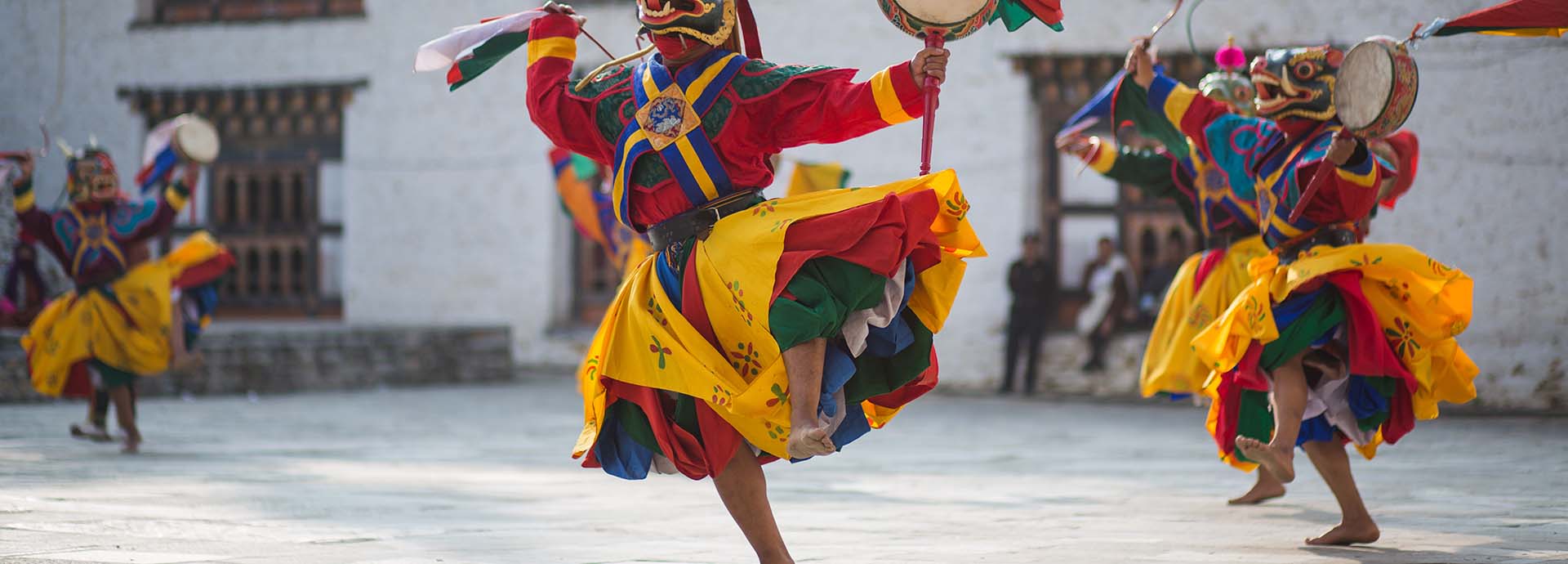
Tsechus are sacred Buddhist festivals held annually at dzongs and monasteries throughout Bhutan, typically featuring Cham — elaborate masked dances performed by monks to bless spectators and ward off evil spirits. They vary in scale and date from region to region: the Paro Tsechu (spring) and Thimphu Tsechu (autumn) are the largest and most internationally attended, while festivals in Punakha, Bumthang, and Haa offer a more intimate experience with fewer visitors. Witnessing a tsechu is one of the most immersive cultural encounters available anywhere in Asia and The Classic Safari Company can build itineraries around specific festivals on request.
Bhutan is an outstanding destination for active travellers. Day hikes are woven into virtually every itinerary — the ascent to Paro Taktsang (Tiger’s Nest Monastery), a 900-metre climb above the Paro Valley floor, is the most iconic. Beyond the famous trails, multi-day treks such as the Druk Path and the Snowman Trek traverse high-altitude passes, yak pastures, and remote valleys largely unchanged for centuries. Elevations across Bhutan range from approximately 200 metres in the southern lowlands to over 7,500 metres in the north, so itineraries can be calibrated from gentle valley walks to demanding high-altitude expeditions. The Classic Safari Company tailors activity levels to each traveller’s fitness and ambition.
An absolutely fantastic travel company - every one of the many trips they have organised for us over 22 years have been faultless and fabulous.
Judith & Roger Williams
Would do it all again and not change a moment. Best holiday ever!
The McGowan Tribe
It certainly was the best trip we have EVER had. The experiences were mind blowing. We want everyone we know to experience Africa - the animals, the people - magical.
Jo-anne & Dean Mifsud
The Classic Safari Company is the best I have dealt with. Extremely knowledgeable & professional, friendly, patient & understanding of first timers to Africa.
Annette Whiley
Classic Safari Company were brilliant - 10/10
Di & Kingsley Yates
Classic Safari is the place to go to for "top end" adventure travel.
Ron & Alison Guthrie
If you want the most sensational experience in Africa let Julia and the staff at Classic Safari Co plan it for you! Their knowledge, expertise and enthusiasm for their job means your every wish will be fulfilled.
Miriam & Joseph Harrison
Their experience and knowledge of Africa is evident and we couldn't have been happier with the total package. This has given us a taste for Africa - now we are ready for more.
Andrew & Pip Stevens
Classic Safari Company has done it again! A unique experience that ticked all the boxes - wildlife, culture and dining experience. A dream come true!
Ros Wheeler
Absolutely everything was first class & so well organised.
Simon & Jackie Adams
The trip of a lifetime, couldn't have dreamt of a better adventure if I tried.
Emma Jeffcoat
You can't improve on perfection. I had my best birthday and holiday with my family celebrating my 80th birthday in Africa. Everything that Julia organised was perfect and the whole trip was a highlight!
Buckingham Family
Everything was perfect! Advice and information on destinations and activities hit everything I had hoped to experience. I contacted the Classic Safari Company upon recommendation and have now, in turn, recommended to others.
Tim Bradley
Very knowledgeable and patient. Our trip was all that we hoped for. Wonderful!
Jane & Robert Happell
Thank you for making our trip to Africa so spectacular. The attention to detail really made it special. It really was the trip of a lifetime.
Paul Cozzi
An amazing experience - the best family holiday we have ever had. We were extremely impressed by the meticulous attention to our itinerary. I can't speak highly enough of all the elements of this exciting journey!
Sheryl & Robert Taylor
We loved it all. Our son wants to go back tomorrow. We would ALL go back again!
Laurence & Remi Cunningham
Classic Safari are the people who genuinely know other culture and offer incredible insight to perfectly meet your expectations.
Melanie McMillan & Iain Jones
The trip exceeded my expectations and was the best family holiday I have ever had. Our children simply loved it and now I know more about African wildlife than they do about our own farm animals.
Rowntree family
We are so happy we put our trust in CSC, we had an amazing adventure and would recommend them to anyone.
Kim & Brad Balance
Julia you did a fantastic job - everything was first class. Well organised, efficient and stress free. We all agreed it was the best holiday we've ever had. Cant wait to travel with CSC again.
Milford family
We wanted the opportunity to see as many wildlife parks as possible and the Classic Safari Company provided an action-packed itinerary that included six, with 11 tiger sightings and nine leopard. This was overlaid with an introduction to Jaisalmer, Jaipur and the 'real' India. Pench and Panna were the hidden gems of a really great trip, very well organised, seamless and enjoyable. As a solo traveller I felt incredibly safe at all times. I want to go back!
Mark Taylor
Exellent and wonderful, reaching way above expectations.
Elizabeth Mackintosh
Thank you for putting together the ancestral adventure of a lifetime. I cannot speak highly enough of the trip.
Jenny Kidd