E-NEWS | FEB 2026 | Un-Googleable Gems
Un-Googleable Gems Botswana, Zambia & Zimbabwe | Newsletter Feb 5, 2026
Read More
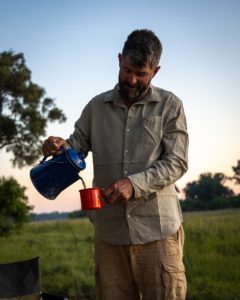
Simon Byron is the epitome of the African bushman. Clad in a singular wardrobe or khaki, whether wading through the Okavango Delta or attending a close friend’s wedding, his healthy beard, robust presence and sparkling eyes exude the confidence and wisdom of a seasoned safari guide.
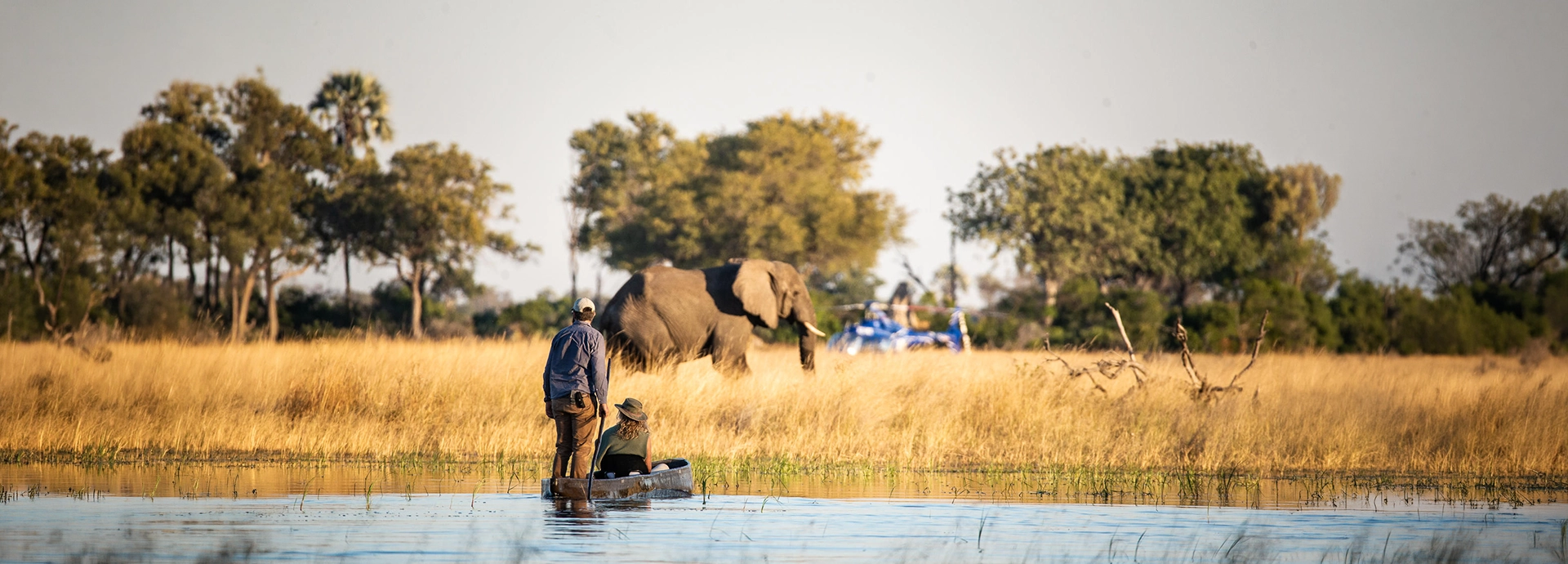
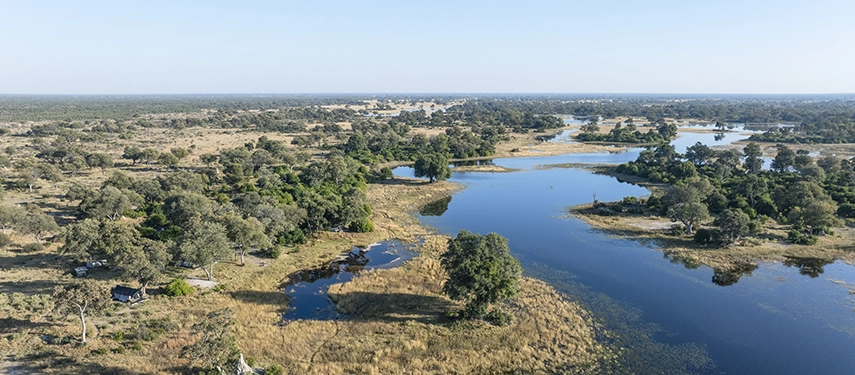
Simon’s enthusiasm is infectious. With a storied background in safari guiding, specifically for mobile camps, he, and wife Marleen, worked tirelessly to secure an operating lease for a secluded concession to the southwest of Botswana’s Okavango Delta. Today, the now well-established Beagle Expeditions offers guests an extraordinary experience, part mobile camp, part walking safari, all within an exclusive-use region shared by no more than 10 guests at any one time.
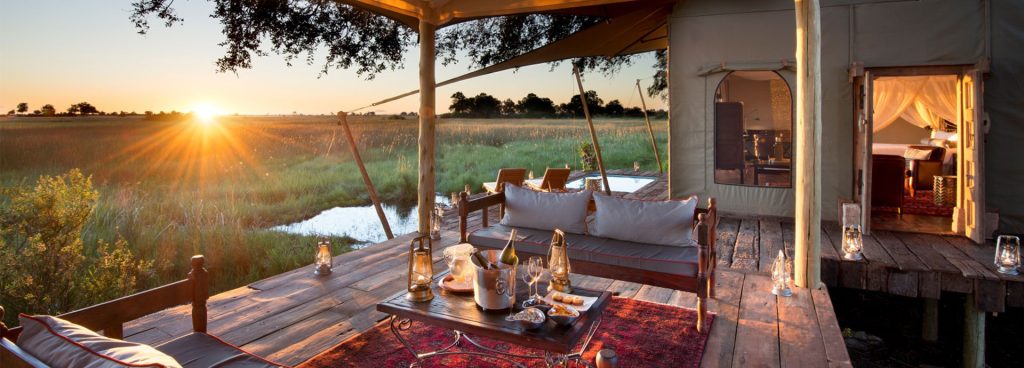
While evolving from the original fully mobile operation, Simon has established two semi-permanent camps between which guests walk, mokoro or game drive, to be greeted by the same camp staff, evoking the same wonderful sense of familiarity found in mobile expedition camps.
Simon recently shared a moment with us to tell of Beagle Expeditions’ founding, its uniqueness, and how luxury can sometimes mean forgoing the frills and trappings of a more opulent, established safari camp:
Classic Safari Company: What is a potted history of Beagle Expeditions?
Simon Bryon: So we started as a fully mobile safari company in 2017. We had a couple of boats, so we used to do a lot of boating safaris into the middle of the Delta. We had a closed game drive vehicle and a backup system.
We went to the Kalahari a lot, we did a bit of Moremi. But predating 2017, we had been tendering for concessions and trying to get into the concession side of things.
We managed to get permission to start operating here in 2018, but obviously the season had already been pretty much sold. So we managed to do one trip in 2018, and then in 2019, we sold most of our bookings through here. And then, beginning of 2020, we signed a long term lease agreement on the area; and then COVID came.
But it was good, actually, because, putting aside the financial stresses, it was magic. We got to know the area really well, we kept our whole team employed, we just changed the ball game; for example, the chef became chief road cutter. We explored, we settled the game down, we had vehicles out every day just to settle things down. Because it was wild when we first started – animals used to just bolt away from us.
We started just with one site here, and then we convinced the concession that two sites would allow us to do a trail, and then we explored the southern area quite extensively, and got the second camp. I think we started in that camp in 2022.
CSC: So, was it from your mobile background that you decided to do a more informal style of on-the-ground tented camp?
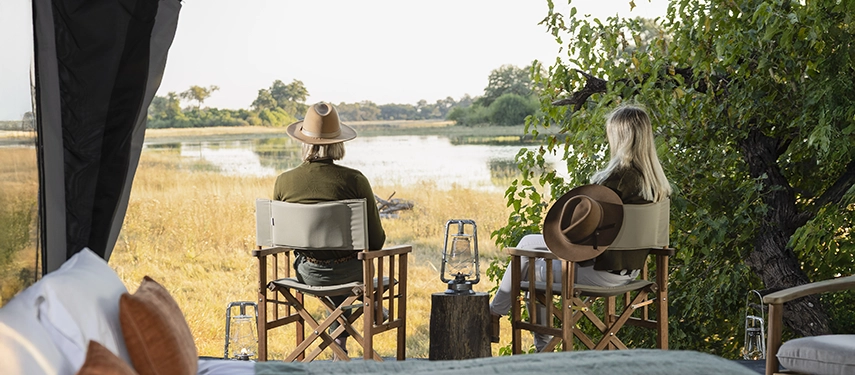
SB: Yeah, so definitely a part of that. I’d spent quite a few years on the mobile side of things, had worked in lodges before that. I also did quite a bit of private guiding across the continent. So basically I just tried to bring in different elements from those experiences. We started here, fully mobile, where we moved our camp between the two [locations], and then we slowly settled into it. Our lease agreement is for a seasonal camp. So we settled into just having them up for the season. The whole idea was to peel back on certain elements of the luxury, especially the material luxury, and just focus more on experience and just the rawness of what this place has to offer.
CSC: So, your ethos is very much about the sense of immersion over the sense of the whistles and bells, so to speak.
SB: Yeah, definitely – focussing on experience. I’ve always said if you want really amazing luxury, the UK, Europe, America have six-star luxury hotels with all the bells and whistles. What we have here is this; space and experience that comes with the immersion into a wild ecosystem. So, the core focus was that.
CSC: How is this received when the wealthy can afford the ultimate luxury and get the bush experiences? How do they feel about stripping all of those superficial things away?
SB: We’ve had one or two that have come in a bit shell-shocked in the beginning, but by and large, most people settle in very quickly. You have everything you need, but nothing that you don’t need. So people settle into that pretty quickly. I had one guy who told me that he lives a life of luxury on tap. He has a private chef that flies in his jet with him wherever he goes, cooks him first-class meals, when his wife drinks champagne, she only drinks the best, et cetera, et cetera. And his comment was, “what I can’t get easily is experience”. And he kind of summed it up for me that that’s what we do. or that’s what our focus is. We try and do it – whether we get it right every time, who knows?!
CSC: Adding the walking aspect, adding the second camp, it gave you the opportunity to do the cross-camp walk. How important is that to the overall Beagle experience?
SB: Doing privately guided safari is where you’re essentially just a tour guide or host, but you’re going from lodge to lodge, versus doing a mobile safari where you’re a contained unit going from place to place.
I always found that moving day was an extremely powerful part of that safari experience, where you arrive in a new place in the true mobile sense, with the same camp, and the same staff complement. The camaraderie that builds between the staff and the guests is an awesome thing, and there’s excitement, and everyone’s accomplished something that day.
That is what we try to create with our two camps. So, the walk is obviously very special. It’s an incredible country to traverse. We often do it as a combo between a walk and a mokoro when the floods are in. And then we do quite a few multi-gen families that come in. Obviously, with little kids, you can’t do it. But then we just explore the western part of the concession, and take the whole day to get into the other camp. But the idea is of a full journey, and that sense, at the end of the day, that you’ve arrived somewhere, it’s an accomplishment to get there.
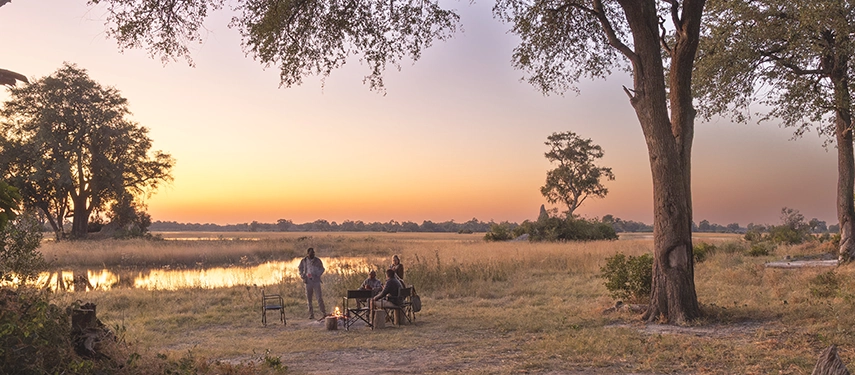
And then the whole staff complement moves as well. So keeping that mobile relationship element, where you’ve got the same host, same chef, same butlers – everyone’s contained in that unit. It was definitely from the mobile side of things that we wanted that journey, essentially.
CSC: Do you do crossovers? So you’ll have a group in this camp, and a group in the other camp, and then you’ll…
SB: Do a switcheroo? Yeah. So that’s how the booking system works. You’ve got four-night slots, fill up both camps with a combined total of 10, so it’s very small, intimate groups. And then, yeah, we do a switcheroo.
We’ve got a couple of trails that we can follow to get to the other camp, so we generally don’t bump into each other. Right now, it’s quite easy to drive with the waters down, but when the flood’s in, it’s a two-and-a-half-hour drive to the bottom camp. So when the flood’s in, we never bump into each other, vehicle-wise. But when it dries out of it, the unwritten rule is that if there’s a crazy sighting, it would be dumb not to allow the other guys into that sighting. So, if there’s, like, lion on buffalo or something, we could cross over. But when the flood’s in, that never really happens.
CSC: If you could tell anybody the one reason to come to Beagle, that sets it apart, or the experience that they’re going to find here, that they might be very hard pushed to find anywhere else, what would be your big selling point, do you think?
SB: I think the exclusivity is next level. I think that’s probably a very strong element to it, with only 10 people in the whole concession. So if you’re doing an exclusive camp cooking, it’s just you and your family, or you and your friends, and you more than likely will not see another human in your stay. I think that’s a very powerful element of it. I think also being a small intimate camp, the relationship with the staff is a lot more intimate, because you’ve only got your way to your chef, then the camp has a tent butler. I think, in bigger operations, there’s a lot of faces to try and remember, where’s here, it becomes, not family, but it becomes close fast. And then, obviously, having a private concession, where you can do anything: you can off-road drive, you can walk, you can night drive, you can mokoro, obviously, water-level dependent. You’ve got the freedom to do everything you want. And then obviously, a big factor in all of that, being small groups, it’s very easy for the guides to tailor safari as you go, based on the guests, and their interests, and their desires, and their abilities, especially from the walking side of it.
CSC: We love your setup. It feels so complete, and the way the two camps are so sort of symbiotic, work together really well, and you’ve got walks in between. But is there is there a next metamorphosis or a next stage or next add-on to Beagle Expeditions?
SB: Um… I’ve often said that we are done. This is magic, and we really chuffed here. Having said that, if an opportunity does arise with something really special… You know, this area is incredible, so it would have to match or better this. That’s not going to be an easy task, on its own. So if something did arrive, we would certainly have a look at it. But we’re not hunting for the next opportunity. This keeps us busy enough as it is.