
DISPATCHES FROM EXOTIC LANDS
What is a Luxury Safari?
Experience Over Extravagance
Our reasons to travel are changing, and rarely more evidently than in the realms of the luxury safari.
Why do we travel? Is it to gather a fresh smudge in the progressively more dogeared pages of our passports? Is it to boastfully claim another tick on our ‘life goals’ checklist? Of course not. We travel to experience.
True, on occasion, there may be a distinct purpose or theme to our journeys; horseriding, birding or the conquest of a specific trail or peak. However, these are experiences in themselves, and it is for this reason that we burgeon the balance of credit cards, endure hours that feel like weeks aboard international flights and forgo our walk-in robes for soft-sided duffels. Experience – or experiential travel – is the new luxury safari.
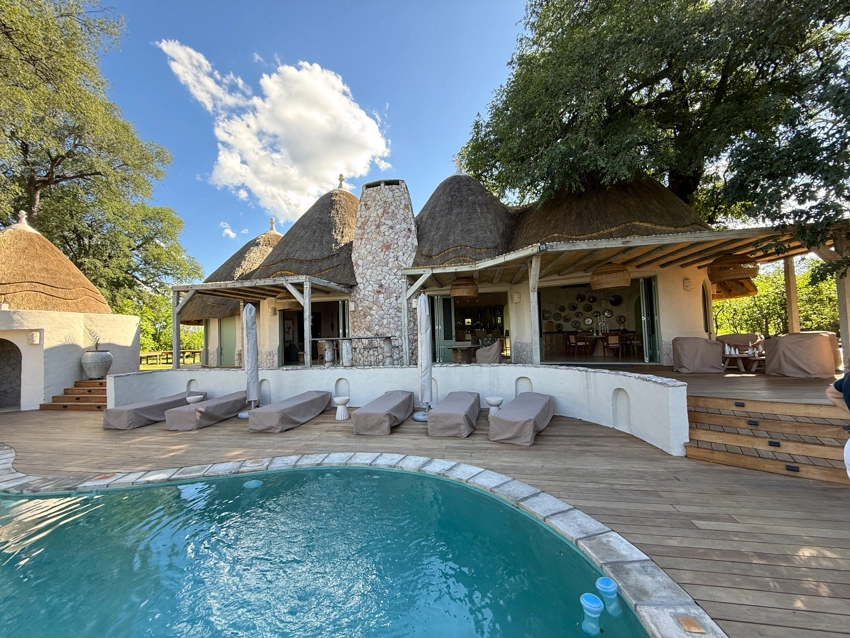
The establishment of a new ultra-luxe safari lodge on the plains of the Maasai Mara by one of the world’s leading premier hotel chains was met with eye rolls at best, vehement ire and legal action at the more extreme. The organisation gave evidence that it had adhered to every stipulation and requirement for its gleaming, high-luxury camp; whether its environmental impact is as minimal as it claims is yet to be evidenced. Politics and legalities aside, what is abundantly clear to anyone who has visited Africa – or any wilderness destination – is that the property planners and board of directors have monumentally missed the point.
“20 years from now you will be more disappointed by the things that you didn’t do than by the ones you did do.
So throw off the bowlines. Sail away from the safe harbor. Catch the trade winds in your sails. Explore. Dream. Discover.” – Mark Twain
A quick tap of the keyboard reveals myriad inspiring travel quotes such as this. Thoreau, Lao Tzu, HH The Dalai Lama, J.R.R. Tolkien, Maya Angelou… even Ivanka Trump has prophetic words on the benefits of travel.
What no writer, poet or novice wordsmith has ever written is that the single-solitary purpose of their adventure was to spend a week in the hermetically-sealed confines of an über-luxurious suite, the real world passing them by – a thin pane of glass yet a million miles away – as they indulge in the third mani-pedi of their holiday.
In the past, and still for a continually diminishing clientele, there was a place and a desire for decadent camps and lodges that pamper you into submission but are apathetic to the natural world that surrounds them. You might take two game drives a day, but you can almost perceive a Velcro-like shhhhrrrriik as you are torn from the bush and coddled in the sterility of polished furnishings and soulless contemporary architecture that evokes more the spirit of central Pitt Street than it does the surrounding landscapes.
With almost 35 years of hindsight, we can clearly see a surging shift in travel trends. There have always been those who wish to ‘get lost’, to find themselves deep in the world’s untouched places, free from the hum of electricity, the distraction of Wifi, and with the banishment of solid walls. But alongside these more ambitious adventurers, there were those who wished to see the world without relinquishing a standard of creature comforts befitting an award-winning inner-city hotel. Thankfully, these latter travellers are a dying breed; thankfully because finally they are heeding our advice!
‘Luxury’ is numerously interprettable. Does luxury lie in architecture, haute cuisine, gilded fittings, Versace soft furnishings and expansive 102nd-floor suites? Of course – in some regard. But does luxury also lie in the dirt of the Okavango Delta, wandering elephant trails that no person has ever seen, witnessing wildlife with no evidence of humankind for 200 kilometres in any direction, and experiencing the wild places of the world in absolute exclusivity? Absolutely.
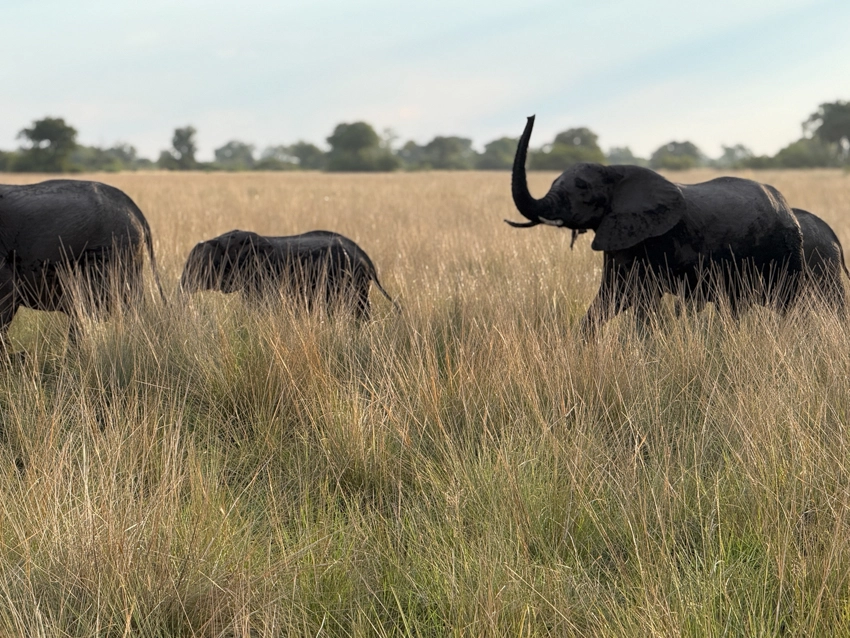
Luxury doesn’t lie in inanimate objects any more than it does waking to the sounds of elephant trumpeting on the banks of the Delta. In the context of travel, luxury lies in the experiences and our perception of them.
“Wealth lies in happiness, not dollars.” – Subcutanea
I was recently fortunate enough to visit Zimbabwe and Botswana on somewhat of a whirlwind itinerary. The Zimbabwe portion of my journey was my “pay-to-play” – a strictly-work week of trade shows and meetings close enough to Victoria Falls to be able to see its rising mists, but with no time free to be able to view the iconic cataract. But working for a luxury safari brand also has its luxury perks…
Shoehorned into my final full day, I was gathered from my hotel and deposited on the banks of the Zambezi to board a small, yet assuringly comfortable boat, to be whisked upriver, winding through rapids to the exquisite Mpala Jena Lodge. One of a handful of premier properties on the upper side of the falls, Mpala Jena justifiably pitches itself to the upper echelons of safari traveller… but it never forgets its place. A tour revealed tented rooms with every convenience and decadence accounted for, but that were organic, unfettered, and tangibly connected to nature. Sublimely talented chefs served a Michelin-worthy luncheon in the open-air dining tent, with stunning views across the Zambezi and my toes curling in the soft, warm sands of the riverbank. Just across the river, I knew my colleague would be indulging in a similar meal at Chundukwa River Lodge, freshly returned from a private game drive across the lodge’s sprawling property, and enjoying the colonial homeliness of the lodge and suites. On both banks, we found luxury, but a definition of luxury interpreted by the exclusivity of the experience, rather than the glitz and bling.
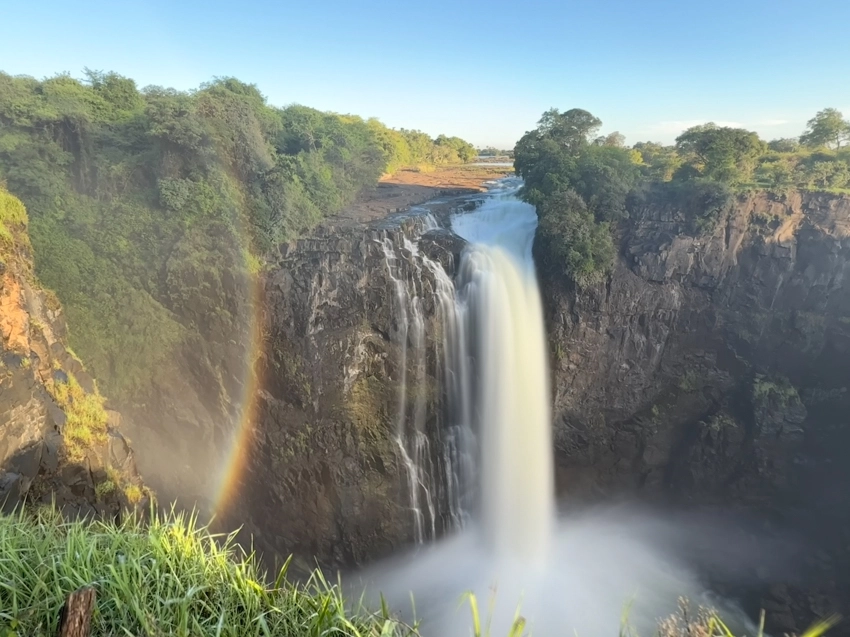
On my final day in Zimbabwe, my alarm roused me at 5 a.m. Lie-ins and lazy mornings are rarely an indulgence on a luxury safari, but I knew – as I would in the coming days – that my early start held more value than my emaciated bank account ever would. Through the shadows of dawn, I was driven the 15 minutes from my cosy lodgings at Insika Lodge to the front gate of Victoria Falls, arriving at 5:58 – two minutes before opening time. The next hour unfolded as if in a surreal dream. I wandered the deserted pathways through the perpetual rain of the falls, pausing at vantage points for as long as I wished, no heads bobbing in front of my camera lens, no groups haranguing me for their chance of peace-sign selfies, ‘hashtag-vicfalls’. Here, at one of the world’s most iconic natural wonders, completely alone in a forest that gently dripped with the mist filling the air, my pocket barely any lighter from the entry fee, I had found luxury, and I laughed uncontrollably at the absurdity of the situation in which I found myself. It wouldn’t be the first time this emotion enveloped me.
“Luxury can be defined as experiencing that which only
the precious few can, or have before you.”
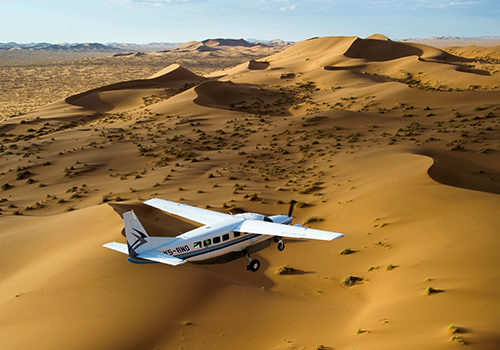
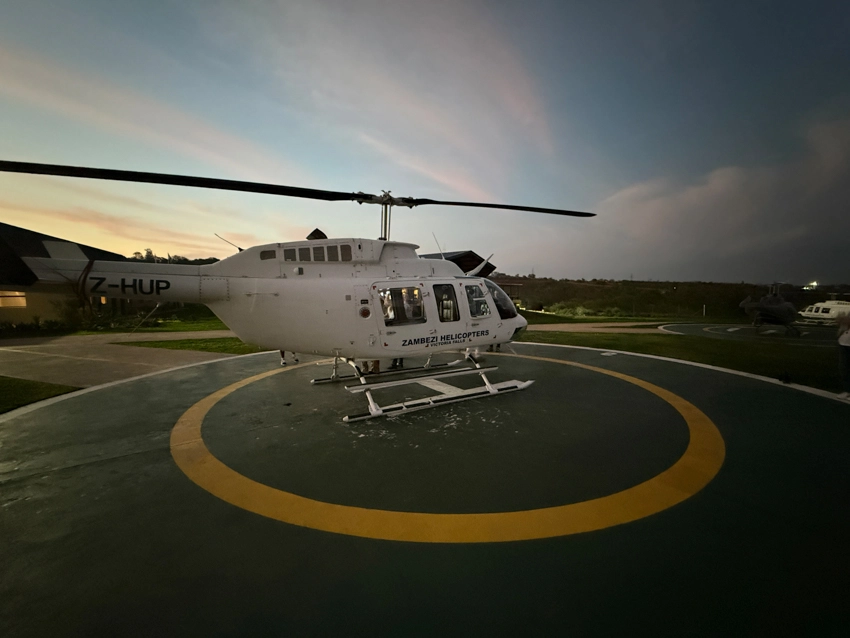
There is an undeniable opulence in the notion of catching a four-seater light aircraft into the Okavango Delta to be deposited at a dirt runway and relieving myself in a pristine bush toilet – complete with porcelain sink, organic soaps and lotions, and Egyptian cotton hand towels – while I wait for my private helicopter to arrive. The ridiculousness of my unfathomable fortune (and my gratitude for it) was not lost on me. However, for me, this was luxury of the saccharine, shrink-wrapped variety.
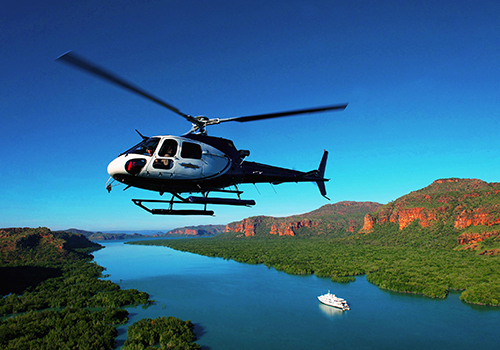
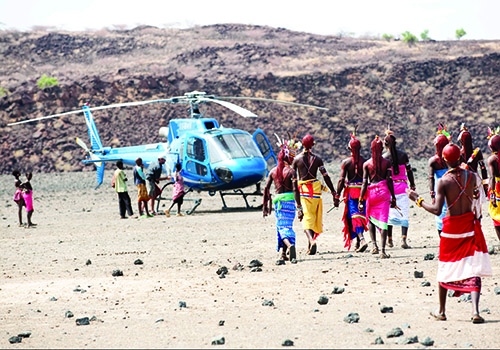
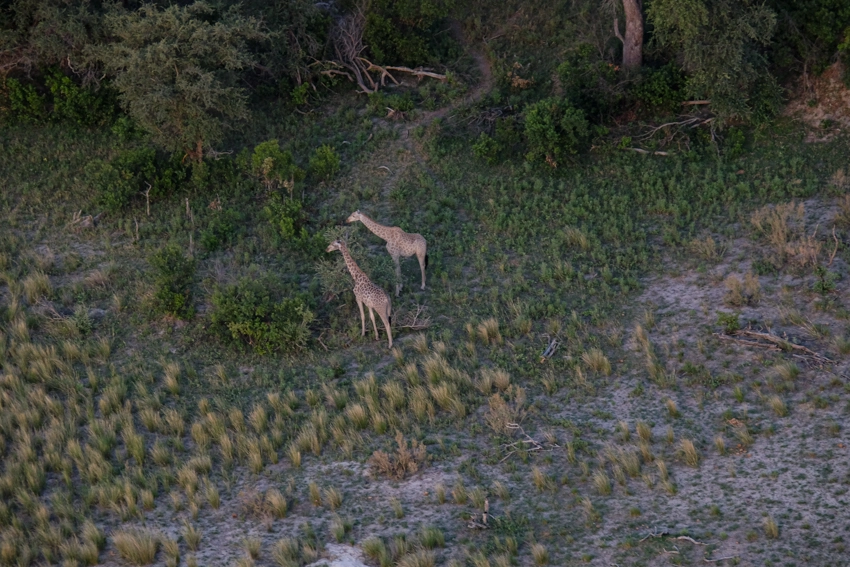
Flashbacks of my youthful self sitting cross-legged on the living room floor as the intro to Magnum P.I. reflected Tom Selleck sweeping across the Hawaiian landscape in a helicopter crept into my mind, casting a grin across my lips as we cast a shadow across Botswana’s floodplains below. Giraffe loped away in slow motion at the sound of the rotors while elephant barely glanced up from their resolute wanderings. The silver ribbons of the waterways fractured the grasslands like spiderwebs glistening with morning dew drops. This was sublime. How is it that I could possibly find myself here? And who was now in possession of the soul I must have sold to get here? Yet, as extraordinary as this and the subsequent helicopter flights I would take in the coming days were, they were all achievable for the price of a ticket. Any tourist, even if of meager means, could throw a few hundred dollars to a pilot and replicate what I was now experiencing. This was travelling in luxury – that much was undeniable – but this was not luxury travel.
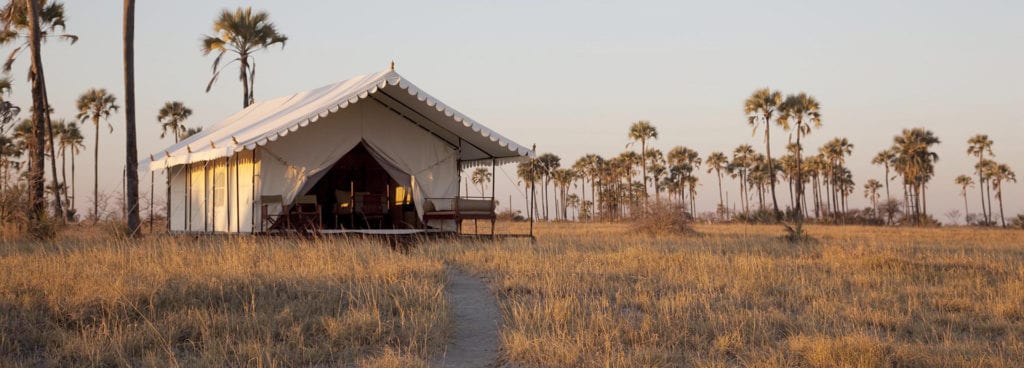
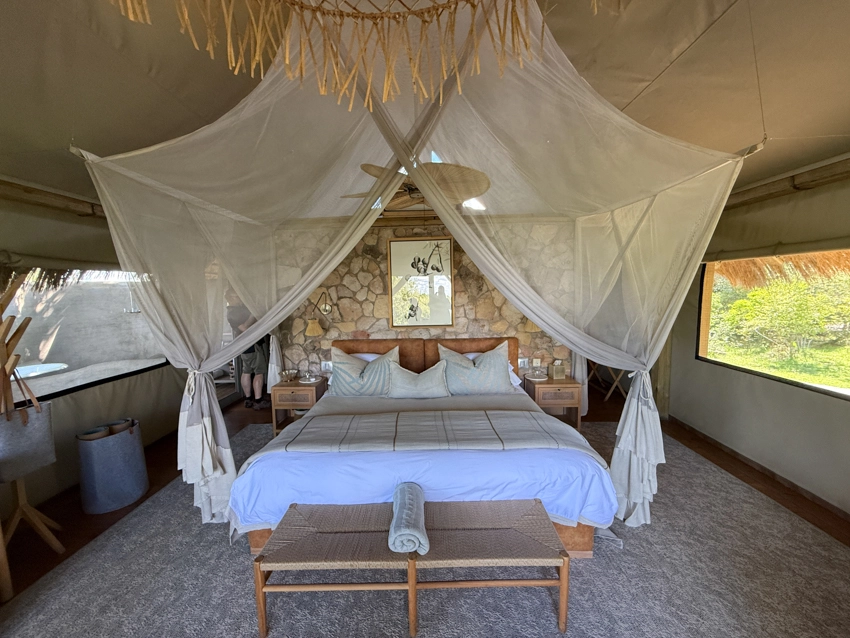
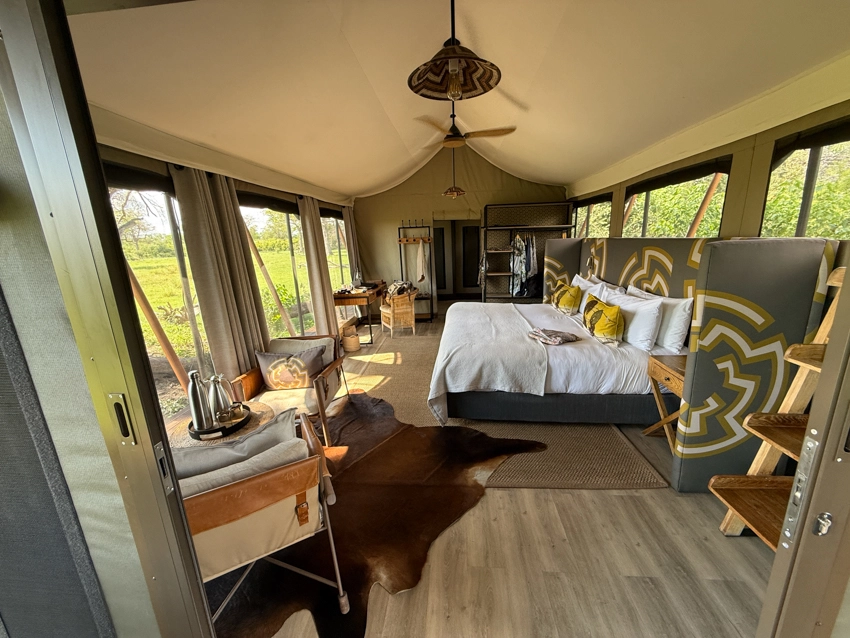
My first Botswana residence was Karangoma, a wonderfully-presented tented camp in the Okavango’s upper east. A new addition to the region, Karangoma was established with nature in its heart. Conservation. Connection. Immersion. These were embedded into the foundations from which the raw timber platforms and walkways grew. My tent still smelled softly of the freshly stained floorboards and new canvas that surrounded me, forming a suite with a larger footprint than my entire one-bed apartment back home. Luxury oozed from the lounge chairs, the soft sheets, the selection of indulgent pillows. It filled the air as I rinsed off the dust of travel, lathering with organic cosmetics under the open-air shower. But the true luxury came when I sat on the edge of the bed, held my breath, and heard nothing but the bush; or as cool water cascaded down on me and I wiped the shampoo from my eyes just in time to watch a family of tsessebe amble past, completely oblivious to my presence. It came at dawn the next morning as campfire smoke hung in the air, mingling with the scent of freshly-brewed coffee, warm grass and the subtle, distinctive hint of elephant dung; and in the sumptuous muffin I sank my teeth into as I boarded the game vehicle – a muffin lovingly made plant-based, just for me. Wealth can bring you to these places, but it can’t create them. These are the luxuries that must be perceived to be believed.
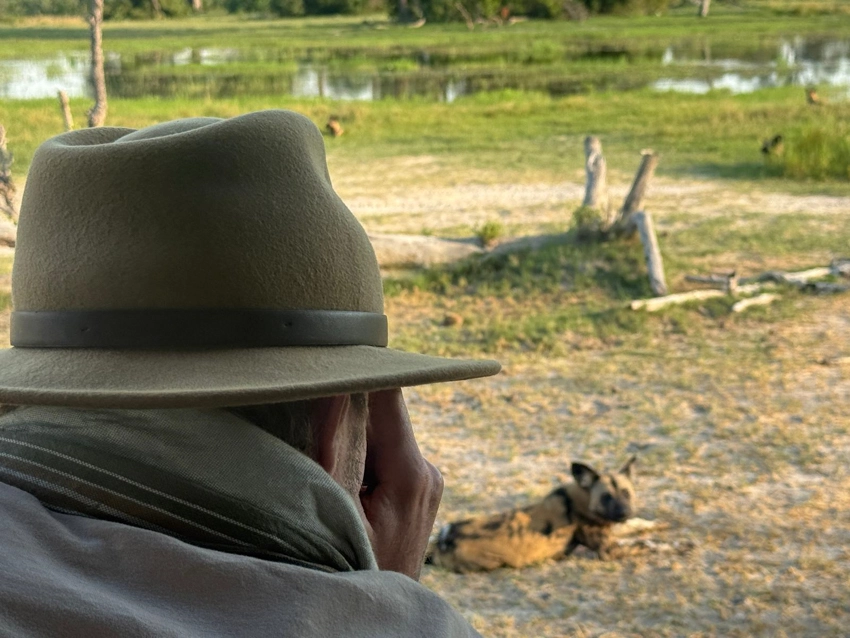
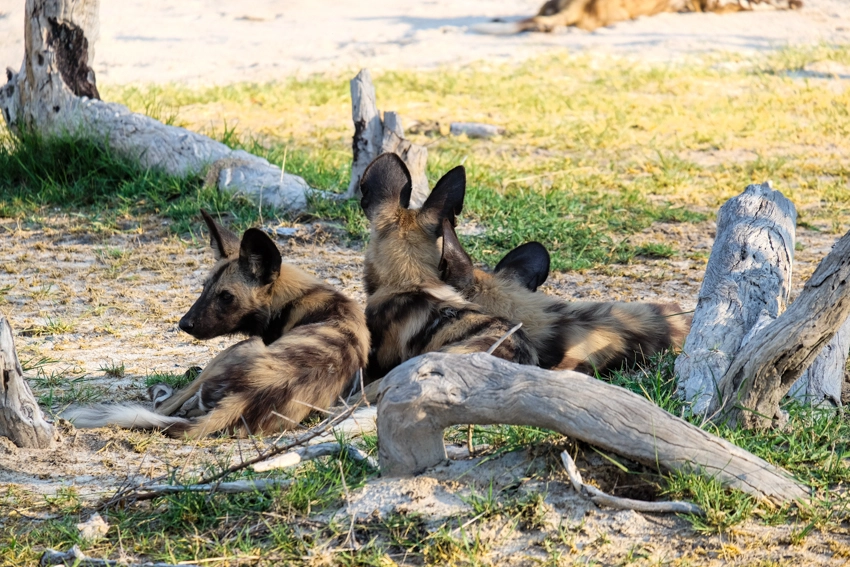
So too as we set out on our game drive. I devolved into a giggling schoolboy at my first, long-anticipated sighting of African wild dogs, tears gathered like floodwaters behind the Warragamba Dam as mother elephants flapped ears in protection of their calves, my cheeks ached at the perpetual glee and wonder I felt in every moment.
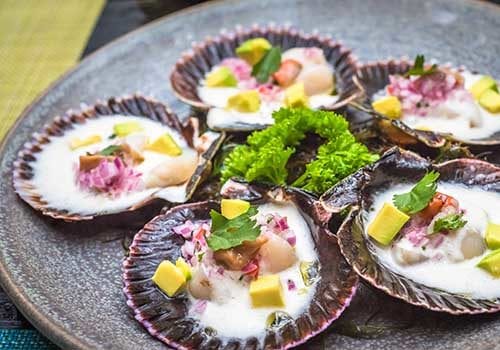
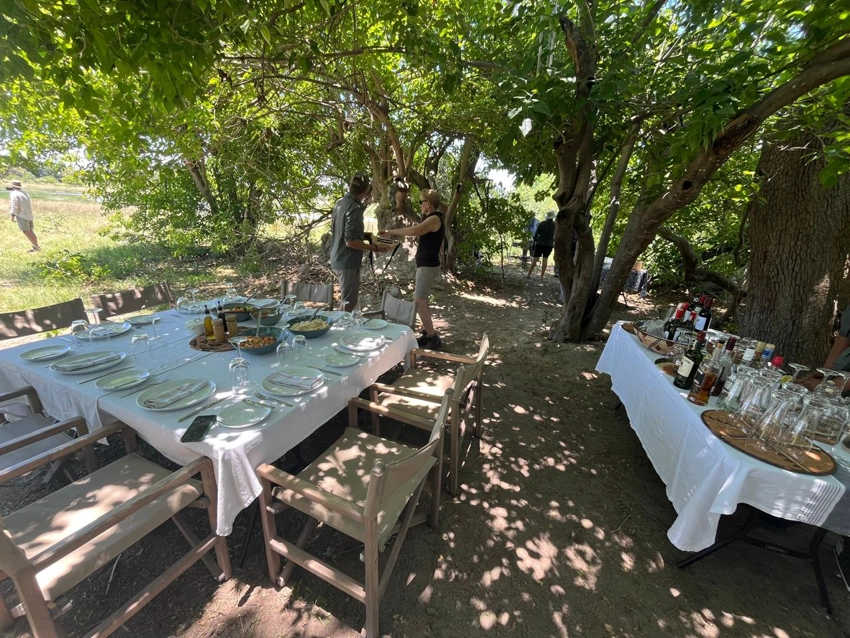
Then, as we rounded a thicket, there emerged a full dining service; plates, cutlery, glassware, linen tablecloths, a cornucopia of salads and a crackling braai a short distance away… in the bush… in the middle of Botswana… on the banks of the Delta… far, far beyond the reach of even the most tenacious moped-riding Uber Eats deliverer. Un – bee – leivable.
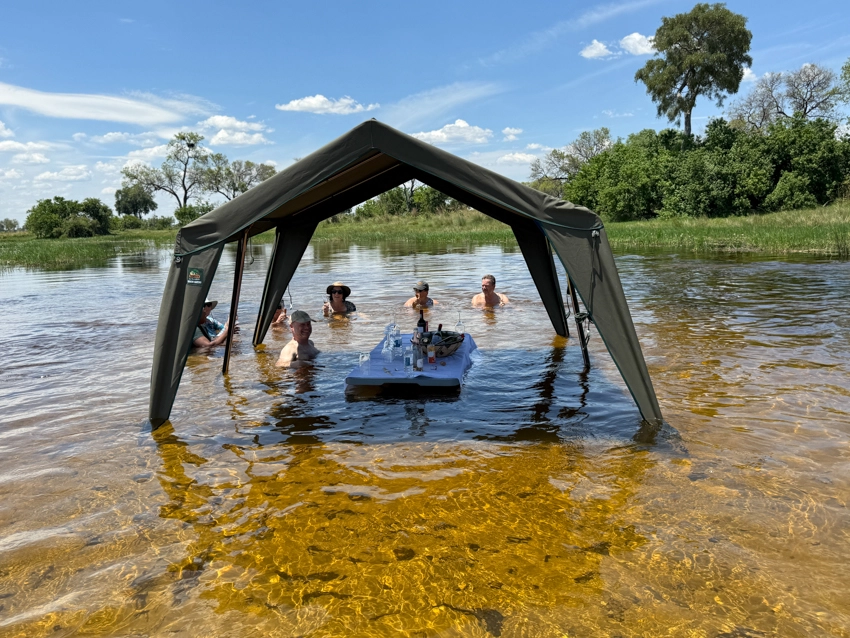
As if this feat of wilderness gastronomy wasn’t enough, our host then invited us for a post-lunch swim. We plunged into the tannin-stained waters of a shallow tributary where an awning had been erected on a barely submerged sandbank, sparkling wine chilling in an ice bucket. Wallowing in the knee-deep water, ice-cold beverage in hand, hippos grunting a safe distance away in the deeper waters of the main channel, and my new friends and acquaintances laughing and splashing under the warm Botswana sun, I was again absolutely overcome by the nonsensicality of the situation I now found myself in. Such a finite proportion of the world’s population have experienced these remarkable circumstances that I could probably host them all at a surf club buffet. If exclusivity defines luxury, I’d just won the lottery.
 |
 |
Departing Karangoma, I embarked on what was, for me, the most anticipated chapter of my journey. Traversing the Okavango from northeast to southwest by helicopter, I gained some degree of appreciation for the immensity and scale of this wonderfully biodiverse yet hauntingly fragile corner of the planet. I arrived at Kweene River Camp, the more southerly of two camps owned and managed by Simon Byron of Beagle Expeditions. Simon greeted me personally, welcoming me to the camp that still illuminates a vibrant spark of passion in his eye simply at its mention.
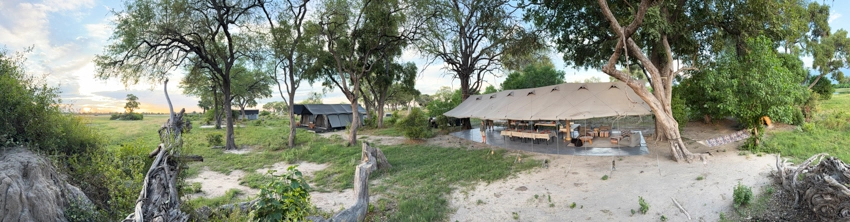
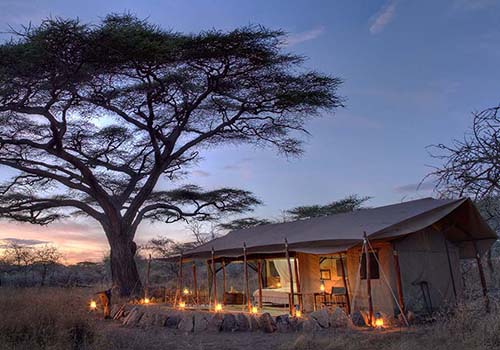
Beagle began as a mobile tented camp. Simon knows this concession intimately, and his greatest thrill, a self-imposed life’s purpose, is to protect it and share it with a handful of enthusiastic guests. In the early days, those clients – sometimes the well-heeled former residents of the world’s Four Seasons and Hiltons – would have to descend onto all fours and crawl into dome tents for a night sleeping on bed rolls. While this was ‘all part of the experience’, Simon appreciated that the same experience could be elevated somewhat. Today, Kweene, and its sister camp, Magwegwe, are somewhat more established. Meru tents offer sumptuous queen-sized beds, a small desk, canvas wardrobe, private viewing deck and en-suite, albeit with bucket shower and composting toilet.
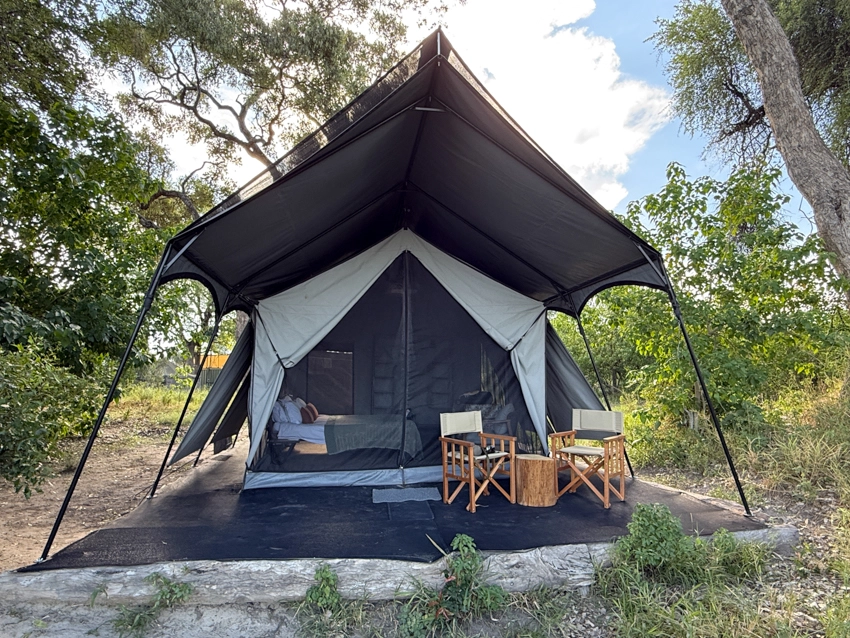
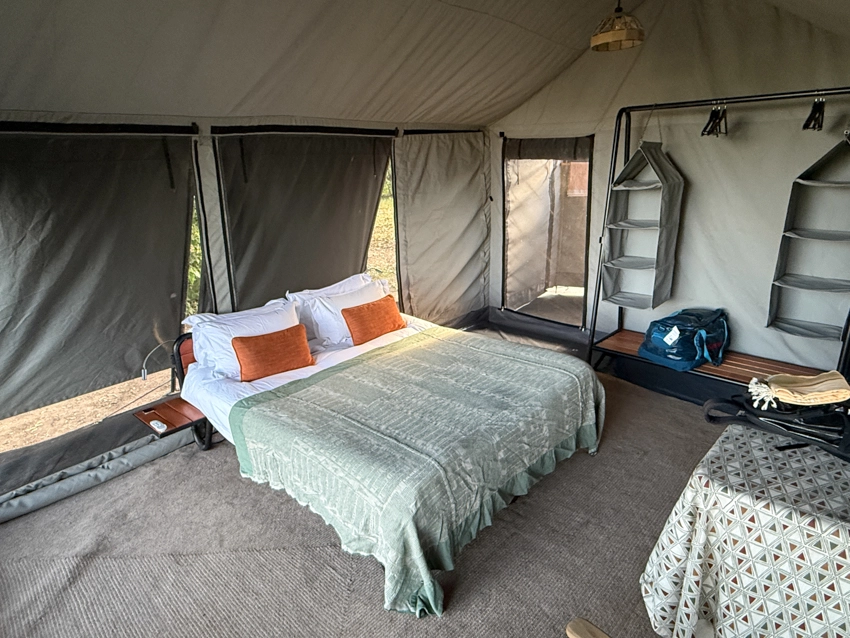
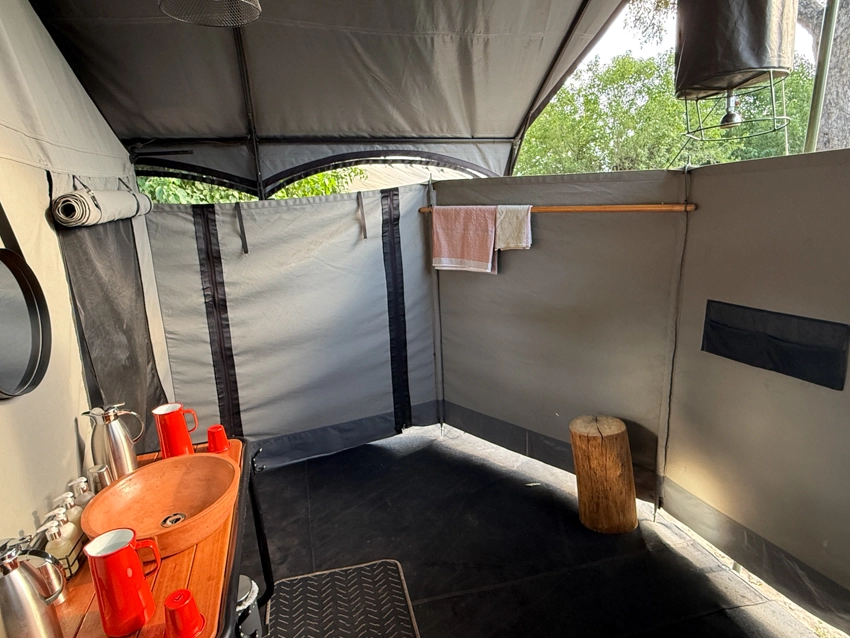
Like a Cirque du Soleil highwire artist, Simon has navigated the fine line between quality comfort and natural immersion and emerged to a cacophony of applause. Beagle Expeditions is rustic, a badge it wears with honour, but it provides everything that is needed, from splendid private lodgings to USB charging ports, superb cuisine, an ice bath, and personal and attentive staff. There is no excess, deliberately, and to indulge in any more than it already offers would be to undermine its very ethos.
Despite the camps now being semi-established, the atmosphere of a mobile camp permeates every aspect. The lounge area is wonderfully relaxed, the dining tent spacious and welcoming, the tents sturdy and secure – comforting when the chatters of hyena penetrate the ink-black night. But the camp feels equally as impermanent, as if it could be broken down and thrown into the back of a handful of Land Cruisers in an afternoon’s work. This is part of its endearing charm, and what makes Beagle Expeditions absolutely priceless and residing amongst the very few properties at the pinnacle of experiential luxury.
Indeed, Simon informed me of a guest travelling a couple of months prior to my arrival whose bank balance had almost too many zeros to count. Used to a decadent lifestyle, he, and far moreso, his wife, were a little perturbed on their arrival, to the point of her insisting that she can’t sleep here and she simply must leave immediately. Simon joined hubby in quelling her concerns, encouraging her to give it just one day and then she could leave with their blessing. At the end of Day Four, she wept as she departed, proclaiming it one of the most magical, incredible and unforgettable few days of her life.
When you see value in experience, luxury is reimagined.
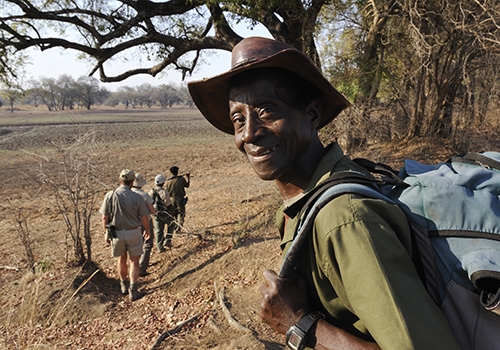
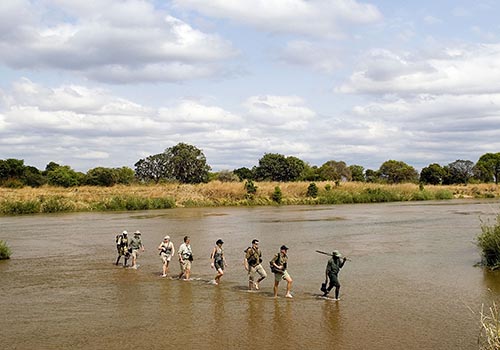
The following day, we embarked on an adventure that defines Beagle Expeditions. Gone are the movable camps, but the philosophy remains, and we set off on the 12-kilometre walk – through waist-high papyrus, past three-metre-tall termite mounds, across open plains and between towering sausage trees – to Magwegwe Camp. Equipped before departure with plenty of water, picnic lunch and a bed roll all tucked into a well-fitting backpack, we departed the most minimal semblance of humanity to plunge into the wilderness. A private concession for these two camps alone, the only iota of mankind we may possibly have seen was the distant vapour trails of jets passing 10 kilometres above us, but even these were more elusive than the few leopards that reside in the region.
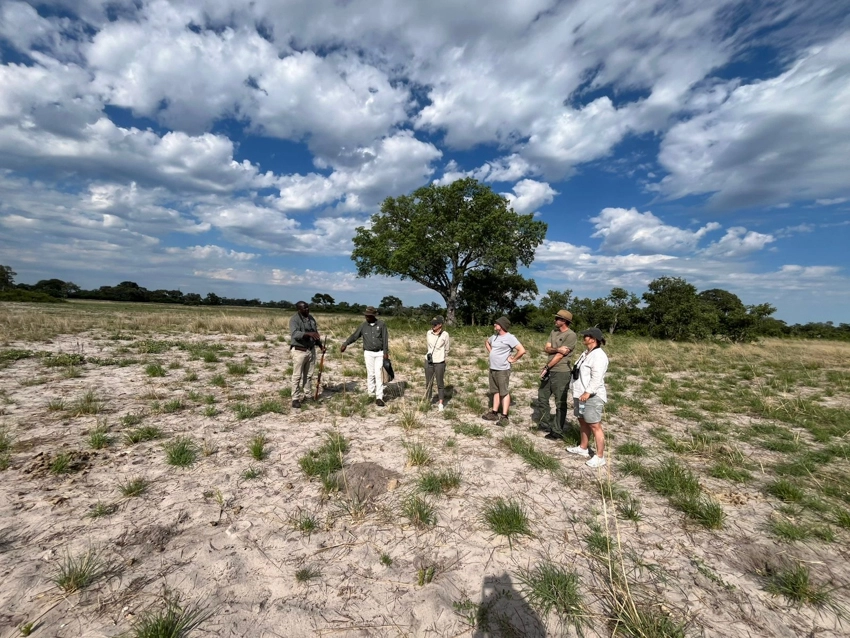
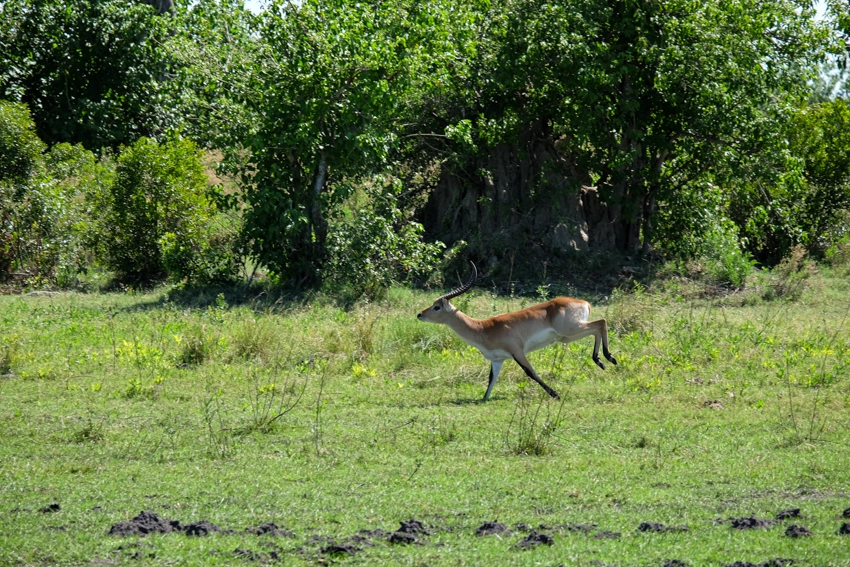
Walking at a leisurely pace, this was a casual day out for me, as I will often pound out 25 kilometres at double speed. But the sedateness of the hike gave me the opportunity to take in the minutiae of every moment. Variegated elephant prints in the mud, porcupine quills lying in the dust, the comical chirps of the go-away birds, distant sightings of kudu, hippo and giraffe, leaping herds of red lechwe, and flutters of brown-veined butterflies that rose in clouds as we approached, swirling around us as if in some Lewis Carroll tale of wonder and fantasy.
As was evidenced throughout my itinerary, the guides were superb, informing us of the stories of the bush; the importance of termites, the seasons of the delta, the biology of lechwe that allows this species specifically to spring through floodwaters. Though undoubtedly outstanding, this is a familiar part of any African luxury safari. The unfamiliar came when we were called to halt for lunch. The antithesis of the silver service affair at Karangoma, we gathered in the shade of an ancient sausage tree, unfurled our bed rolls and, like fourth graders on a school outing, clicked open the lids of our blue Tupperware lunch boxes to explore what ‘mum’ had packed us. Simple, flavoursome, nourishing – it may not have been gourmet, but that it had been made at dawn in a camp kitchen in the middle of nowhere was a baffling feat. Fingers sticky from mini burritos, homemade brownies and fresh fruit, I could not comprehend of a more unforgettable meal.
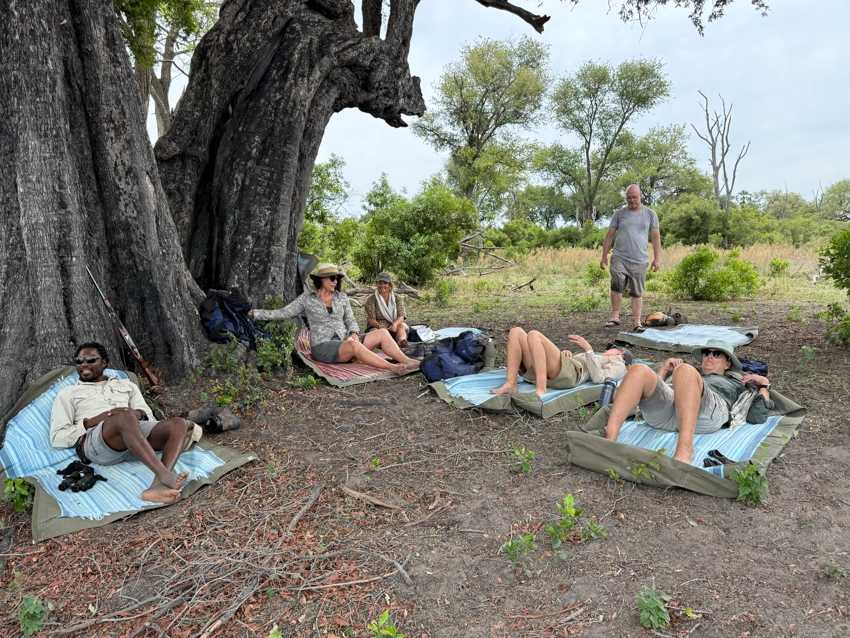
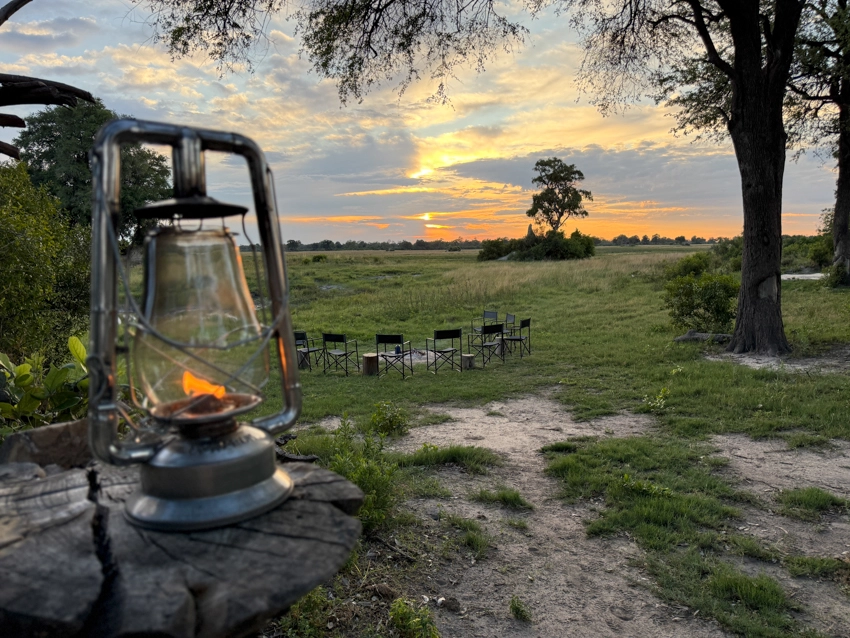
Bellies full, we reclined on our bed rolls, all but me emitting soft snores as they drifted off in the warmth of the day and the weariness of the morning’s walk. Taking out a book as my companions snoozed, I sat cross-legged, stooped over the pages as if wishing to fall into the story. But as I was on the brink, I caught myself, looked up, saw a family of elephant passing barely 30 metres away – though safely on the farther riverbank – and realised that the moments unfolding in this very moment were infinitely more captivating than the William S. Burroughs novel I held in my hands.
Some moments fill the imagination, recollected for months, sometimes years, recounted in idle conversations, but inevitably fading, if not to nothing, then losing their lustre and definition. This, I knew, would be indelibly tattooed onto my hippocampus in glorious Technicolor, there for life, that nothing may erase. Priceless.
• • •
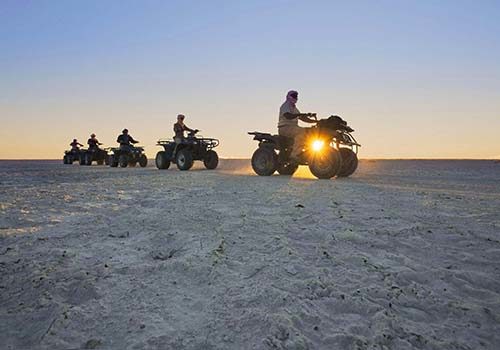
Moela Lodge sits on the border of the Makgadikgadi Pans National Park. However, to my initial disappointment, it is over four hours’ drive to the pans themselves. I say ‘initial disappointment’ because I have long harboured a luxury safari desire to spend a night on the pans, gazing up at the stars, laying in the nothingness of that otherworldly vista. This would not be the journey that delivered, but it would gift me with such compensatory moments as to make this inconsequential.
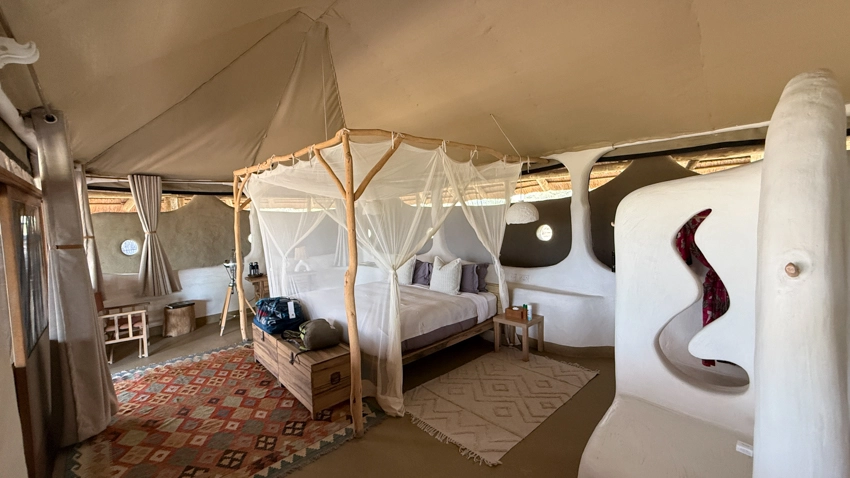
A community-established property, Moela rests on the banks of the Boteti River, its elevated position providing it with spectacular viewing of one of Africa’s largest zebra migrations. Each year, tens of thousands of the monochromatic mammals make their way from the arid Makgadikgadi, joined by scores of elephant, giraffe, kudu and more, to take advantage of the perennial springs and water holes in the river bed. This miraculous marvel would also evade me, as I arrived too late. The rains had begun, watering the plains once more and triggering the migratory return to the pans. However, more than enough animals remained, and this private concession was teeming with life. Moela feels private too, as if – even on game drives far from the lodge – the region is yours, and yours alone; because it is, fellow guests notwithstanding.
As thunder and the roars of lions formed a duet in the distance, we set out on a stunning game drive. The African sky loomed ominously, creating a dramatic backdrop for photos, but equally simply for watching kudu graze, zebra fuss and kick, and hippos wallow in a distractingly pungent pool. Cracks of lightning split the black sky as we neared the lodge, a pair of bat-eared foxes scurrying at our approach, and I was thankful the rains were coming, if only for the light show they summoned.
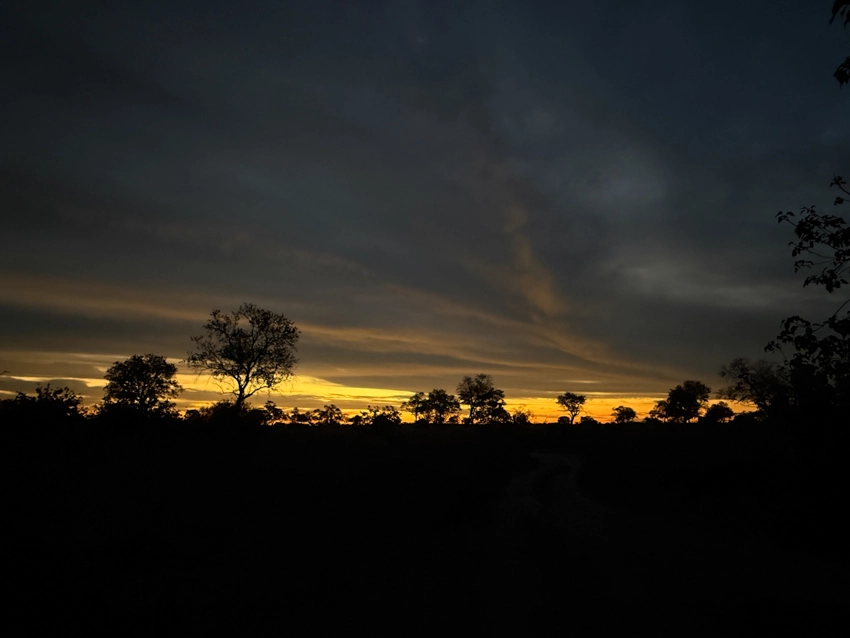
It was my last day. I was grateful that this was one of the times in my life when the clocks were on my side, each day slowing in pace, stretching out before me with endless possibility, and the passing of ten days feeling closer to two months. All too often, good times go too fast, but I was thankful that on this occasion they slowed to a sedentary crawl. But my journey had one more priceless moment yet to bestow, one of culture and connection.
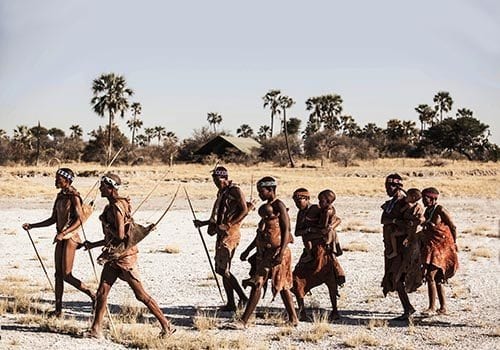
The San bushmen have spread throughout Botswana and northern South Africa, even creeping into Zambia, Zimbabwe and Namibia. But it is in the Makgadikgadi that they are particularly renowned. A ‘bushman experience’ would fill my morning before I inevitably would depart on my 40-hour journey homeward. Through these many magical, priceless, luxury safari experiences, this remained a work trip and – not a fan of theme parks, living history museums and the falsity of costumed performances – I felt more obliged than intrigued to undertake this final activity.
I was ushered from my breakfast, introduced to the bushmen – actually, two bushmen and one bush lady – and immediately realised I had been wrong. The bitter-sweet smell of their traditional tanned leather garments filled my nostrils, the rattling of their seed pod necklaces echoed the clicks of their dialect, and the absolute authenticity of the moment was reinforced by the sense of pride and enthusiasm these warm, smiling tribespeople had in sharing their culture with me. In words I could not possibly enunciate, they conveyed, through gesticulation and a translator, the uses of all manner of plants; hardwoods that are perfect for fire starting, berries brewed into an intoxicating beverage, leaves and roots steeped to deal with the former’s repercussions, and so much more. The bush is their newspaper, their grocery store, their apothecary, their shelter, their jewellery store and their boutique, and they shared their wisdom with me with exuberance. Such moments are found only through connection, through the openness required to welcome in experiences beyond your comfort zone, but that reward you for your courage.
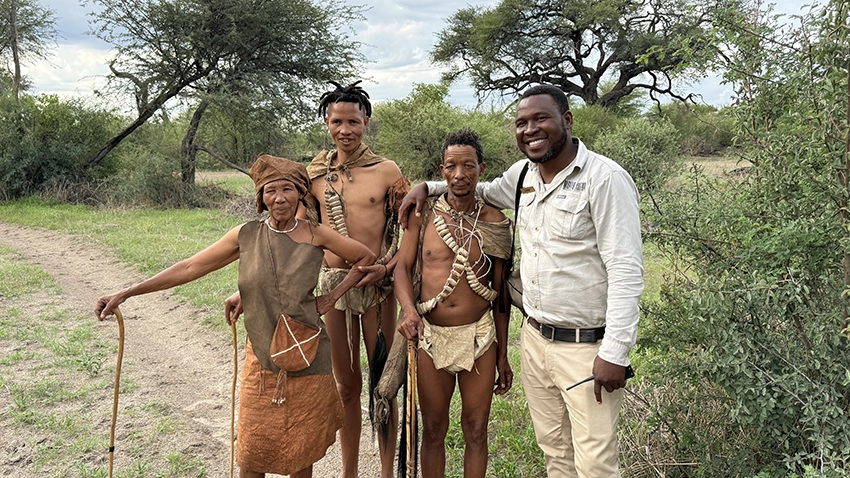
And so, I left – with a deep sigh, a full heart and a library of memories.
If a luxury safari is determined by the opulence of accommodation, the menu of spa treatments available, the choice of gourmet cuisines at a selection of restaurants or the 24-hour porter on standby to deliver Kruge and caviar to your door at any time of day or night, then my itinerary failed abysmally. However, any luxury safari that does offer all of those trappings of an affluent lifestyle fails abysmally at being a true safari. Hence why – I believe – the Mara’s latest high-luxury addition is utterly missing the point.
The words of rich men on death beds spew forth in innumerable cliches: “I’d give it all up for [health, one more day, to do things differently, one more kiss]” One thing pervades; it is the moments of awe and wonder, preferably those shared with a loved one, those experiential seconds and minutes, that are the most precious – the most valuable – of our lives. Ergo, a luxury safari is not one of glitz and glamour, it is one of immersion, of connection, of emotion, of losing oneself in the great wilderness to leave us with tear-streaked cheeks and no words left to describe these priceless moments that no amount of money can buy.
Luxury Safari vs. Experiential Travel: Your questions answered
1. Does Classic Safari Company create luxury safaris?
Absolutely. Classic Safari Company designs luxury safaris across Africa, offering access to an exceptionally diverse portfolio of camps and lodges. This allows itineraries to be crafted entirely around premier properties, or blended thoughtfully with more immersive, experience-driven camps. Luxury is tailored to each traveller, whether that means refined comfort, total exclusivity, or deeply immersive wilderness encounters.
2. What is experiential travel?
Experiential travel focuses on meaningful, immersive experiences rather than surface-level comfort or excess. It prioritises connection to place, wildlife, culture, and people, allowing travellers to actively engage with their surroundings rather than observe them from a distance. In safari terms, experiential travel might include walking safaris, time with expert guides, cultural encounters, or remote camps where nature sets the rhythm of each day.
3. What is the difference between a luxury safari and an experiential safari?
A traditional luxury safari often centres on high-end accommodation and amenities, while an experiential safari places greater emphasis on immersion, exclusivity, and emotional connection to the landscape. Many of today’s most rewarding journeys combine both, offering exceptional comfort alongside authentic wilderness experiences that feel rare, personal, and profoundly memorable.
4. Can a safari be both luxurious and immersive?
Very much so. The most compelling safaris balance refined comfort with deep immersion in the natural world. This might mean elegant tented camps without solid walls, gourmet meals served in the bush, or beautifully designed lodges that feel connected to their environment rather than sealed off from it. True luxury often lies in how the experience feels, not how polished it appears.
5. Why is experiential travel becoming more popular?
Travellers are increasingly seeking depth over display. With greater awareness of conservation, sustainability, and cultural authenticity, many people now value experiences that feel personal, rare, and emotionally resonant. Experiential travel offers stories, memories, and moments that endure long after the journey ends.
6. Does experiential travel mean sacrificing comfort?
No. Experiential travel does not mean discomfort, it simply means thoughtful balance. Many experiential safari camps offer exceptional bedding, attentive service, and outstanding cuisine, while deliberately avoiding unnecessary excess. Comfort exists to support the experience, not overshadow it.
7. What makes a safari experience feel exclusive?
Exclusivity on safari often comes from remoteness, private concessions, small guest numbers, and expert guiding. Being alone at a wildlife sighting, exploring areas inaccessible to most travellers, or staying in camps with only a handful of guests creates a sense of privilege that money alone cannot replicate.
8. How does Classic Safari Company design bespoke safari itineraries?
Each itinerary is designed from the ground up, based on a traveller’s interests, pace, and definition of luxury. This might include combining iconic destinations with lesser-known regions, selecting camps that prioritise conservation and immersion, or arranging unique experiences such as private walks, scenic flights, or cultural encounters.
With huge thanks to the staff at Wild Expeditions, Karangoma Camp, Beagle Expeditions & Moela.

OLDER POSTS
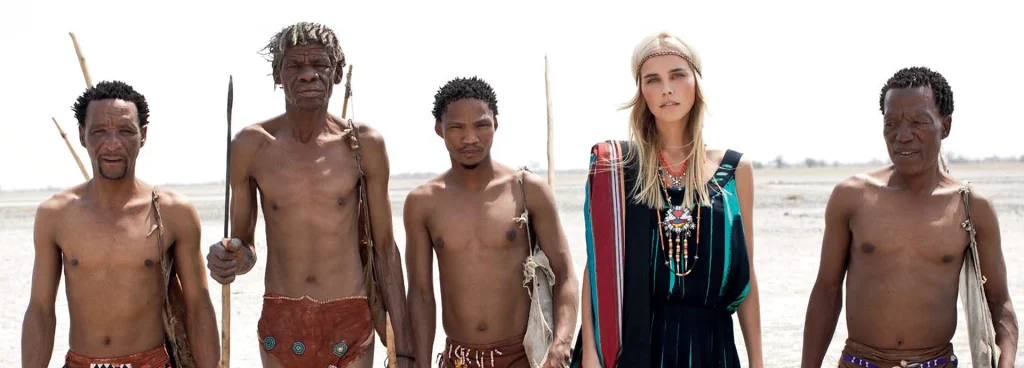
Vogue Australia – Nov, 2011
Isabel Lucas explores Botswana's Makgadikgadi with Vogue Australia, connecting with both nature…
E-NEWS | FEB | JOIN US: PIONEER UNCHARTED POLAR WATERS
An evening of polar waters explorations 8 MARCH 2016 | 6.00PM |…